
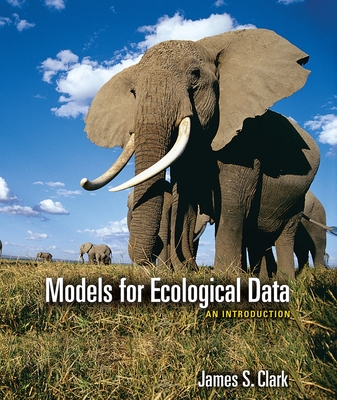
Models for Ecological Data – An Introduction : An Introduction
Book Details
Format
Hardback
ISBN-10
0691121788
ISBN-13
9780691121789
Publisher
Princeton University Press
Imprint
Princeton University Press
Country of Manufacture
US
Country of Publication
GB
Publication Date
Apr 15th, 2007
Print length
632 Pages
Weight
1,680 grams
Dimensions
25.50 x 21.00 x 4.00 cms
Product Classification:
Social research & statisticsSocial research and statisticsEcological science, the Biosphere
KSh 18,000.00
Currently unavailable
0 in stock
Delivery Location
Delivery fee: Select location
Secure
Quality
Fast
Facing ecological data sets of unprecedented size and complexity, environmental scientists are struggling to understand and exploit powerful statistical tools for making sense of ecological processes. This work introduces them to these methods in modeling and computation. It also describes how complexity can motivate a shift to Bayesian methods.
The environmental sciences are undergoing a revolution in the use of models and data. Facing ecological data sets of unprecedented size and complexity, environmental scientists are struggling to understand and exploit powerful new statistical tools for making sense of ecological processes. In Models for Ecological Data, James Clark introduces ecologists to these modern methods in modeling and computation. Assuming only basic courses in calculus and statistics, the text introduces readers to basic maximum likelihood and then works up to more advanced topics in Bayesian modeling and computation. Clark covers both classical statistical approaches and powerful new computational tools and describes how complexity can motivate a shift from classical to Bayesian methods. Through an available lab manual, the book introduces readers to the practical work of data modeling and computation in the language R. Based on a successful course at Duke University and National Science Foundation-funded institutes on hierarchical modeling, Models for Ecological Data will enable ecologists and other environmental scientists to develop useful models that make sense of ecological data. * Consistent treatment from classical to modern Bayes * Underlying distribution theory to algorithm development * Many examples and applications * Does not assume statistical background * Extensive supporting appendixes * Accompanying lab manual in R
Get Models for Ecological Data – An Introduction by James S. Clark at the best price and quality guaranteed only at Werezi Africa's largest book ecommerce store. The book was published by Princeton University Press and it has 632 pages.
Customers Who Bought This Also Bought

Apostles of Development
KSh 5,600.00

Elementary Statistics in Social Research: Essentials
KSh 13,700.00
Narrative Inquiry – Experience and Story in Qualitative Research
KSh 4,850.00

Scouting and Scoring – How We Know What We Know about Baseball
KSh 3,050.00

Shared Beginnings, Divergent Lives
KSh 5,400.00

The Nagorno-Karabakh Conflict
KSh 8,800.00
Multiple Attribute Decision Making
KSh 7,400.00

World Food and Agriculture – Statistical Pocketbook 2024
KSh 4,500.00

National Accounts Statistics
KSh 16,050.00

The Southwest
KSh 2,500.00

World Food and Agriculture – Statistical Pocketbook 2022
KSh 4,500.00

Research Design in Political Science
KSh 6,300.00
More by James S. Clark
More in This Genre
Apostles of Development
KSh 5,600.00
Elementary Statistics in Social Research: Essentials
KSh 13,700.00
Narrative Inquiry – Experience and Story in Qualitative Research
KSh 4,850.00
Scouting and Scoring – How We Know What We Know about Baseball
KSh 3,050.00
Shared Beginnings, Divergent Lives
KSh 5,400.00
The Nagorno-Karabakh Conflict
KSh 8,800.00
