
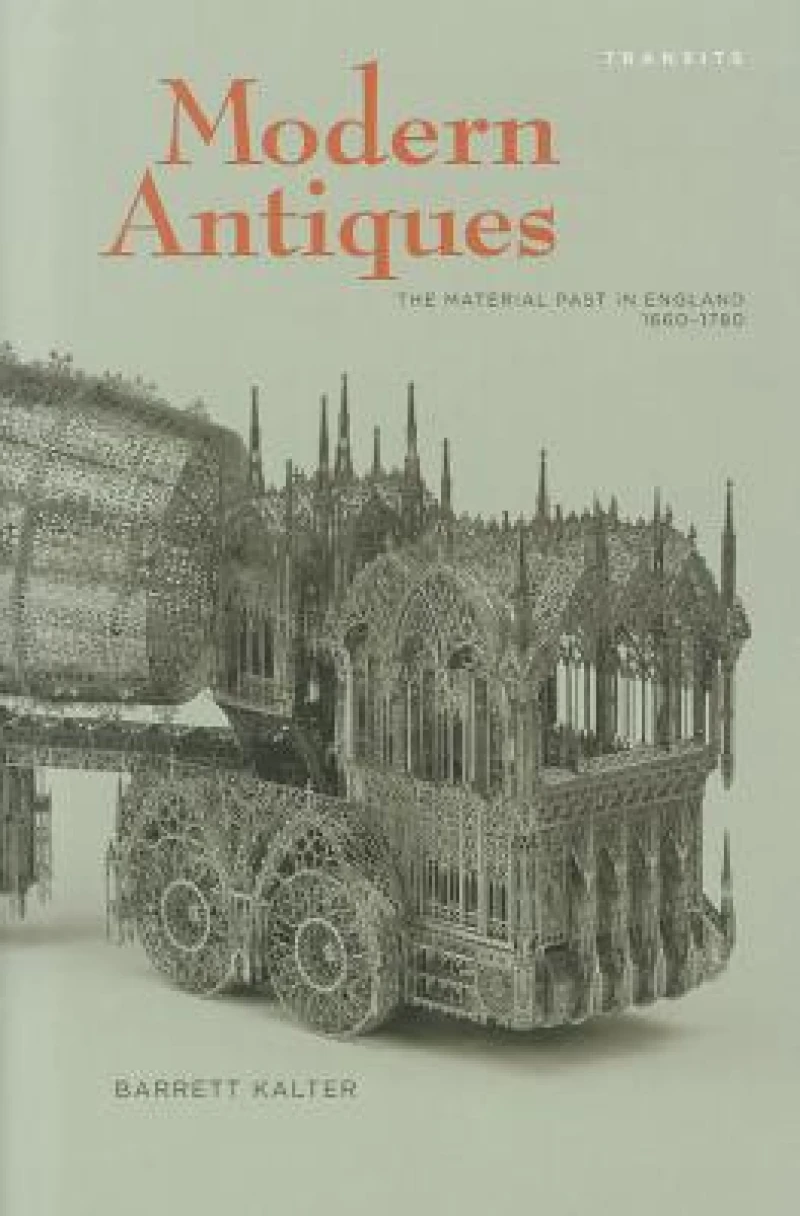
Modern Antiques : The Material Past in England, 1660–1780
Book Details
Format
Hardback or Cased Book
ISBN-10
1611483786
ISBN-13
9781611483789
Publisher
Bucknell University Press
Imprint
Bucknell University Press
Country of Manufacture
US
Country of Publication
GB
Publication Date
Dec 23rd, 2011
Print length
260 Pages
Weight
520 grams
Dimensions
22.90 x 16.00 x 2.30 cms
Product Classification:
Literary studies: c 1500 to c 1800
Ksh 19,400.00
Manufactured on Demand
Delivery in 29 days
Delivery Location
Delivery fee: Select location
Delivery in 29 days
Secure
Quality
Fast
The recovery and reinvention of the past were fundamental to the conception of the modern in England during the long eighteenth century. Scholars then forged connections between linear time and empirical evidence that transformed historical consciousness. Chronologers, textual critics, and antiquaries constructed the notion of a material past, which spread through the cultures of print and consumption to a broader public, offering powerful—and for that reason, contested—ways of perceiving temporality and change, the historicity of objects, and the relation between fact and imagination. But even as these innovative ideas won acceptance, they also generated rival forms of historical meaning. The regular progression of chronological time accentuated the deviance of anachronism and ephemerality, while the opposition of unique artifacts to ubiquitous commodities exoticized things that straddled this divide. Inspired by the authentic products as well as the anomalous by-products of contemporary scholarship, writers, craftsmen, and shoppers appropriated the past to create nostalgic and ironic alternatives to their own moment. Barrett Kalter explores the history of these “modern antiques,” including Dryden’s translation of Virgil, modernizations of The Canterbury Tales, Gray’s Gothic wallpaper, and Walpole’s Strawberry Hill. Though grounded in the ancient and medieval eras, these works uncannily addressed the controversies about monarchy, nationhood, commerce, and specialized knowledge that defined the present for the English eighteenth century. Bringing together literary criticism, historiography, material culture studies, and book history, Kalter argues that the proliferation of modern antiques in the period reveals modernity’s paradoxical emergence out of encounters with the past.
Get Modern Antiques by at the best price and quality guaranteed only at Werezi Africa's largest book ecommerce store. The book was published by Bucknell University Press and it has pages.

