
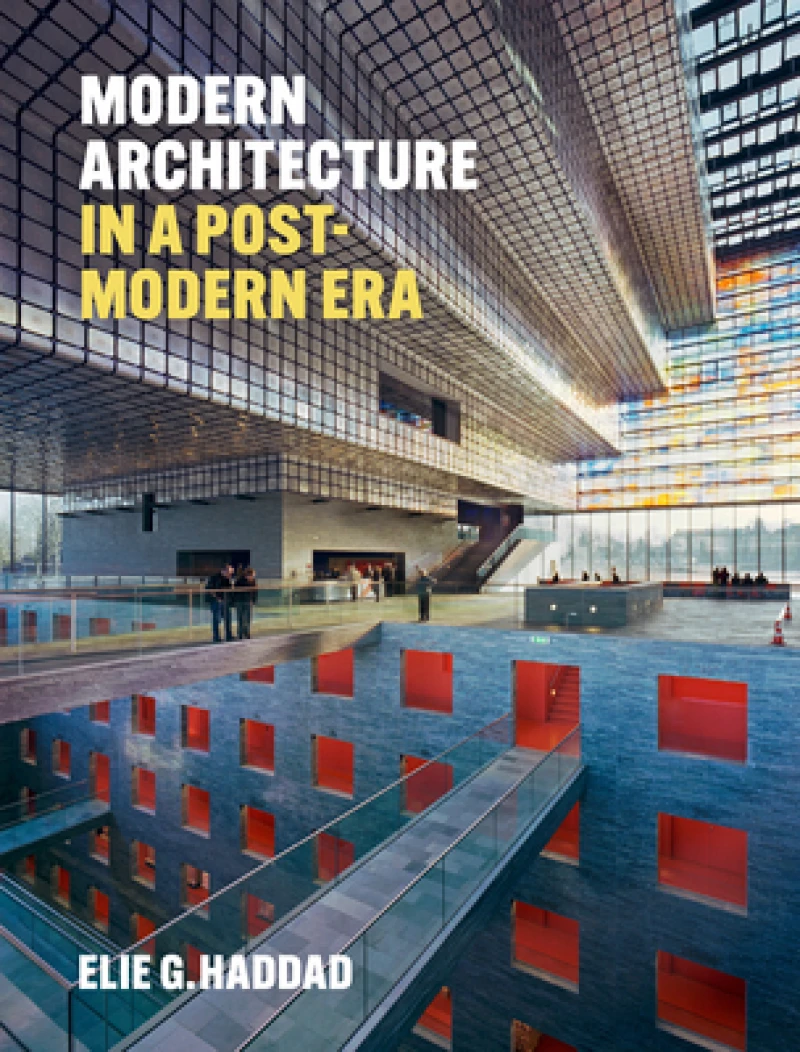
Modern Architecture in a Post-Modern Era
Book Details
Format
Hardback or Cased Book
ISBN-10
1848225954
ISBN-13
9781848225954
Publisher
Lund Humphries Publishers Ltd
Imprint
Lund Humphries Publishers Ltd
Country of Manufacture
GB
Country of Publication
GB
Publication Date
Jul 5th, 2023
Print length
288 Pages
Weight
1,268 grams
Dimensions
25.80 x 20.00 x 2.70 cms
Product Classification:
Theory of architectureHistory of architecture
Ksh 9,100.00
Werezi Extended Catalogue
Delivery in 14 days
1 copies in stock
Delivery Location
Delivery fee: Select location
Delivery in 14 days
Secure
Quality
Fast
The history of modern architecture has been well covered in the classical surveys of Sigfried Giedion, Kenneth Frampton, William Curtis, Alan Colquhoun, and others who traced the developments of this major movement that dominated the architectural landscape of the 20th century until the beginning of the 1970s, when a major contesting movement appeared on the scene, labelled as Post-Modernism. Taking a similar approach, this book explores the different tendencies that affected the developments of the past six decades, beginning around the 1960s, when a new wind started to blow from within Modernism, leading to different reactions and counter-reactions, the effects of which are still felt today. This book provides a survey of contemporary developments, starting with an introductory chapter on the transitional period of the 1960s and then examining the different movements that followed, charting a middle course between the ‘aesthetic’ histories that examine architecture solely in terms of its formal aspects, and the ‘ideological’ histories that subject it to a critique that often skirts the discussion of its formal aspects. Global in scope, each chapter begins with a theoretical overview of the ‘paradigm’ in question, leading to an examination of its main actors and projects. The survey concludes with a section on more recent trends, including environmental concerns that placed sustainability as one of the main objectives in architecture in parallel to an aesthetic direction that blurs the boundaries between architecture and art, relying on technological innovations to develop ever more complex forms.
The history of modern architecture has been well covered in the classical surveys of Sigfried Giedion, Kenneth Frampton, William Curtis, Alan Colquhoun, and others who traced the developments of this major movement that dominated the architectural landscape of the 20th century until the beginning of the 1970s, when a major contesting movement appeared on the scene, labelled as Post-Modernism. Taking a similar approach, this book explores the different tendencies that affected the developments of the past six decades, beginning around the 1960s, when a new wind started to blow from within Modernism, leading to different reactions and counter-reactions, the effects of which are still felt today. This book provides a survey of contemporary developments, starting with an introductory chapter on the transitional period of the 1960s and then examining the different movements that followed, charting a middle course between the aesthetic histories that examine architecture solely in terms of its formal aspects, and the ideological histories that subject it to a critique that often skirts the discussion of its formal aspects. Global in scope, each chapter begins with a theoretical overview of the paradigm in question, leading to an examination of its main actors and projects. The survey concludes with a section on more recent trends, including environmental concerns that placed sustainability as one of the main objectives in architecture in parallel to an aesthetic direction that blurs the boundaries between architecture and art, relying on technological innovations to develop ever more complex forms.
Get Modern Architecture in a Post-Modern Era by at the best price and quality guaranteed only at Werezi Africa's largest book ecommerce store. The book was published by Lund Humphries Publishers Ltd and it has pages.

