

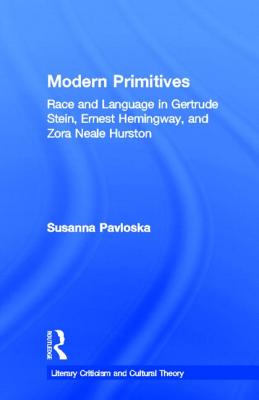
Modern Primitives : Race and Language in Gertrude Stein, Ernest Hemingway, and Zora Neale Hurston
Book Details
Format
Paperback / softback
Book Series
Literary Criticism and Cultural Theory
ISBN-10
1138976261
ISBN-13
9781138976269
Publisher
Taylor & Francis Ltd
Imprint
Routledge
Country of Manufacture
GB
Country of Publication
GB
Publication Date
Apr 27th, 2016
Print length
154 Pages
Weight
453 grams
Product Classification:
Literature: history & criticismLiterature: history and criticism
KSh 9,900.00
Currently unavailable
0 in stock
Delivery Location
Delivery fee: Select location
Secure
Quality
Fast
This book explores the ways in which the American writers Gertrude Stein, Ernest Hemingway, and Zora Neale Hurston used modernist primitivism to assert a uniquely American literary identity in the face of European cultural hegemony.
The extended Introduction traces the history of primitivism from a classical rhetorical trope to its emergence in the twentieth century as aesthetic, exemplified by Picasso and his use of African masks, that combined new work in the human sciences especially anthropology and psychology, with new ideas in the visual arts to challenge traditional ideas of realism and artistic accomplishment. The first two chapters bring together visual evidence, published and unpublished writings, and linguistic theory to give the first detailed account of the theoretical and gender concerns of the Stein-Picasso collaboration, which culminated in Picasso''s Les demoiselles d''Avignon and Stein''s Melanctha.
In the final two chapters, the author shows how both Hemingway and Hurston participated in the racialist scientific debates of the 1920s and used primitivism to find their respective artistic voices: Hemingway in his use of American Indians in recasting his life narratives in the Nick Adams stories, and Hurston in her attempts to use her anthropological training to construct a mythic African-American past.
The extended Introduction traces the history of primitivism from a classical rhetorical trope to its emergence in the twentieth century as aesthetic, exemplified by Picasso and his use of African masks, that combined new work in the human sciences especially anthropology and psychology, with new ideas in the visual arts to challenge traditional ideas of realism and artistic accomplishment. The first two chapters bring together visual evidence, published and unpublished writings, and linguistic theory to give the first detailed account of the theoretical and gender concerns of the Stein-Picasso collaboration, which culminated in Picasso''s Les demoiselles d''Avignon and Stein''s Melanctha.
In the final two chapters, the author shows how both Hemingway and Hurston participated in the racialist scientific debates of the 1920s and used primitivism to find their respective artistic voices: Hemingway in his use of American Indians in recasting his life narratives in the Nick Adams stories, and Hurston in her attempts to use her anthropological training to construct a mythic African-American past.
Get Modern Primitives by Susanna Pavloska at the best price and quality guaranteed only at Werezi Africa's largest book ecommerce store. The book was published by Taylor & Francis Ltd and it has 154 pages.
Customers Who Bought This Also Bought

On Freedom
KSh 2,350.00
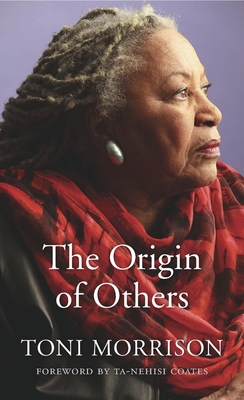
The Origin of Others
KSh 3,600.00
There Are Places in the World Where Rules Are Less Important Than Kindness
KSh 3,600.00

Amazing Peace
KSh 3,050.00
Lewis Carroll and "Alice" on Stage
KSh 9,350.00
There Are Places in the World Where Rules Are Less Important Than Kindness
KSh 2,350.00
Swim in a Pond in the Rain
KSh 2,000.00

The Obscene Bird of Night – unabridged, centennial edition
KSh 3,050.00

I''m Not Here to Give a Speech
KSh 1,800.00

This Craft of Verse
KSh 3,600.00

On Great Writing (On the Sublime)
KSh 2,000.00
In Praise of Mystery
KSh 2,700.00
More by Susanna Pavloska
More in This Genre
On Freedom
KSh 2,350.00
The Origin of Others
KSh 3,600.00
There Are Places in the World Where Rules Are Less Important Than Kindness
KSh 3,600.00
Amazing Peace
KSh 3,050.00
Lewis Carroll and "Alice" on Stage
KSh 9,350.00
There Are Places in the World Where Rules Are Less Important Than Kindness
KSh 2,350.00
