
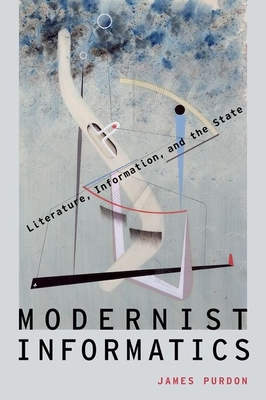
Modernist Informatics : Literature, Information, and the State
by
James Purdon
Book Details
Format
Hardback
Book Series
Modernist Literature and Culture
ISBN-10
0190211695
ISBN-13
9780190211691
Publisher
Oxford University Press Inc
Imprint
Oxford University Press Inc
Country of Manufacture
US
Country of Publication
GB
Publication Date
Jan 7th, 2016
Print length
242 Pages
Weight
454 grams
Dimensions
24.40 x 16.50 x 2.40 cms
Product Classification:
Literary studies: from c 1900 -Communication studiesMedia studies
KSh 17,400.00
Temporarily out of stock, due soon
0 in stock
Delivery Location
Delivery fee: Select location
Secure
Quality
Fast
Modernist Informatics traces the effects of an infomation culture in the early twentieth-century, where experimental approaches to narrative and to subjectivity began to compete with government archives for the right to represent the citizens of the modern security state.
Between steam and cybernetics lies a missing phase in the history of information culture. Beginning in the late nineteenth century, national governments and writers of fiction alike began to take an interest in information not simply as fact, nor yet as effortlessly transmissible data, but as an unusual and destabilizing new phenomenon. For some writers, such as Joseph Conrad and Walter Benjamin, ''information'' came to represent not effortless transmissibility, but rather an interruption of meaningful communication. For others - such as Elizabeth Bowen - such interruptions were themselves ways of making new kinds of meaning. The attempt to reimagine and redefine information produced a range of new informatic phenomena dedicated to its control: passports, files, and identity papers; the files of Mass-Observation movement; the literal and figurative blackout procedures of the Blitz; and the government-backed ''information film''. Modernist Informatics traces the effects of these new phenomena in early twentieth-century culture, where experimental approaches to narrative and to subjectivity began to compete with government archives for the right to represent the citizens of the modern security state. It argues that information and literary narrative have a history of entanglement as well as antagonism, and that this double relation was central to the cultural shaping of modernity.
Get Modernist Informatics by James Purdon at the best price and quality guaranteed only at Werezi Africa's largest book ecommerce store. The book was published by Oxford University Press Inc and it has 242 pages.
Customers Who Bought This Also Bought
Dreams in a Time of War
KSh 3,050.00

Modern Classics Penguin Essays of George Orwell
KSh 2,700.00

On Writing
KSh 2,000.00

To the Lighthouse
KSh 1,450.00

On Morrison
KSh 4,500.00

Africa''s Tarnished Name
KSh 700.00
C. S. Lewis
KSh 1,800.00

Life in Letters
KSh 5,400.00

By Grand Central Station I
KSh 1,800.00

Wide Sargasso Sea
KSh 1,800.00

Mom and Me and Mom
KSh 2,000.00

Jorge Luis Borges
KSh 1,800.00

