
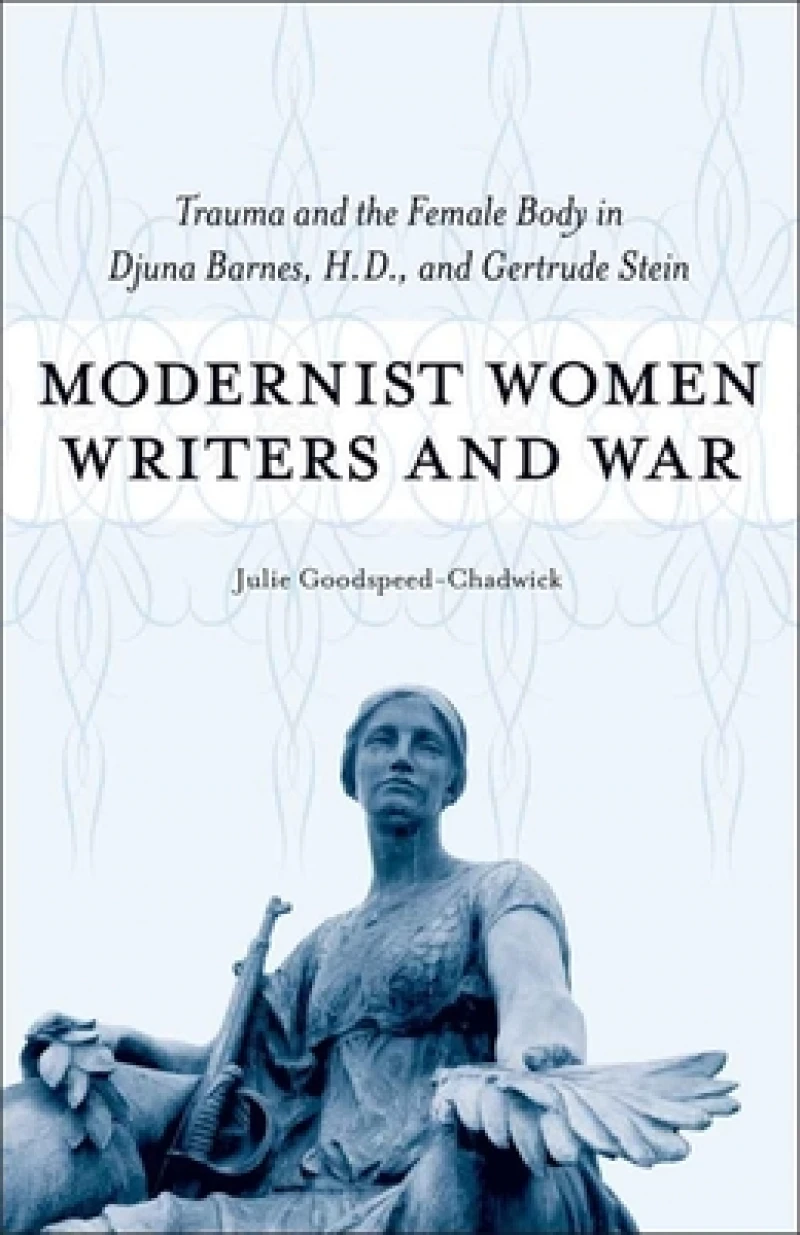
Modernist Women Writers and War : Trauma and the Female Body in Djuna Barnes, H.D., and Gertrude Stein
Book Details
Format
Hardback or Cased Book
ISBN-10
0807136816
ISBN-13
9780807136812
Publisher
Louisiana State University Press
Imprint
Louisiana State University Press
Country of Manufacture
US
Country of Publication
GB
Publication Date
Jan 1st, 2011
Print length
184 Pages
Weight
363 grams
Dimensions
21.80 x 14.20 x 2.00 cms
Product Classification:
Literature: history & criticismLiterature: history and criticism
Ksh 5,200.00
Temporarily out of stock, due soon
0 in stock
Delivery Location
Delivery fee: Select location
Secure
Quality
Fast
Examines important avant-garde writings by three American women authors and shows that during World Wars I and II a new kind of war literature emerged - one in which feminist investigation of war and trauma effectively counters the paradigmatic war experience long narrated by men.
In Modernist Women Writers and War, Julie Goodspeed-Chadwick examines important avant-garde writings by three American women authors and shows that during World Wars I and II a new kind of war literature emerged -- one in which feminist investigation of war and trauma effectively counters the paradigmatic war experience long narrated by men.
In the past, Goodspeed-Chadwick explains, scholars have not considered writings by women as part of war literature. They have limited ""war writing"" to works by men, such as William Butler Yeats's poem An Irish Airman Foresees His Death (1919), which relies on a male perspective: a pilot contemplates his forthcoming flight, his duty to his country, and his life in combat. But works by Djuna Barnes, H.D., and Gertrude Stein set in wartime reveal experiences and views of war markedly different from those of male writers. They write women and their bodies into their texts, thus creating space for female war writing, insisting on female presence in wartime, and, perhaps most significantly, critiquing war and patriarchal politics, often in devastating fashion.
Goodspeed-Chadwick begins with Barnes, who in her surrealist novel Nightwood (1936) emphasizes the actual perversity of war by placing it in contrast to the purported perverse and deviant behavior of her main characters. In her epic poem Trilogy (1944--1946), H.D. validates female suffering and projects a feminist, spiritual worldview that fosters healing from the ravages of war. Stein, for her part, in her experimental novel Mrs. Reynolds (1952) and her long love poem Lifting Belly (1953), captures her experience of the everyday reality of war on the home front, within the domestic economy of her household.
In these works, the female body stands as the primary textual marker or symbol of female identity -- an insistence on women's presence in both the text and in the world outside the book. The strategies employed by Barnes, H.D., and Stein in these texts serve to produce a new kind of writing, Goodspeed-Chadwick reveals, one that ineluctably constructs a female identity within, and authorship of, the war narrative.
In the past, Goodspeed-Chadwick explains, scholars have not considered writings by women as part of war literature. They have limited ""war writing"" to works by men, such as William Butler Yeats's poem An Irish Airman Foresees His Death (1919), which relies on a male perspective: a pilot contemplates his forthcoming flight, his duty to his country, and his life in combat. But works by Djuna Barnes, H.D., and Gertrude Stein set in wartime reveal experiences and views of war markedly different from those of male writers. They write women and their bodies into their texts, thus creating space for female war writing, insisting on female presence in wartime, and, perhaps most significantly, critiquing war and patriarchal politics, often in devastating fashion.
Goodspeed-Chadwick begins with Barnes, who in her surrealist novel Nightwood (1936) emphasizes the actual perversity of war by placing it in contrast to the purported perverse and deviant behavior of her main characters. In her epic poem Trilogy (1944--1946), H.D. validates female suffering and projects a feminist, spiritual worldview that fosters healing from the ravages of war. Stein, for her part, in her experimental novel Mrs. Reynolds (1952) and her long love poem Lifting Belly (1953), captures her experience of the everyday reality of war on the home front, within the domestic economy of her household.
In these works, the female body stands as the primary textual marker or symbol of female identity -- an insistence on women's presence in both the text and in the world outside the book. The strategies employed by Barnes, H.D., and Stein in these texts serve to produce a new kind of writing, Goodspeed-Chadwick reveals, one that ineluctably constructs a female identity within, and authorship of, the war narrative.
Get Modernist Women Writers and War by at the best price and quality guaranteed only at Werezi Africa's largest book ecommerce store. The book was published by Louisiana State University Press and it has pages.

