
Cart 0
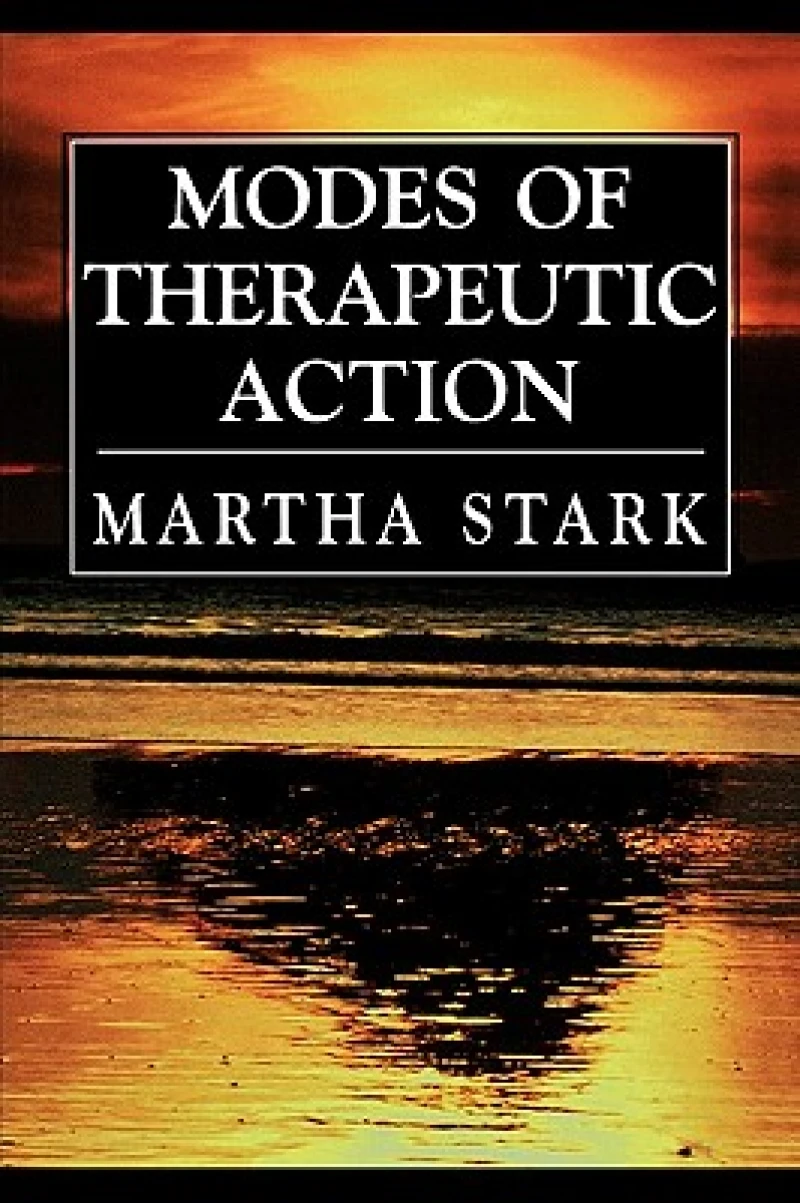
Modes of Therapeutic Action
Click to zoom

Share this book

Modes of Therapeutic Action

Book Details

Format Hardback or Cased Book
ISBN-10 0765702029
ISBN-13 9780765702029
Publisher Jason Aronson Publishers
Imprint Jason Aronson Publishers
Country of Manufacture GB
Country of Publication GB
Publication Date Apr 1st, 1999
Print length 384 Pages
Weight 834 grams
Dimensions 23.20 x 16.20 x 3.20 cms
Ksh 13,500.00
Manufactured on Demand 0 in stock

Delivery Location

Delivery fee: Select location

Secure
Quality
Fast
How do we position ourselves in relation to our patients? Do we participate as neutral object, as empathetic self-object, or as authentic subject? Do we strive to enhance the patient's knowledge, to provide a corrective experience, or to work at the intimate edge?
How do we position ourselves, moment by moment, in relation to our patients and how do these positions inform both what we come to know about our patients and how we intervene? Do we participate as neutral object, as empathic self-object, or as authentic subject? Do we strive to enhance the patient''s knowledge, to provide a corrective experience, or to work at the intimate edge? In an effort to answer these and other clinically relevant questions about the process of psychotherapeutic change, Martha Stark has developed a comprehensive theory of therapeutic action that integrates the interpretive perspective of classical psychoanalysis (Model 1), the corrective-provision perspective of self psychology and those object relations theories emphasizing the internal ''absence of good'' (Model 2), and the relational perspective of contemporary psychoanalysis and those object relations theories emphasizing the internal ''presence of bad'' (Model 3). Model I is about knowledge and insight. It is a one-person psychology because its focus is on the patient and the internal workings of her mind. Model 2 is about corrective experience. It is a one-and-a-half-person psychology because its emphasis is not so much on the relationship per se, but on the filling in of the patient''s deficits by way of the therapist''s corrective provision; what ultimately matters is not who the therapist is, but, rather, what she can offer. Model 3 is about relationship, the real relationship. It is a two-person psychology because its focus is on patients and therapists who relate to each other as real people; it is about mutuality, reciprocity, and intersubjectivity. Whereas Model 2 is about ''give'' and involves the therapist''s bringing the best of who she is into the room, Model 3 is about ''give-and-take'' and involves the therapist''s bringing all of who she is into the room. As Dr. Stark repeatedly demonstrates in numerous clinical vignettes, the three modes of therapeutic actionDknowledge, experience, and relationshipDare not mutually exclusive but mutually enhancing. If, as therapists, we can tolerate the necessary uncertainty that comes with the recognition that there is an infinite variety of possibilities for change, then we will be able to enhance the therapeutic potential of each moment and optimize our effectiveness as clinicians.

Get Modes of Therapeutic Action by at the best price and quality guaranteed only at Werezi Africa's largest book ecommerce store. The book was published by Jason Aronson Publishers and it has pages.


Mind, Body, & Spirit

Shopping Cart

Africa largest book store

Sub Total:
Ebooks

Digital Library
Coming Soon

Our digital collection is currently being curated to ensure the best possible reading experience on Werezi. We'll be launching our Ebooks platform shortly.