
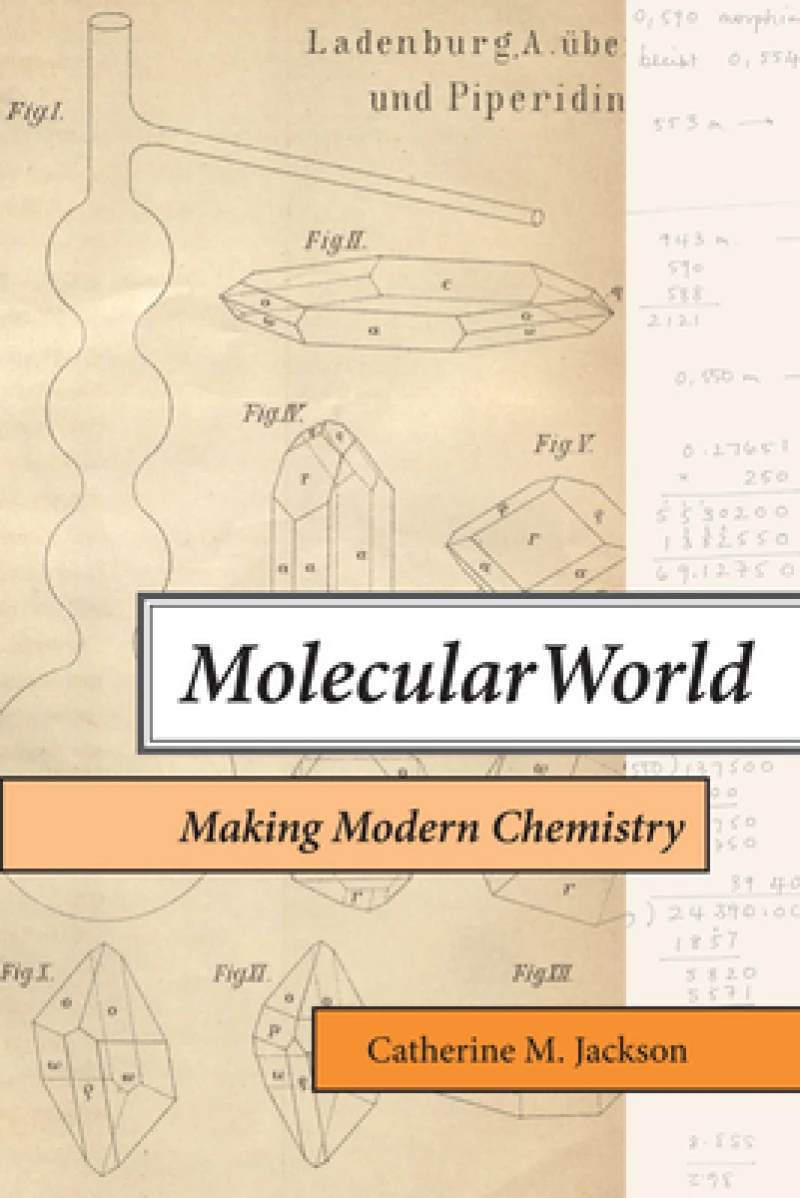
Molecular World : Making Modern Chemistry
Book Details
Format
Paperback / Softback
ISBN-10
0262545543
ISBN-13
9780262545549
Publisher
MIT Press Ltd
Imprint
MIT Press
Country of Manufacture
GB
Country of Publication
GB
Publication Date
Jul 4th, 2023
Print length
460 Pages
Weight
734 grams
Dimensions
15.20 x 23.00 x 3.70 cms
Product Classification:
Science: general issues
Ksh 12,950.00
Werezi Extended Catalogue
Delivery in 14 days
3 copies in stock
Delivery Location
Delivery fee: Select location
Delivery in 14 days
Secure
Quality
Fast
A compelling and innovative account that reshapes our view of nineteenth-century chemistry, explaining a critical period in chemistry’s quest to understand and manipulate organic nature.
According to existing histories, theory drove chemistry’s remarkable nineteenth-century development. In Molecular World, Catherine M. Jackson shows instead how novel experimental approaches combined with what she calls “laboratory reasoning” enabled chemists to bridge wet chemistry and abstract concepts and, in so doing, create the molecular world. Jackson introduces a series of practice-based breakthroughs that include chemistry’s move into lampworked glassware, the field’s turn to synthesis and subsequent struggles to characterize and differentiate the products of synthesis, and the gradual development of institutional chemical laboratories, an advance accelerated by synthesis and the dangers it introduced.
Jackson’s historical reassessment emerges from the investigation of alkaloids by German chemists Justus Liebig, August Wilhelm Hofmann, and Albert Ladenburg. Stymied in his own research, Liebig steered his student Hofmann into pioneering synthesis as a new investigative method. Hofmann’s practice-based laboratory reasoning produced a major theoretical advance, but he failed to make alkaloids. That landmark fell to Ladenburg, who turned to cutting-edge theory only after his successful synthesis.
In telling the story of these scientists and their peers, Jackson reveals organic synthesis as the ground chemists stood upon to forge a new relationship between experiment and theory—with far-reaching consequences for chemistry as a discipline.
According to existing histories, theory drove chemistry’s remarkable nineteenth-century development. In Molecular World, Catherine M. Jackson shows instead how novel experimental approaches combined with what she calls “laboratory reasoning” enabled chemists to bridge wet chemistry and abstract concepts and, in so doing, create the molecular world. Jackson introduces a series of practice-based breakthroughs that include chemistry’s move into lampworked glassware, the field’s turn to synthesis and subsequent struggles to characterize and differentiate the products of synthesis, and the gradual development of institutional chemical laboratories, an advance accelerated by synthesis and the dangers it introduced.
Jackson’s historical reassessment emerges from the investigation of alkaloids by German chemists Justus Liebig, August Wilhelm Hofmann, and Albert Ladenburg. Stymied in his own research, Liebig steered his student Hofmann into pioneering synthesis as a new investigative method. Hofmann’s practice-based laboratory reasoning produced a major theoretical advance, but he failed to make alkaloids. That landmark fell to Ladenburg, who turned to cutting-edge theory only after his successful synthesis.
In telling the story of these scientists and their peers, Jackson reveals organic synthesis as the ground chemists stood upon to forge a new relationship between experiment and theory—with far-reaching consequences for chemistry as a discipline.
Get Molecular World by at the best price and quality guaranteed only at Werezi Africa's largest book ecommerce store. The book was published by MIT Press Ltd and it has pages.

