
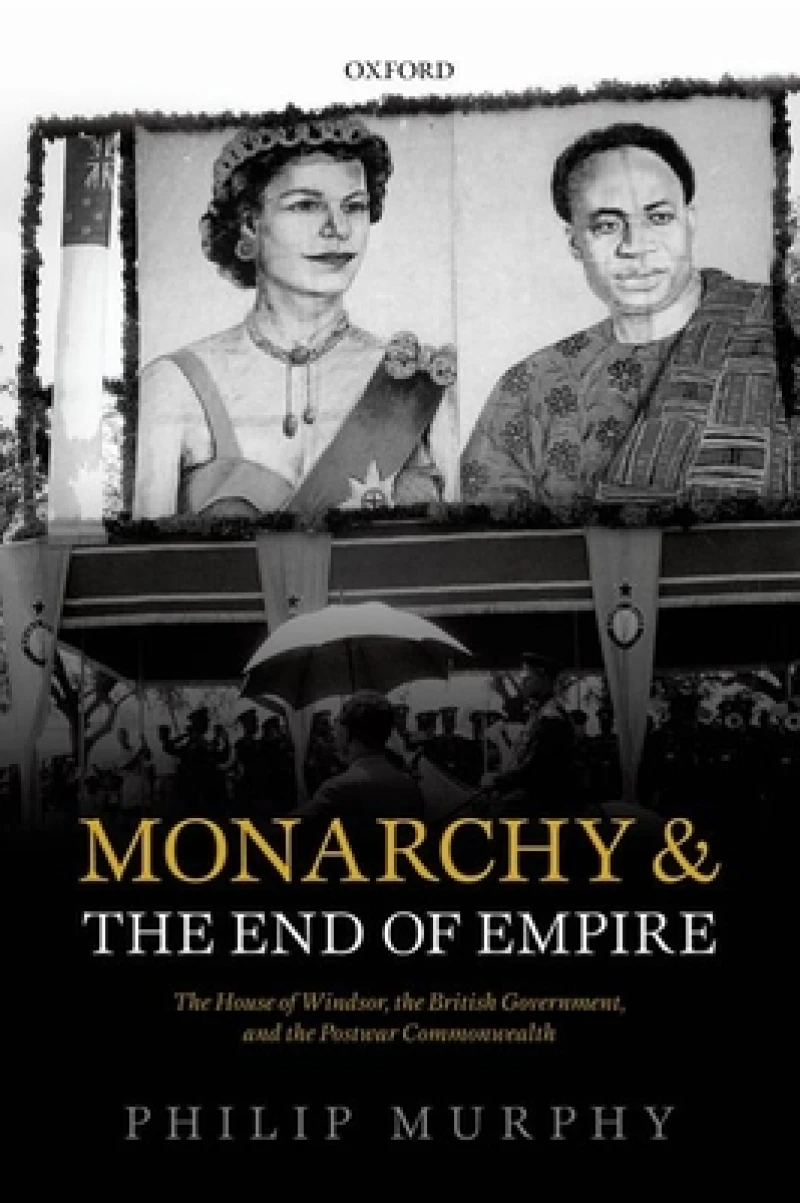
Monarchy and the End of Empire : The House of Windsor, the British Government, and the Postwar Commonwealth
Book Details
Format
Paperback / Softback
ISBN-10
0198757697
ISBN-13
9780198757696
Publisher
Oxford University Press
Imprint
Oxford University Press
Country of Manufacture
GB
Country of Publication
GB
Publication Date
Nov 12th, 2015
Print length
258 Pages
Weight
420 grams
Dimensions
15.80 x 23.50 x 3.20 cms
Product Classification:
Later 20th century c 1950 to c 1999HistoriographyBritish & Irish historyPostwar 20th century history, from c 1945 to c 2000Colonialism & imperialismNational liberation & independence, post-colonialismPolitical structure & processesPolitical structure and processesInternational relationsHistoryHistoriographyEuropean historyColonialism and imperialismNational liberation and independence
Ksh 9,050.00
Werezi Extended Catalogue
0 in stock
Delivery Location
Delivery fee: Select location
Secure
Quality
Fast
Examines the relationship between the British government, the Palace, and the modern Commonwealth since 1945 and argues that the monarchy's relationship with the Commonwealth, which was initially promoted by the UK as a means of strengthening imperial ties, increasingly became an impediment to British foreign policy.
This unique and meticulously-researched study examines the triangular relationship between the British government, the Palace, and the modern Commonwealth since 1945. It has two principal areas of focus: the monarch''s role as sovereign of a series of Commonwealth Realms, and quite separately as head of the Commonwealth. It traces how, in the early part of the twentieth century, the British government promoted the Crown as a counterbalance to the centrifugal forces that were drawing the Empire apart. Ultimately, however, with newly-independent India''s determination to become a republic in the late 1940s, Britain had to accept that allegiance to the Crown could no longer be the common factor binding the Commonwealth together. It therefore devised the notion of the headship of the Commonwealth as a means of enabling a republican India ''to continue to give the monarchy a pivotal symbolic role and therefore to remain in the Commonwealth.''In the years of rapid decolonization which followed 1945, it became clear that this elaborate constitutional infrastructure posed significant problems for British foreign policy. The system of Commonwealth Realms was a recipe for confusion and misunderstanding. Policy makers in the UK increasingly saw it as a liability in terms of Britain''s relations with its former colonies, so much so that by the early 1960s they actively sought to persuade African nationalist leaders to adopt republican constitutions on independence. The headship of the Commonwealth also became a cause for concern, partly because it offered opportunities for the monarch to act without ministerial advice, and partly because it tended to tie the British government to what many within the UK had begun to regard as a largely redundant institution. Philip Murphy employs a large amount of previously-unpublished documentary evidence to argue that the monarchy''s relationship with the Commonwealth, which was initially promoted by the UK as a means of strengthening Imperial ties, increasingly became an source of frustration for British foreign policy makers.
Get Monarchy and the End of Empire by at the best price and quality guaranteed only at Werezi Africa's largest book ecommerce store. The book was published by Oxford University Press and it has pages.

