
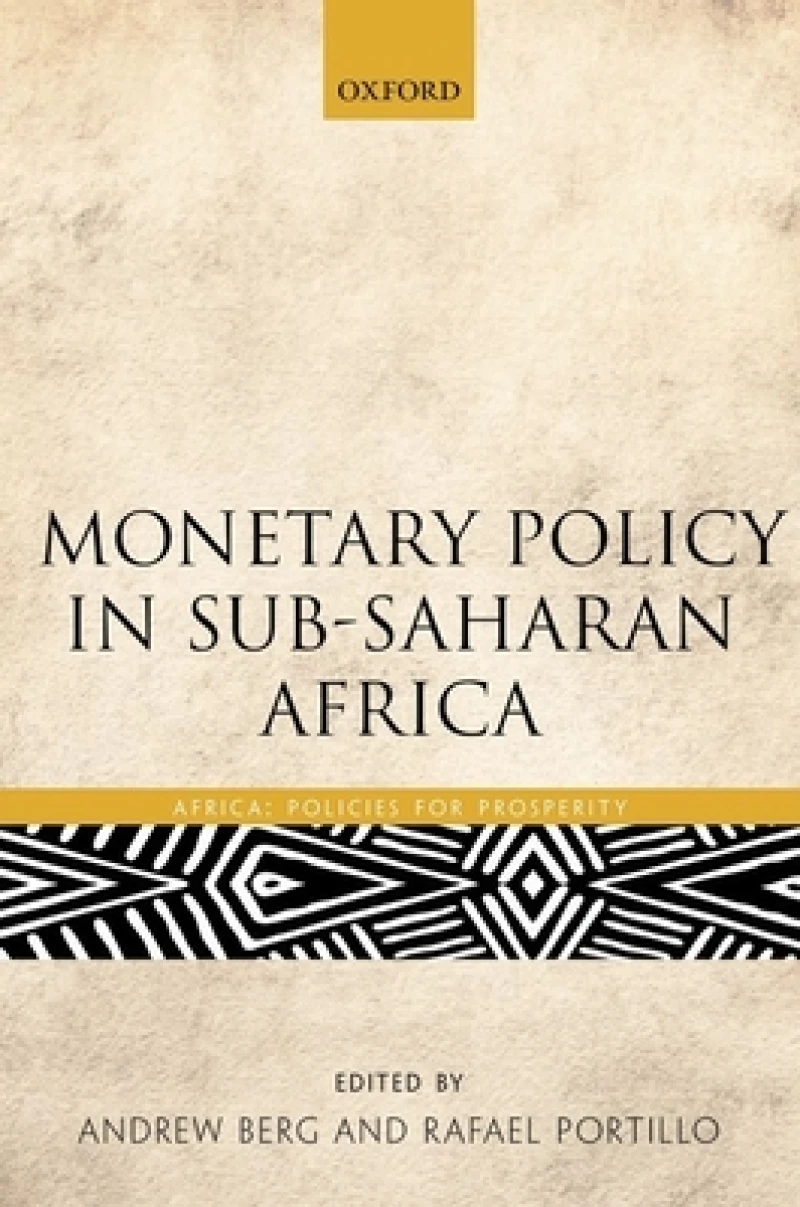
Monetary Policy in Sub-Saharan Africa
Book Details
Format
Hardback or Cased Book
Book Series
Africa: Policies for Prosperity
ISBN-10
019878581X
ISBN-13
9780198785811
Publisher
Oxford University Press
Imprint
Oxford University Press
Country of Manufacture
GB
Country of Publication
GB
Publication Date
Mar 22nd, 2018
Print length
474 Pages
Weight
804 grams
Dimensions
16.10 x 24.50 x 3.30 cms
Product Classification:
MacroeconomicsMonetary economicsDevelopment economics & emerging economiesFinance
Ksh 18,500.00
Manufactured on Demand
0 in stock
Delivery Location
Delivery fee: Select location
Secure
Quality
Fast
Low-income countries in sub-Saharan Africa present unique monetary policy challenges, from the high share of volatile food in consumption to underdeveloped financial markets. This book draws on the International Monetary Fund's research and practice to uncover how monetary policy in this region currently operates, and what changes should be made.
Low-income countries in sub-Saharan Africa present unique monetary policy challenges, from the high share of volatile food in consumption to underdeveloped financial markets; however most academic and policy work on monetary policy is aimed at much richer countries. Can economic models and methods invented for rich countries even be adapted and applied here? How does and should monetary policy work in sub-Saharan African? Monetary Policy in Sub-Saharan Africa answers these questions and provides practical tools and policy guidance to respond to the complex challenges of this region.Most countries in sub-Saharan Africa have made great progress in stabilizing inflation over the past two decades. As they have achieved a degree of basic macroeconomic stability, policymakers are looking to avoid policy misalignments and respond appropriately to shocks in order to achieve stability and growth. Officially, they often have adopted "money targeting" frameworks, a regime that has long disappeared from almost all advanced and even emerging-market discussions. In practice, though, they are in many cases finding current regimes lacking, with opaque and sometimes inconsistent objectives, inadequate transmission of policy to the economy, and difficulties in responding to supply shocks. Monetary Policy in Sub-Saharan Africa takes a new approach by applying dynamic general equilibrium models suitably adapted to reflect key features of low-income countries for the analysis of monetary policy in sub-Saharan African countries.Using a progressive approach derived from the International Monetary Fund''s extensive practice and research, Monetary Policy in Sub-Saharan Africa seeks to address what we know about the empirics of monetary transmission in low-income countries, how monetary policy can work in countries characterized by underdeveloped financial markets and opaque policy regimes, and how we can use empirical and theoretical methods largely derived in advanced countries to answer these questions. It then uses these key topics to guide policymakers as they attempt to adjust food price, terms of trade, aid shocks, and the effects of the global financial crisis.
Get Monetary Policy in Sub-Saharan Africa by at the best price and quality guaranteed only at Werezi Africa's largest book ecommerce store. The book was published by Oxford University Press and it has pages.

