
Cart 0
Money, Corruption, and Political Competition in Established and Emerging Democracies
Click to zoom

Share this book

Money, Corruption, and Political Competition in Established and Emerging Democracies

Book Details

Format Hardback or Cased Book
ISBN-10 0739170759
ISBN-13 9780739170755
Publisher Bloomsbury Publishing Plc
Imprint Lexington Books
Country of Manufacture GB
Country of Publication GB
Publication Date Sep 13th, 2012
Print length 228 Pages
Weight 496 grams
Dimensions 23.90 x 18.50 x 2.50 cms
Ksh 19,350.00
Manufactured on Demand Delivery in 29 days

Delivery Location

Delivery fee: Select location

Delivery in 29 days

Secure
Quality
Fast
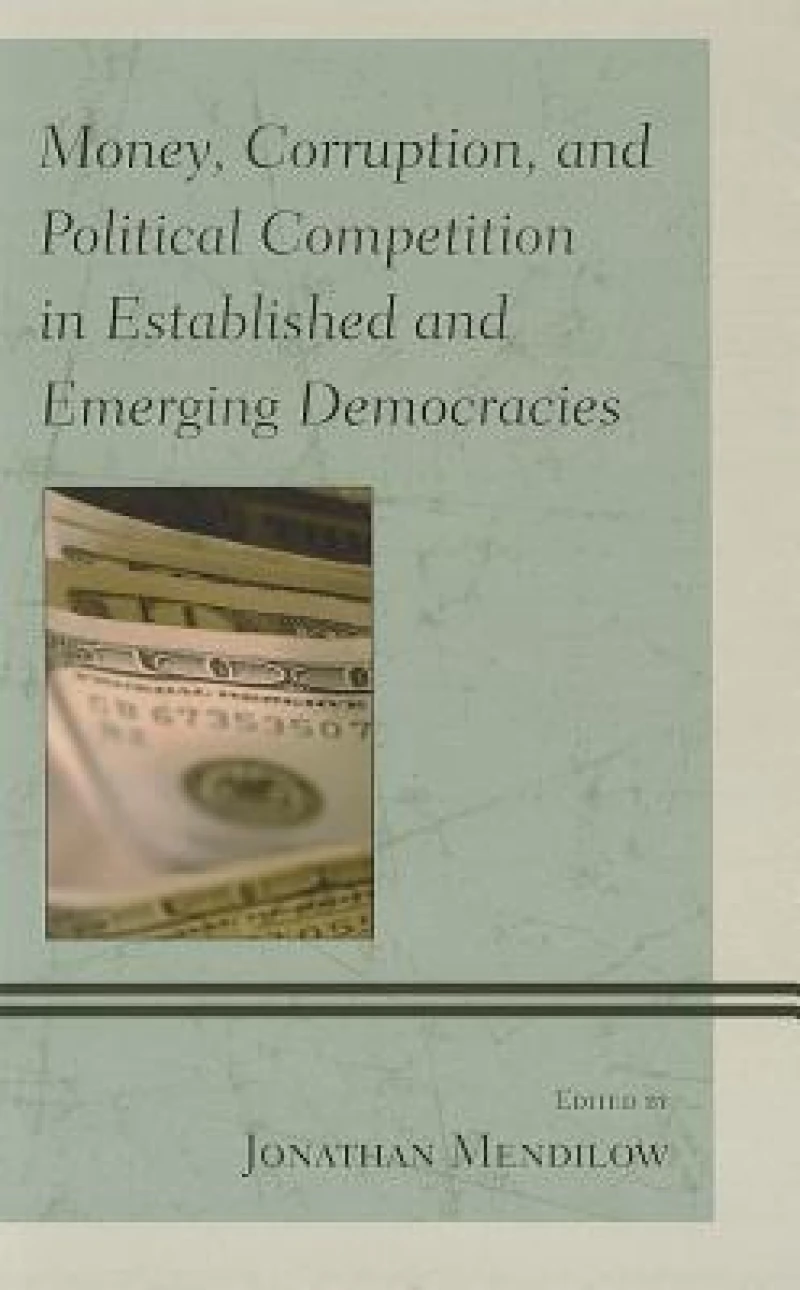
Money, Corruption, and Competition in Established and Emerging Democracies, edited by Jonathan Mendilow, investigates the effectiveness of public subsidization of political competition as an anti-corruption mechanism. The exponential growth of advertising and polling techniques, the need to reach wider publics, and the inability to raise commensurate funds from ordinary members confront parties with ever-increasing difficulty to budget their apparatus. The use of contribution solicitation from corporations and wealthy individuals, drawing on the unpaid use of public services as sources or the imposition of “contributions” from government employees and contractors, and the “sale” of policies, concessions, or access to policy makers are commonly perceived as solutions corrosive to democratic governance. Such solutions shade into one another. Even where provider–consumer connections are only implied, donations by corporations and rich donors involve the desire to surmount the democratic constraints of “one man one vote” in order to gain disproportionate influence on the policy making process. An alternative resolution of the budgetary conundrum adopted by most democracies is the subsidization of political competition. This collection clarifies outcomes that are critical to an assessment of the ramifications for modern democracy. What do Western countries’ experiences with public funding tell us about unforeseen changes in the role of parties and their behavior that are seen as additional costs of the public subsidization of political competition? What can we learn from experiments with subsidization in different contexts about possible pitfalls that should be taken into account, especially when public subsidies are adopted by new and emerging democracies? Answers to such questions are critical if democratic principles and institutions that were formed in an earlier age are to be adjusted to modern needs. In a politically divisive climate, the contributors to this essential collection provide thoughtful insight to some of the most important public and economic policy questions facing our world today.

Get Money, Corruption, and Political Competition in Established and Emerging Democracies by at the best price and quality guaranteed only at Werezi Africa's largest book ecommerce store. The book was published by Bloomsbury Publishing Plc and it has pages.


Mind, Body, & Spirit

Price

Ksh 19,350.00

Shopping Cart

Africa largest book store

Sub Total:
Ebooks

Digital Library
Coming Soon

Our digital collection is currently being curated to ensure the best possible reading experience on Werezi. We'll be launching our Ebooks platform shortly.