
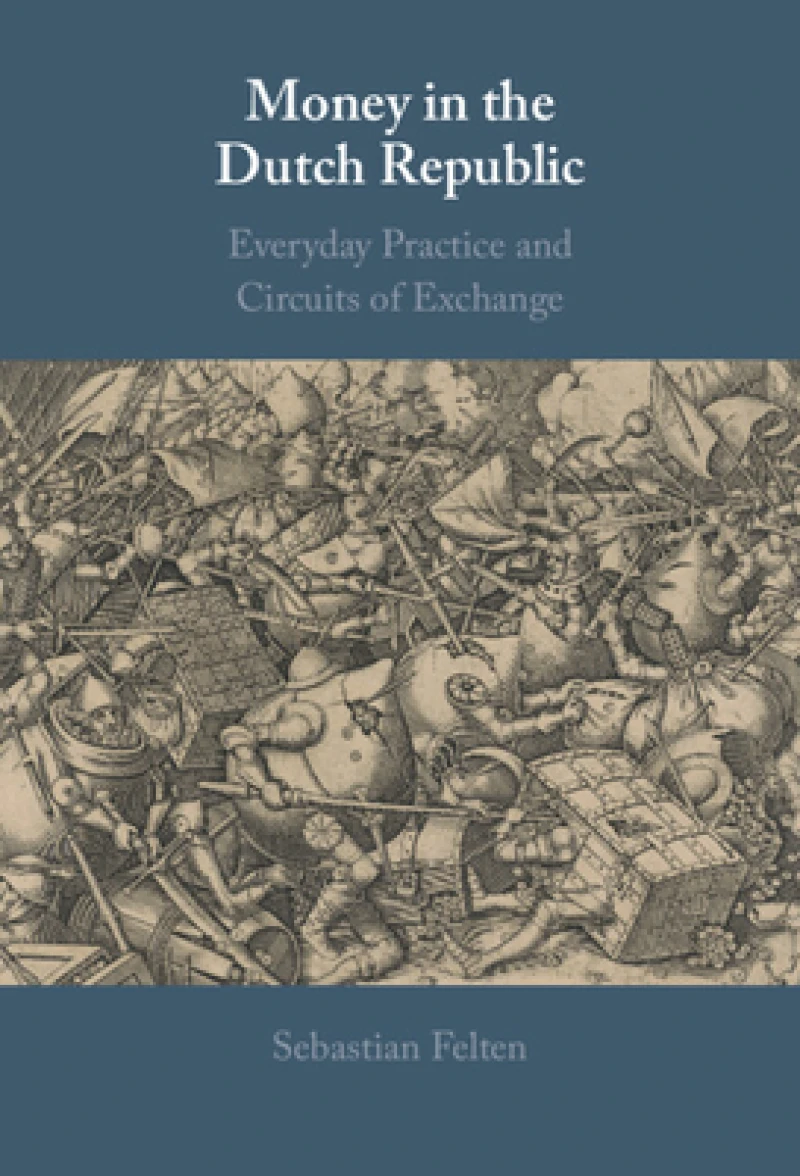
Money in the Dutch Republic : Everyday Practice and Circuits of Exchange
Book Details
Format
Hardback or Cased Book
ISBN-10
1009098845
ISBN-13
9781009098847
Publisher
Cambridge University Press
Imprint
Cambridge University Press
Country of Manufacture
GB
Country of Publication
GB
Publication Date
Mar 10th, 2022
Print length
290 Pages
Weight
552 grams
Dimensions
15.90 x 29.30 x 2.40 cms
Product Classification:
Economic history
Ksh 14,750.00
Manufactured on Demand
0 in stock
Delivery Location
Delivery fee: Select location
Secure
Quality
Fast
Sebastian Felten examines regional and global circuits of monetary exchange in early modern Europe by analysing everyday practices in the Dutch Republic. He considers how peasants and craftsmen, stewards and churchmen, merchants and metallurgists combined many types of money in their everyday lives and thus fashioned plural monetary system.
The Dutch Republic was an important hub in the early modern world-economy, a place where hundreds of monies were used alongside each other. Sebastian Felten explores regional, European and global circuits of exchange by analysing everyday practices in Dutch cities and villages in the period 1600-1850. He reveals how for peasants and craftsmen, stewards and churchmen, merchants and metallurgists, money was an everyday social technology that helped them to carve out a livelihood. With vivid examples of accounting and assaying practices, Felten offers a key to understanding the internal logic of early modern money. This book uses new archival evidence and an approach informed by the history of technology to show how plural currencies gave early modern users considerable agency. It explores how the move to uniform national currency limited this agency in the nineteenth century and thus helps us make sense of the new plurality of payments systems today.
Get Money in the Dutch Republic by at the best price and quality guaranteed only at Werezi Africa's largest book ecommerce store. The book was published by Cambridge University Press and it has pages.

