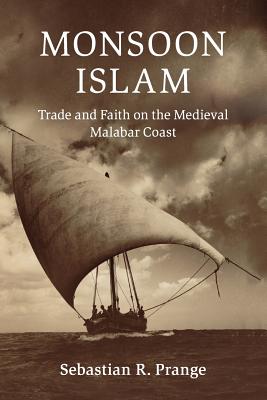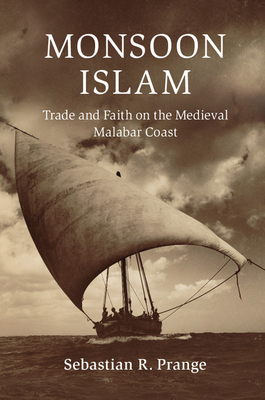
Monsoon Islam : Trade and Faith on the Medieval Malabar Coast
Book Details
Format
Hardback
Book Series
Cambridge Oceanic Histories
ISBN-10
1108424384
ISBN-13
9781108424387
Publisher
Cambridge University Press
Imprint
Cambridge University Press
Country of Manufacture
GB
Country of Publication
GB
Publication Date
May 3rd, 2018
Print length
358 Pages
Weight
658 grams
Dimensions
23.30 x 16.00 x 2.20 cms
Product Classification:
Asian historyAsian history
KSh 20,900.00
Currently unavailable
0 in stock
Delivery Location
Delivery fee: Select location
Secure
Quality
Fast
Explores how the interaction of Muslim merchants with non-Muslim societies in medieval Indian Ocean ports resulted in a distinct strand of Islamic thought and practice. This trajectory of Islam, marked by cosmopolitanism, cultural exchange, and pragmatic adaptation, continues to shape how the faith is lived across much of monsoon Asia.
Between the twelfth and sixteenth centuries, a distinct form of Islamic thought and practice developed among Muslim trading communities of the Indian Ocean. Sebastian R. Prange argues that this 'monsoon Islam' was shaped by merchants not sultans, forged by commercial imperatives rather than in battle, and defined by the reality of Muslims living within non-Muslim societies. Focusing on India's Malabar Coast, the much-fabled 'land of pepper', Prange provides a case study of how monsoon Islam developed in response to concrete economic, socio-religious, and political challenges. Because communities of Muslim merchants across the Indian Ocean were part of shared commercial, scholarly, and political networks, developments on the Malabar Coast illustrate a broader, trans-oceanic history of the evolution of Islam across monsoon Asia. This history is told through four spaces that are examined in their physical manifestations as well as symbolic meanings: the port, the mosque, the palace, and the sea.
Get Monsoon Islam by Sebastian R. Prange at the best price and quality guaranteed only at Werezi Africa's largest book ecommerce store. The book was published by Cambridge University Press and it has 358 pages.
Customers Who Bought This Also Bought

From Third World to First
KSh 3,200.00

Breakneck
KSh 4,500.00

India After Gandhi
KSh 4,850.00

Anarchy
KSh 2,700.00

On China
KSh 3,400.00
Apostles of Development
KSh 5,600.00
Shattered Lands
KSh 2,000.00
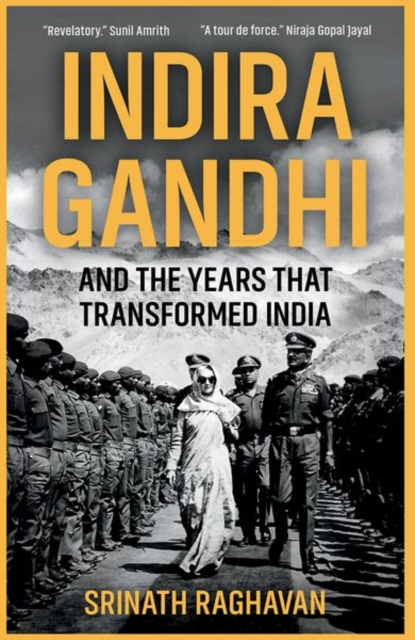
Indira Gandhi and the Years that Transformed India
KSh 5,050.00
India: A Wounded Civilization
KSh 2,000.00
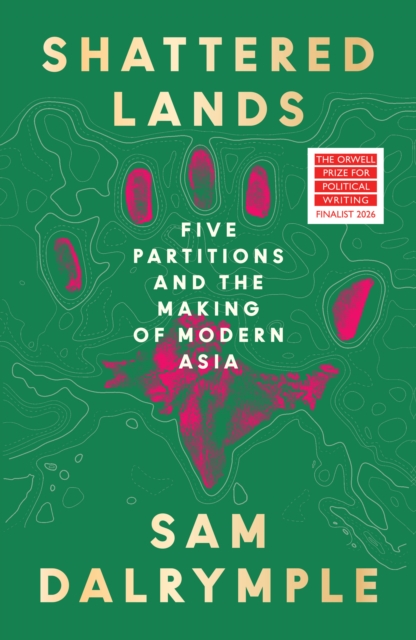
Shattered Lands
KSh 3,200.00

Games without Rules
KSh 2,900.00

Ghost Nation
KSh 3,950.00