
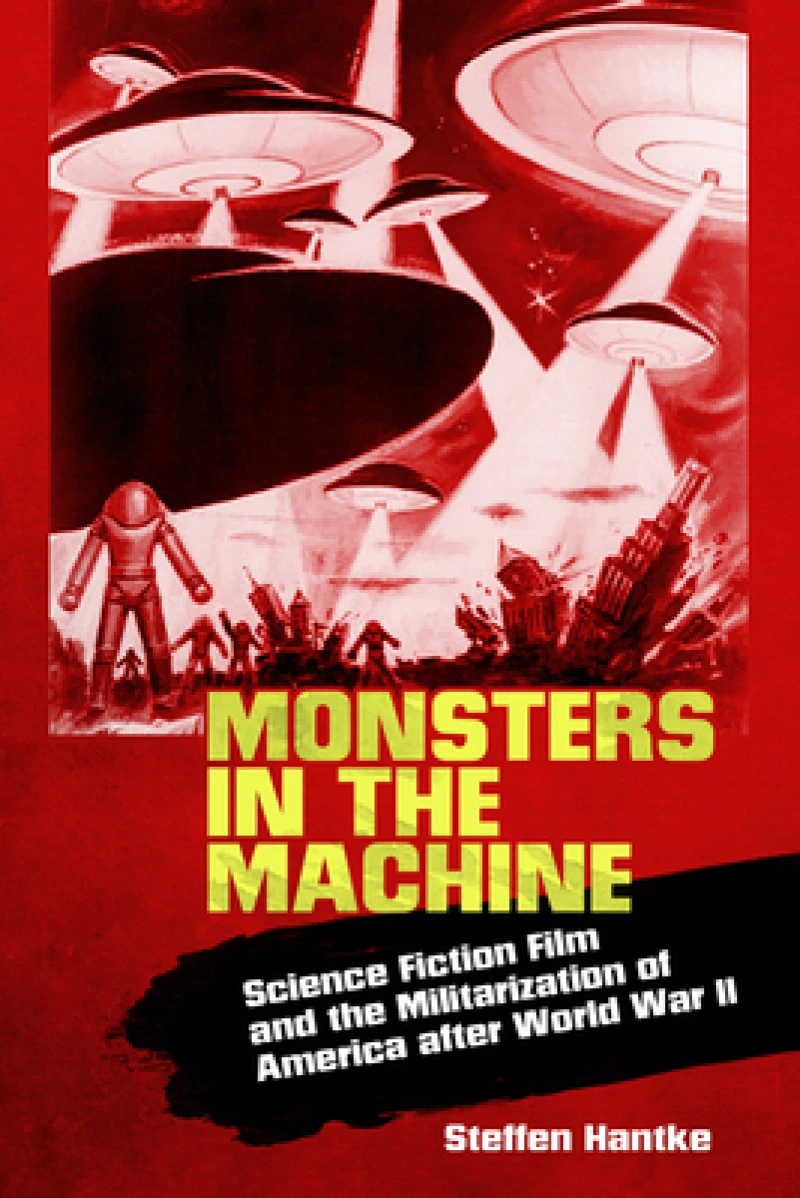
Monsters in the Machine : Science Fiction Film and the Militarization of America After World War II
Book Details
Format
Hardback or Cased Book
ISBN-10
1496805658
ISBN-13
9781496805652
Publisher
University Press of Mississippi
Imprint
University Press of Mississippi
Country of Manufacture
US
Country of Publication
GB
Publication Date
Jun 20th, 2016
Print length
240 Pages
Weight
512 grams
Dimensions
16.20 x 23.60 x 2.10 cms
Product Classification:
Film: styles & genres
Ksh 15,850.00
Werezi Extended Catalogue
0 in stock
Delivery Location
Delivery fee: Select location
Secure
Quality
Fast
During the 1950s and early 1960s, the American film industry produced a distinct cycle of films situated on the boundary between horror and science fiction. Using the familiar imagery of science fiction - from alien invasions to biological mutation and space travel - the vast majority of these films subscribed to the effects and aesthetics of horror film, anticipating the dystopian turn of many science fiction films to come. Departing from projections of American technological awe and optimism, these films often evinced paranoia, unease, fear, shock, and disgust. Not only did these movies address technophobia and its psychological, social, and cultural corollaries; they also returned persistently to the military as a source of character, setting, and conflict. Commensurate with a state of perpetual mobilization, the US military comes across as an inescapable presence in American life. Regardless of their genre, Steffen Hantke argues that these films have long been understood as allegories of the Cold War. They register anxieties about two major issues of the time: atomic technologies, especially the testing and use of nuclear weapons, as well as communist aggression and/or subversion. Setting out to question, expand, and correct this critical argument, Hantke follows shifts and adjustments prompted by recent scholarly work into the technological, political, and social history of America in the 1950s. Based on this revised historical understanding, science fiction films appear in a new light as they reflect on the troubled memories of World War II, the emergence of the military-industrial complex, the postwar rewriting of the American landscape, and the relative insignificance of catastrophic nuclear war compared to America's involvement in postcolonial conflicts around the globe.
During the 1950s and early 1960s, the American film industry produced a distinct cycle of films situated on the boundary between horror and science fiction. Steffen Hantke argues that these films have long been understood as allegories of the Cold War. Setting out to question, expand, and correct this critical argument, Hantke follows shifts and adjustments prompted by recent scholarly work into the technological, political, and social history of America in the 1950s.
During the 1950s and early 1960s, the American film industry produced a distinct cycle of films situated on the boundary between horror and science fiction. Using the familiar imagery of science fiction - from alien invasions to biological mutation and space travel - the vast majority of these films subscribed to the effects and aesthetics of horror film, anticipating the dystopian turn of many science fiction films to come. Departing from projections of American technological awe and optimism, these films often evinced paranoia, unease, fear, shock, and disgust. Not only did these movies address technophobia and its psychological, social, and cultural corollaries; they also returned persistently to the military as a source of character, setting, and conflict. Commensurate with a state of perpetual mobilization, the US military comes across as an inescapable presence in American life.
Regardless of their genre, Steffen Hantke argues that these films have long been understood as allegories of the Cold War. They register anxieties about two major issues of the time: atomic technologies, especially the testing and use of nuclear weapons, as well as communist aggression and/or subversion. Setting out to question, expand, and correct this critical argument, Hantke follows shifts and adjustments prompted by recent scholarly work into the technological, political, and social history of America in the 1950s. Based on this revised historical understanding, science fiction films appear in a new light as they reflect on the troubled memories of World War II, the emergence of the military-industrial complex, the postwar rewriting of the American landscape, and the relative insignificance of catastrophic nuclear war compared to America''s involvement in postcolonial conflicts around the globe.
Regardless of their genre, Steffen Hantke argues that these films have long been understood as allegories of the Cold War. They register anxieties about two major issues of the time: atomic technologies, especially the testing and use of nuclear weapons, as well as communist aggression and/or subversion. Setting out to question, expand, and correct this critical argument, Hantke follows shifts and adjustments prompted by recent scholarly work into the technological, political, and social history of America in the 1950s. Based on this revised historical understanding, science fiction films appear in a new light as they reflect on the troubled memories of World War II, the emergence of the military-industrial complex, the postwar rewriting of the American landscape, and the relative insignificance of catastrophic nuclear war compared to America''s involvement in postcolonial conflicts around the globe.
Get Monsters in the Machine by at the best price and quality guaranteed only at Werezi Africa's largest book ecommerce store. The book was published by University Press of Mississippi and it has pages.

