
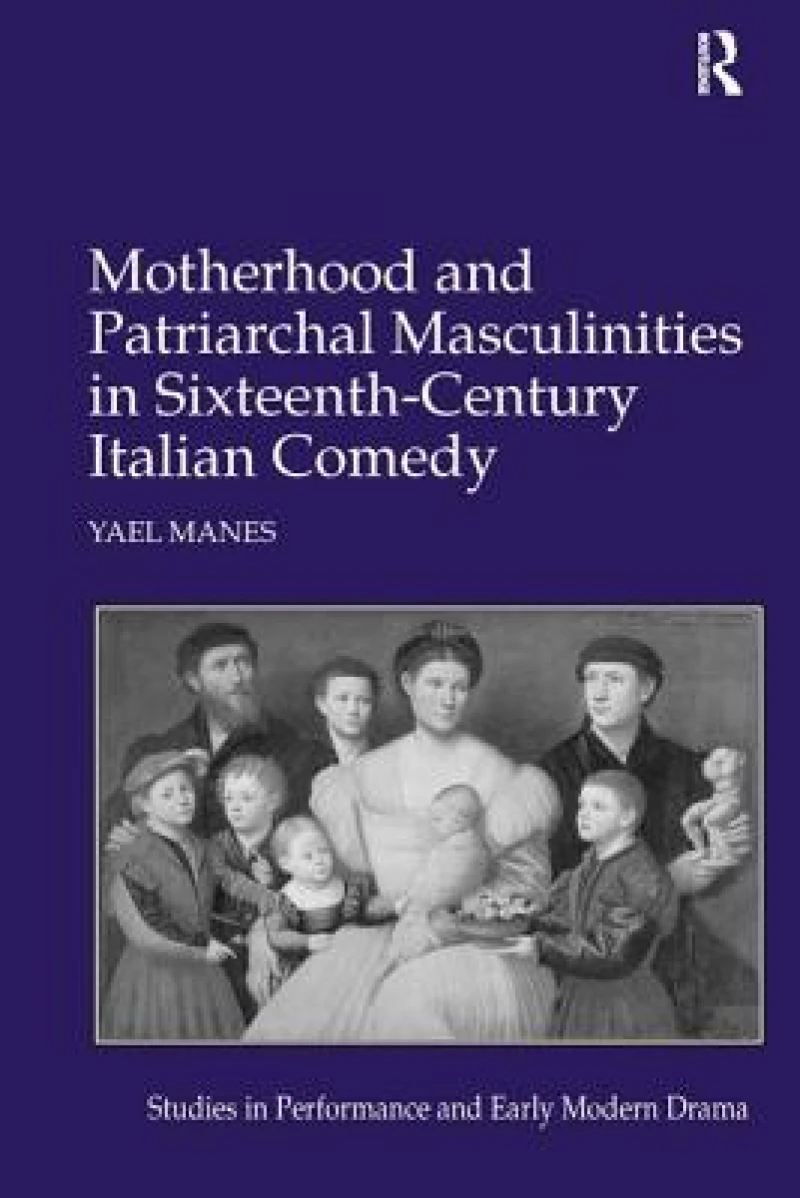
Motherhood and Patriarchal Masculinities in Sixteenth-Century Italian Comedy
by
Yael Manes
Book Details
Format
Hardback or Cased Book
ISBN-10
1409434400
ISBN-13
9781409434405
Publisher
Taylor & Francis Ltd
Imprint
Routledge
Country of Manufacture
GB
Country of Publication
GB
Publication Date
Dec 28th, 2011
Print length
160 Pages
Weight
453 grams
Product Classification:
Literary studies: c 1500 to c 1800
Ksh 28,800.00
Werezi Extended Catalogue
0 in stock
Delivery Location
Delivery fee: Select location
Secure
Quality
Fast
Exploring individual and collective formation of gender identities, this book contributes to scholarly discourses by examining plays in the genre of 'erudite comedy' (commedia erudita), which was extremely popular among sixteenth-century Italians from the elite classes.
Exploring individual and collective formation of gender identities, this book contributes to current scholarly discourses by examining plays in the genre of ''erudite comedy'' (commedia erudita), which was extremely popular among sixteenth-century Italians from the elite classes. Author Yael Manes investigates five erudite comedies-Ludovico Ariosto''s I suppositi (1509), Niccolò Machiavelli''s La Mandragola (1518) and Clizia (1525), Antonio Landi''s Il commodo (1539), and Giovan Maria Cecchi''s La stiava (1546)-to consider how erudite comedies functioned as ideological battlefields where the gender system of patriarchy was examined, negotiated, and critiqued. These plays reflect the patriarchal order of their elite social milieu, but they also offer a unique critical vantage point on the paradoxical formation of patriarchal masculinity. On the one hand, patriarchal ideology rejects the mother and forbids her as an object of desire; on the other hand, patriarchal male identity revolves around representations of motherhood. Ultimately, the comedies reflect the desire of the Italian Renaissance male elite for women who will provide children to their husbands but not actively assume the role of a mother. In sum, Manes reveals a wide cultural understanding that motherhood-as an activity that women undertake, not simply a relational position they occupy-challenges patriarchy because it bestows women with agency, power, and authority. Manes here recovers the complexity of Renaissance Italian discourse on gender and identity formation by approaching erudite comedies not only as mirrors of their audiences but also as vehicles for contemporary audiences'' ideological, psychological, and emotional expressions.
Get Motherhood and Patriarchal Masculinities in Sixteenth-Century Italian Comedy by at the best price and quality guaranteed only at Werezi Africa's largest book ecommerce store. The book was published by Taylor & Francis Ltd and it has pages.

