

Mountain Arapesh : Volume One
Book Details
Format
Hardback
ISBN-10
0367075113
ISBN-13
9780367075118
Publisher
Taylor & Francis Ltd
Imprint
Routledge
Country of Manufacture
GB
Country of Publication
GB
Publication Date
Jul 31st, 2024
Print length
372 Pages
Weight
860 grams
Product Classification:
SociologySocial & cultural anthropology, ethnographySocial and cultural anthropology
KSh 10,050.00
Currently unavailable
0 in stock
Delivery Location
Delivery fee: Select location
Secure
Quality
Fast
For approximately eight months during 1931-1932, anthropologist Margaret Mead lived with and studied the Mountain Arapesh-a segment of the population of the East Sepik Province, Papua New Guinea. She found a culture based on simplicity, sensitivity, and cooperation.
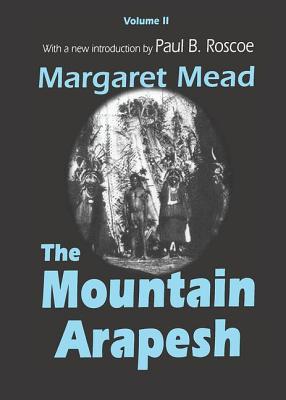
For approximately eight months during 1931-1932, anthropologist Margaret Mead lived with and studied the Mountain Arapesh-a segment of the population of the East Sepik Province, Papua New Guinea. She found a culture based on simplicity, sensitivity, and cooperation. In contrast to the aggressive Arapesh who lived on the plains, both the men and the women of the mountain settlements were found to be, in Mead''s word, maternal. The Mountain Arapesh exhibited qualities that many might consider feminine: they were, in general, passive, affectionate, and peaceloving. Though Mead partially explains the male''s "femininity" as being due to the type of nourishment available to the Arapesh, she maintains social conditioning to be a factor in the type of lifestyle led by both sexes. Mead''s study encapsulates all aspects of the Arapesh culture. She discusses betrothal and marriage customs, sexuality, gender roles, diet, religion, arts, agriculture, and rites of passage. In possibly a portent for the breakdown of traditional roles and beliefs in the latter part of the twentieth century, Mead discusses the purpose of rites of passage in maintaining societal values and social control. Mead also discovered that both male and female parents took an active role in raising their children. Furthermore, it was found that there were few conflicts over property: the Arapesh, having no concept of land ownership, maintained a peaceful existence with each other. In his new introduction to The Mountain Arapesh, Paul B. Roscoe assesses the importance of Mead''s work in light of modern anthropological and ethnographic research, as well as how it fits into her own canon of writings. Roscoe discusses findings he culled from a trip to Papua New Guinea in 1991 to clarify some ambiguities in Mead''s work. His travels also served to help reconstruct what had happened to the Arapesh since Mead''s historic visit in the early 1930s.
Get Mountain Arapesh by Margaret Mead at the best price and quality guaranteed only at Werezi Africa's largest book ecommerce store. The book was published by Taylor & Francis Ltd and it has 372 pages.
Customers Who Bought This Also Bought

Caste
KSh 2,700.00

On Freedom
KSh 2,350.00

Extinction of Experience
KSh 3,950.00

Revenge of the Tipping Point
KSh 2,350.00

Lost Girls
KSh 2,000.00

Right to Sex
KSh 2,000.00

Caste
KSh 4,550.00

Revenge of the Tipping Point
KSh 4,500.00

Revenge of the Tipping Point
KSh 3,050.00

Can Feminism Be African
KSh 2,000.00

Can Feminism Be African
KSh 3,950.00

History of Sexuality: 2
KSh 2,350.00
More by Margaret Mead
small conference
KSh 19,000.00

Coming of Age in Samoa
KSh 0.00

Mountain Arapesh
KSh 10,050.00

Ruth Benedict
KSh 16,550.00

Themes in French Culture
KSh 17,900.00
Mountain Arapesh
KSh 22,950.00

Cooperation and Competition Among Primitive Peoples
KSh 10,950.00
Russian Culture
KSh 4,300.00

Cooperation and Competition Among Primitive Peoples
KSh 30,950.00

Themes in French Culture
KSh 4,300.00
And Keep Your Powder Dry
KSh 4,300.00

Ruth Benedict
KSh 5,400.00
