
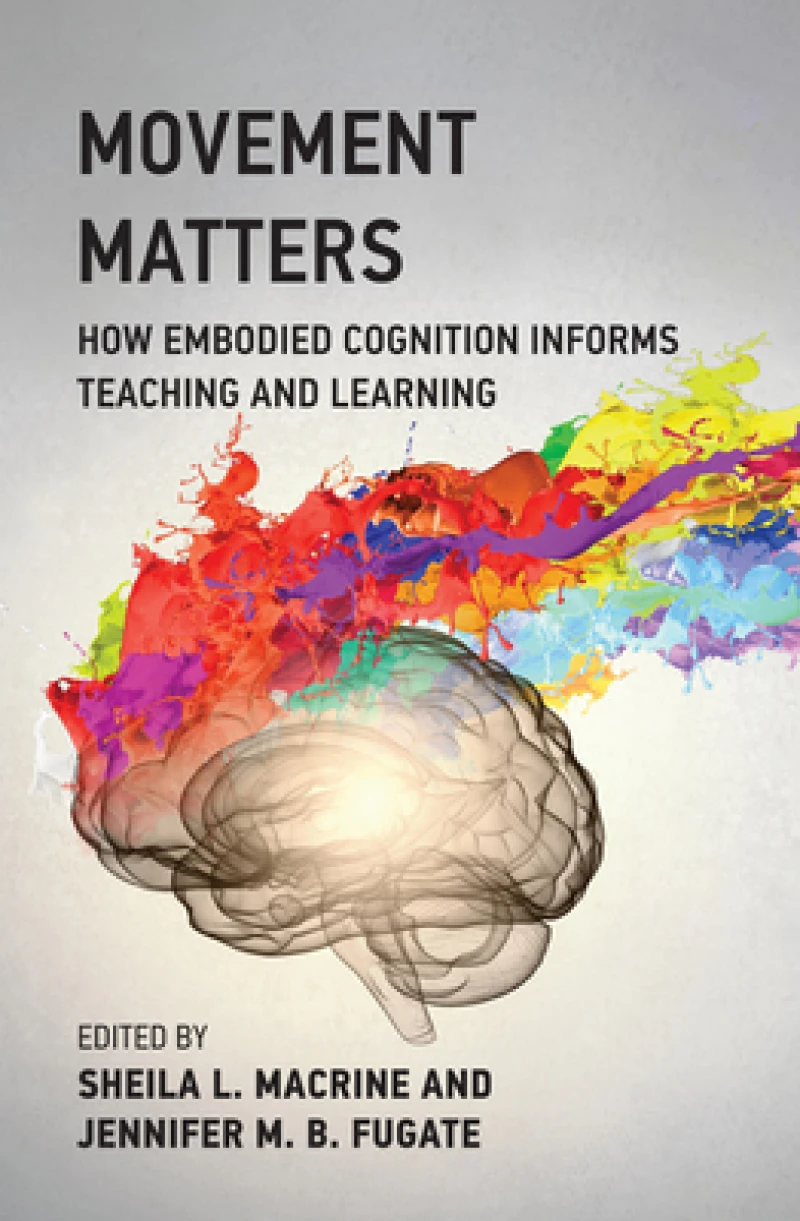
Movement Matters : How Embodied Cognition Informs Teaching and Learning
Book Details
Format
Paperback / Softback
ISBN-10
0262543486
ISBN-13
9780262543484
Publisher
MIT Press Ltd
Imprint
MIT Press
Country of Manufacture
GB
Country of Publication
GB
Publication Date
Apr 19th, 2022
Print length
304 Pages
Weight
578 grams
Dimensions
15.20 x 22.90 x 2.70 cms
Product Classification:
Psychology
Ksh 10,250.00
Re-Printing
0 in stock
Delivery Location
Delivery fee: Select location
Secure
Quality
Fast
Experts translate the latest findings on embodied cognition from neuroscience, psychology, and cognitive science to inform teaching and learning pedagogy.
Embodied cognition represents a radical shift in conceptualizing cognitive processes, in which cognition develops through mind-body environmental interaction. If this supposition is correct, then the conventional style of instruction—in which students sit at desks, passively receiving information—needs rethinking. Movement Matters considers the educational implications of an embodied account of cognition, describing the latest research applications from neuroscience, psychology, and cognitive science and demonstrating their relevance for teaching and learning pedagogy. The contributors cover a range of content areas, explaining how the principles of embodied cognition can be applied in classroom settings.
After a discussion of the philosophical and theoretical underpinnings of embodied cognition, contributors describe its applications in language, including the areas of handwriting, vocabulary, language development, and reading comprehension; STEM areas, emphasizing finger counting and the importance of hand and body gestures in understanding physical forces; and digital learning technologies, including games and augmented reality. Finally, they explore embodied learning in the social-emotional realm, including how emotional granularity, empathy, and mindfulness benefit classroom learning.
Movement Matters introduces a new model, translational learning sciences research, for interpreting and disseminating the latest empirical findings in the burgeoning field of embodied cognition. The book provides an up-to-date, inclusive, and essential resource for those involved in educational planning, design, and pedagogical approaches.
Contributors
Dor Abrahamson, Martha W. Alibali, Petra A. Arndt, Lisa Aziz-Zadeh, Jo Boaler, Christiana Butera, Rachel S. Y. Chen,Charles P. Davis, Andrea Marquardt Donovan, Inge-Marie Eigsti, Virginia J. Flood, Jennifer M. B. Fugate, Arthur M. Glenberg, Ligia E. Gómez, Daniel D. Hutto, Karin H. James, Mina C. Johnson-Glenberg, Michael P. Kaschak, Markus Kiefer, Christina Krause, Sheila L. Macrine, Anne Mangen, Carmen Mayer, Amanda L. McGraw, Colleen Megowan-Romanowicz, Mitchell J. Nathan, Antti Pirhonen, Kelsey E. Schenck, Lawrence Shapiro, Anna Shvarts, Yue-Ting Siu,Sofia Tancredi, Chrystian Vieyra, Rebecca Vieyra, Candace Walkington, Christine Wilson-Mendenhall, Eiling Yee
Embodied cognition represents a radical shift in conceptualizing cognitive processes, in which cognition develops through mind-body environmental interaction. If this supposition is correct, then the conventional style of instruction—in which students sit at desks, passively receiving information—needs rethinking. Movement Matters considers the educational implications of an embodied account of cognition, describing the latest research applications from neuroscience, psychology, and cognitive science and demonstrating their relevance for teaching and learning pedagogy. The contributors cover a range of content areas, explaining how the principles of embodied cognition can be applied in classroom settings.
After a discussion of the philosophical and theoretical underpinnings of embodied cognition, contributors describe its applications in language, including the areas of handwriting, vocabulary, language development, and reading comprehension; STEM areas, emphasizing finger counting and the importance of hand and body gestures in understanding physical forces; and digital learning technologies, including games and augmented reality. Finally, they explore embodied learning in the social-emotional realm, including how emotional granularity, empathy, and mindfulness benefit classroom learning.
Movement Matters introduces a new model, translational learning sciences research, for interpreting and disseminating the latest empirical findings in the burgeoning field of embodied cognition. The book provides an up-to-date, inclusive, and essential resource for those involved in educational planning, design, and pedagogical approaches.
Contributors
Dor Abrahamson, Martha W. Alibali, Petra A. Arndt, Lisa Aziz-Zadeh, Jo Boaler, Christiana Butera, Rachel S. Y. Chen,Charles P. Davis, Andrea Marquardt Donovan, Inge-Marie Eigsti, Virginia J. Flood, Jennifer M. B. Fugate, Arthur M. Glenberg, Ligia E. Gómez, Daniel D. Hutto, Karin H. James, Mina C. Johnson-Glenberg, Michael P. Kaschak, Markus Kiefer, Christina Krause, Sheila L. Macrine, Anne Mangen, Carmen Mayer, Amanda L. McGraw, Colleen Megowan-Romanowicz, Mitchell J. Nathan, Antti Pirhonen, Kelsey E. Schenck, Lawrence Shapiro, Anna Shvarts, Yue-Ting Siu,Sofia Tancredi, Chrystian Vieyra, Rebecca Vieyra, Candace Walkington, Christine Wilson-Mendenhall, Eiling Yee
Get Movement Matters by at the best price and quality guaranteed only at Werezi Africa's largest book ecommerce store. The book was published by MIT Press Ltd and it has pages.

