
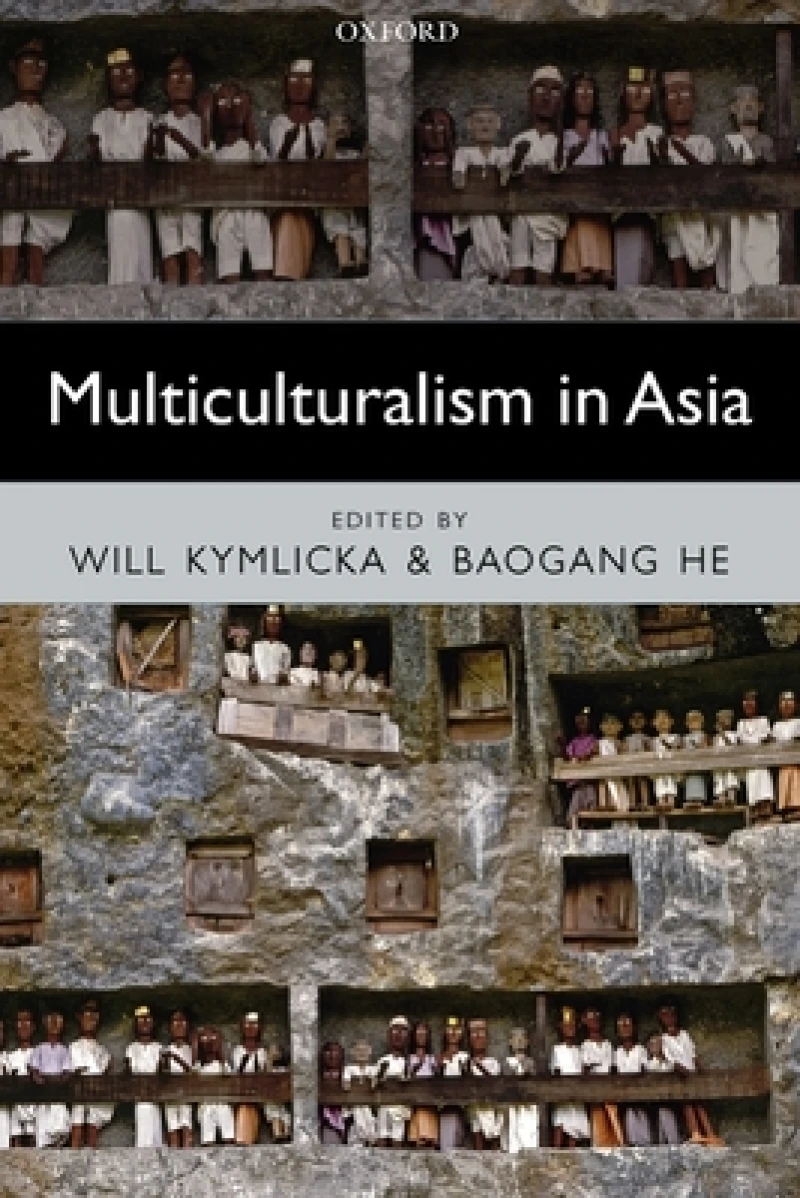
Multiculturalism in Asia
Book Details
Format
Paperback / Softback
ISBN-10
019927763X
ISBN-13
9780199277636
Publisher
Oxford University Press
Imprint
Oxford University Press
Country of Manufacture
GB
Country of Publication
GB
Publication Date
Oct 6th, 2005
Print length
376 Pages
Weight
600 grams
Dimensions
23.40 x 15.60 x 2.20 cms
Ksh 11,900.00
Manufactured on Demand
0 in stock
Delivery Location
Delivery fee: Select location
Secure
Quality
Fast
Assembles a group of leading regional experts to formulate a consideration of multiculturalism debates in South and East Asia. Through close examination of pre-colonial traditions, colonial legacies, and post-colonial ideologies, this volume sheds light on religious and ethnic conflict in the area.
This volume explores the different ways that ethnic and religious diversity is conceptualized and debated in South and East Asia. In the first few decades following decolonization, talk of multiculturalism and pluralism was discouraged, as states attempted to consolidate themselves as unitary and homogenizing nation-states. Today, however, it is widely recognized that states in the region must come to terms with the enduring reality of ethnic and religious cleavages, and find new ways of accommodating and respecting diversity. As a result, many countries are now debating policies to accommodate minorities, including recognition of indigenous rights, minority language rights, consociational power-sharing, regional autonomy, and multination federalism. This is often described as a key ingredient in any process of democratization in the region.One manifestation of this new ethos is the growing rhetoric of ''multiculturalism'', often imported from the West. And indeed Western models of minority rights have had an influence in many Asian countries, often promoted by international organizations. However, Asian societies also have their own traditions of peaceful coexistence amongst linguistic and religious groups. All of the major ethical and religious traditions in the region - from Confucian and Buddhist to Islamic and Hindu - have their own conceptions of tolerance, and their own recipes for sustaining unity amidst diversity. These traditions continue to shape people''s beliefs and practices in the region. Even the distinctive conception of Marxism developed in the region provides an influential perspective on these issues not found in the West. The rhetoric of ''multiculturalism'' may be ubiquitous around the world, but it is being used to express quite different ideas and norms. Using both case studies and thematic essays, this volume examines the pre-colonial traditions, colonial legacies, and post-colonial ideologies that influence contemporary debates on multiculturalism in the region. It explores the areas of convergence and divergence between these different perspectives, and the extent to which they provide viable frameworks for managing ethnic and religious diversity in the region.
Get Multiculturalism in Asia by at the best price and quality guaranteed only at Werezi Africa's largest book ecommerce store. The book was published by Oxford University Press and it has pages.

