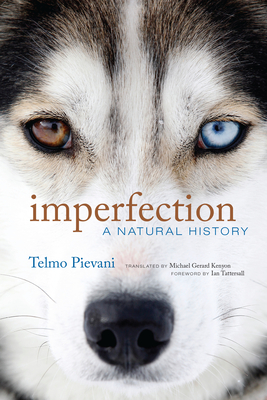
Multiplicity : A Scientist’s Journey into Evolutionary Space
Book Details
Format
Hardback
ISBN-10
0262054639
ISBN-13
9780262054638
Publisher
MIT Press Ltd
Imprint
MIT Press
Country of Manufacture
GB
Country of Publication
GB
Publication Date
Oct 6th, 2026
Print length
176 Pages
Weight
567 grams
Product Classification:
History of science
KSh 4,700.00
Not Yet Published
0 in stock
Delivery Location
Delivery fee: Select location
Secure
Quality
Fast
The awe-inspiring, little-known story of Nobel laureate Frances Arnold’s discovery of directed enzyme evolution—and how it was sparked by reading Jorge Luis Borges.
In 1976, a young engineering student from Princeton, Frances Arnold, happened upon Jorge Luis Borges’s short story “The Library of Babel” while in Madrid. The tale recounts a vast honeycomb of a library that contains all the answers to the mysteries of humanity. Little did Arnold know that the story would change the course of her life—and the course of science.
In Multiplicity, Telmo Pievani explores her journey and the significance—and scientific potential—of Borges’s legendary library and others like it. The famous evolutionist John Maynard Smith, for instance, had fantasized about the existence of a similar enormous library full of proteins rather than books. And in 1995 the philosopher of mind Daniel Dennett would devise a library no less confounding: one that collects all possible genomes, or all possible combinations of the nucleotide bases of DNA. Why? Because by comparing all the proteins, genomes, and plants and animals that exist and have existed throughout evolution, what is finally revealed is possibility—what doesn’t exist but could.
For Arnold, the concept of such a library ultimately led to the discovery of the directed evolution of enzymes: a way of using nature’s own method to produce new and better enzymes. The revolutionary idea transformed protein chemistry and biotechnology and earned her the Nobel Prize in Chemistry in 2018. With literary echoes ranging from Borges to Italo Calvino, this slim book tells her brilliant story.
In 1976, a young engineering student from Princeton, Frances Arnold, happened upon Jorge Luis Borges’s short story “The Library of Babel” while in Madrid. The tale recounts a vast honeycomb of a library that contains all the answers to the mysteries of humanity. Little did Arnold know that the story would change the course of her life—and the course of science.
In Multiplicity, Telmo Pievani explores her journey and the significance—and scientific potential—of Borges’s legendary library and others like it. The famous evolutionist John Maynard Smith, for instance, had fantasized about the existence of a similar enormous library full of proteins rather than books. And in 1995 the philosopher of mind Daniel Dennett would devise a library no less confounding: one that collects all possible genomes, or all possible combinations of the nucleotide bases of DNA. Why? Because by comparing all the proteins, genomes, and plants and animals that exist and have existed throughout evolution, what is finally revealed is possibility—what doesn’t exist but could.
For Arnold, the concept of such a library ultimately led to the discovery of the directed evolution of enzymes: a way of using nature’s own method to produce new and better enzymes. The revolutionary idea transformed protein chemistry and biotechnology and earned her the Nobel Prize in Chemistry in 2018. With literary echoes ranging from Borges to Italo Calvino, this slim book tells her brilliant story.
Get Multiplicity by Telmo Pievani at the best price and quality guaranteed only at Werezi Africa's largest book ecommerce store. The book was published by MIT Press Ltd and it has 176 pages.
Customers Who Bought This Also Bought

Anaximander
KSh 2,000.00

When Breath Becomes Air
KSh 1,800.00
On the Origin of Species
KSh 1,600.00

Origin of Species
KSh 1,850.00
There Are Places in the World Where Rules Are Less Important Than Kindness
KSh 2,350.00
Every Living Thing
KSh 2,350.00

Everything Is Tuberculosis
KSh 3,950.00
Short History of Nearly Everything 2.0
KSh 3,550.00

Short History of Nearly Everything
KSh 2,350.00

Classics Origin of Species
KSh 1,100.00

Essential Galileo
KSh 2,900.00
Helgoland
KSh 2,350.00