
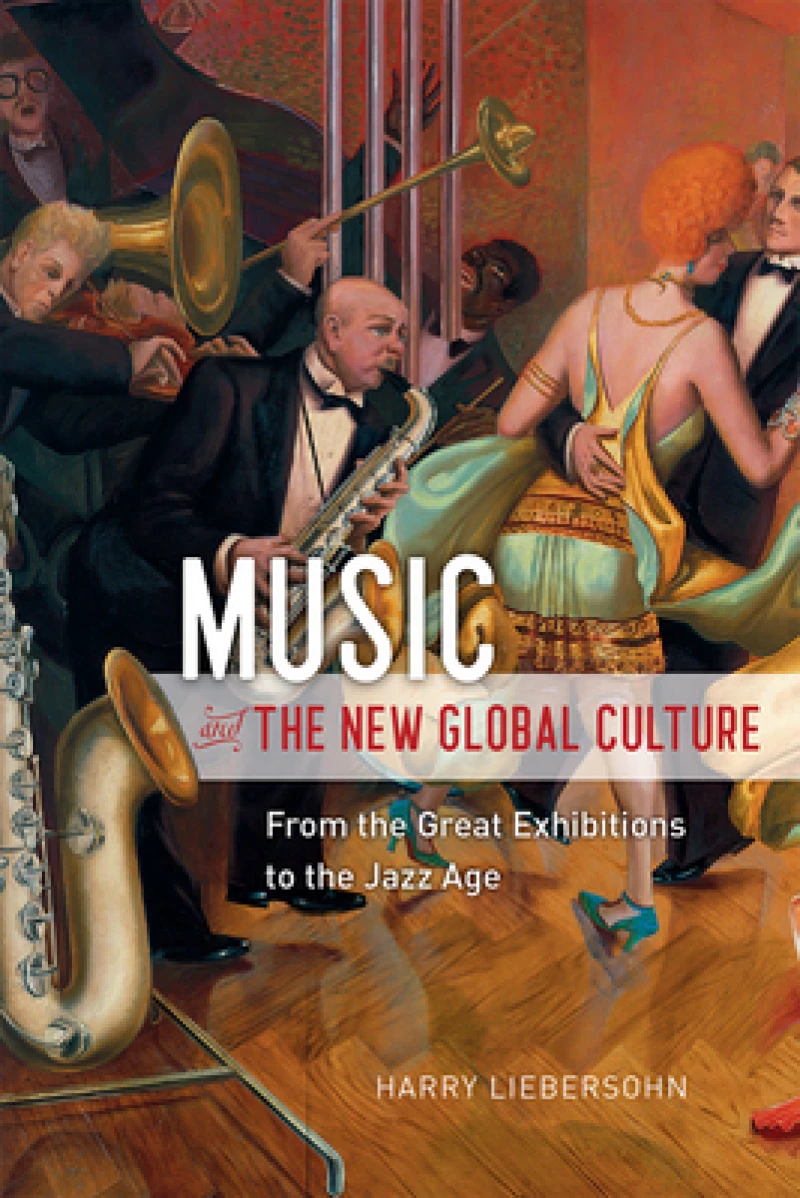
Music and the New Global Culture : From the Great Exhibitions to the Jazz Age
Book Details
Format
Hardback or Cased Book
Book Series
Big Issues in Music
ISBN-10
022662126X
ISBN-13
9780226621265
Publisher
The University of Chicago Press
Imprint
University of Chicago Press
Country of Manufacture
US
Country of Publication
GB
Publication Date
Sep 2nd, 2019
Print length
336 Pages
Weight
582 grams
Dimensions
15.70 x 23.60 x 2.00 cms
Product Classification:
Theory of music & musicologyMusic reviews & criticismHistoryArchaeology
Ksh 14,050.00
Werezi Extended Catalogue
0 in stock
Delivery Location
Delivery fee: Select location
Secure
Quality
Fast
Music listeners today can effortlessly flip from K-pop to Ravi Shankar to Amadou & Mariam with a few quick clicks of a mouse. While contemporary globalized musical culture has become ubiquitous and unremarkable, its fascinating origins long predate the internet era. In Music and the New Global Culture, Harry Liebersohn traces the origins of global music to a handful of critical transformations that took place between the mid-nineteenth and early twentieth century. In Britain, the arts and crafts movement inspired a fascination with non-Western music; Germany fostered a scholarly approach to global musical comparison, creating the field we now call ethnomusicology; and the United States provided the technological foundation for the dissemination of a diverse spectrum of musical cultures by launching the phonograph industry. This is not just a story of Western innovation, however: Liebersohn shows musical responses to globalization in diverse areas that include the major metropolises of India and China and remote settlements in South America and the Arctic. By tracing this long history of world music, Liebersohn shows how global movement has forever changed how we hear music--and indeed, how we feel about the world around us.
Get Music and the New Global Culture by at the best price and quality guaranteed only at Werezi Africa's largest book ecommerce store. The book was published by The University of Chicago Press and it has pages.

