
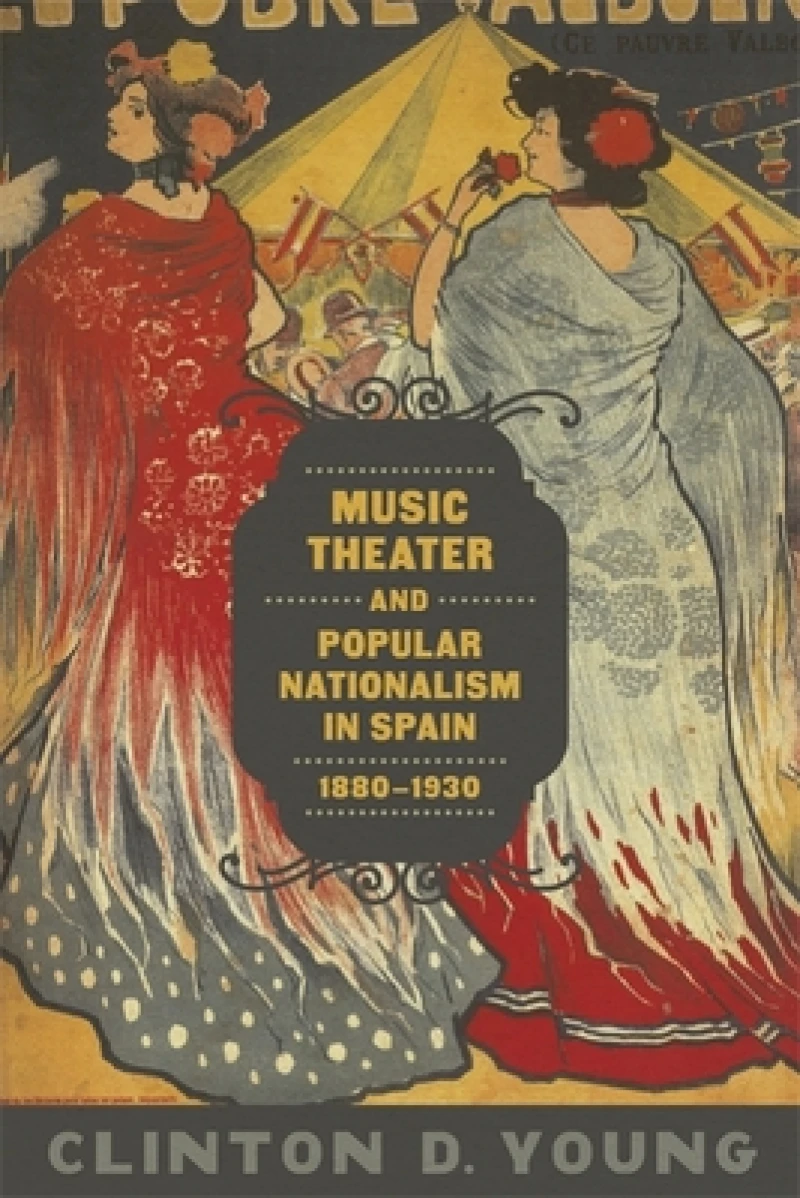
Music Theater and Popular Nationalism in Spain, 1880-1930
Book Details
Format
Hardback or Cased Book
ISBN-10
0807161020
ISBN-13
9780807161029
Publisher
Louisiana State University Press
Imprint
Louisiana State University Press
Country of Manufacture
US
Country of Publication
GB
Publication Date
Jan 11th, 2016
Print length
256 Pages
Weight
526 grams
Dimensions
16.30 x 23.90 x 2.70 cms
Ksh 6,750.00
Temporarily out of stock, due soon
0 in stock
Delivery Location
Delivery fee: Select location
Secure
Quality
Fast
From its earliest appearance in the mid-1600s, the lyric theatre form of zarzuela captivated Spanish audiences. Clinton Young persuasively links zarzuela's celebration of Spanish history and culture to the development of concepts of nationalism and national identity at the dawn of the twentieth century.
From its earliest appearance in the mid-1600s, the lyric theater form of zarzuela captivated Spanish audiences with its witty writing and lively musical scores. Clinton D. Young's Music Theater and Popular Nationalism in Spain, 1880- 1930 persuasively links zarzuela's celebration of Spanish history and culture to the development of concepts of nationalism and national identity at the dawn of the twentieth century.
As a weak Spanish government focused its energy on preventing a recurrence of mid-nineteenth-century political upheavals, the project of articulating a national identity occurred at the popular level, particularly in cultural venues such as the theater. Zarzuela suited this aim well, depicting the lives of everyday citizens amid the rapidly changing norms brought about by industrialization and urbanization. It also integrated regional differences into a unified vision of Spanish national identity: a zarzuela performance set in Madrid could incorporate forms of music and folk dancing native to areas of the country as far distant as AndalucÃa and Catalonia. A true ""music of the people"" (música popular), zarzuela offered its audiences an image of what a more modern Spain might look like.
Zarzuela alone could not create a unified concept of Spanish identity, particularly with competition from new forms of mass culture and the rise of the Primo de Rivera dictatorship in the 1920s. Yet, as this riveting study shows, it made an indelible contribution to popular culture and nationalism. Young's history brings to life the stories, songs, and evolving contexts of a uniquely Spanish art form.
As a weak Spanish government focused its energy on preventing a recurrence of mid-nineteenth-century political upheavals, the project of articulating a national identity occurred at the popular level, particularly in cultural venues such as the theater. Zarzuela suited this aim well, depicting the lives of everyday citizens amid the rapidly changing norms brought about by industrialization and urbanization. It also integrated regional differences into a unified vision of Spanish national identity: a zarzuela performance set in Madrid could incorporate forms of music and folk dancing native to areas of the country as far distant as AndalucÃa and Catalonia. A true ""music of the people"" (música popular), zarzuela offered its audiences an image of what a more modern Spain might look like.
Zarzuela alone could not create a unified concept of Spanish identity, particularly with competition from new forms of mass culture and the rise of the Primo de Rivera dictatorship in the 1920s. Yet, as this riveting study shows, it made an indelible contribution to popular culture and nationalism. Young's history brings to life the stories, songs, and evolving contexts of a uniquely Spanish art form.
Get Music Theater and Popular Nationalism in Spain, 1880-1930 by at the best price and quality guaranteed only at Werezi Africa's largest book ecommerce store. The book was published by Louisiana State University Press and it has pages.

