
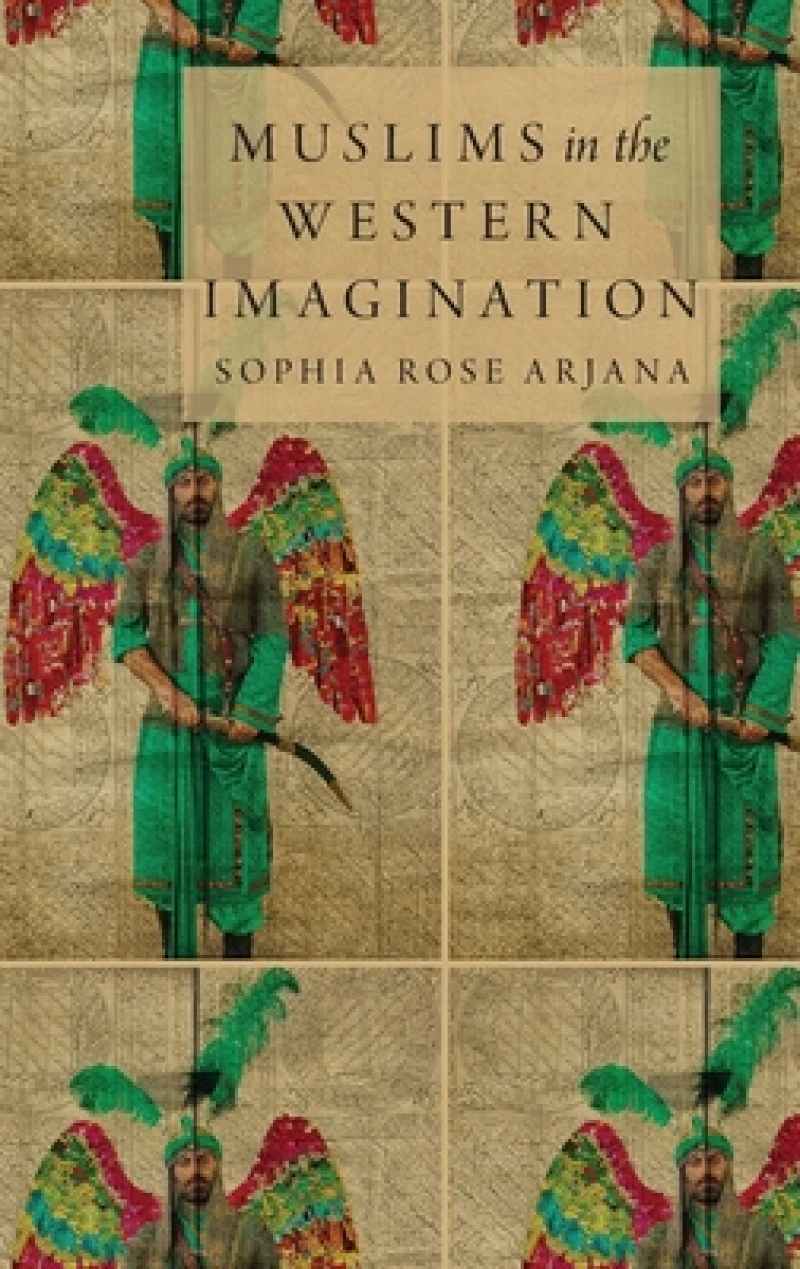
Muslims in the Western Imagination
Book Details
Format
Hardback or Cased Book
ISBN-10
0199324921
ISBN-13
9780199324927
Publisher
Oxford University Press Inc
Imprint
Oxford University Press Inc
Country of Manufacture
US
Country of Publication
GB
Publication Date
Feb 19th, 2015
Print length
280 Pages
Weight
532 grams
Dimensions
24.50 x 37.00 x 2.10 cms
Product Classification:
Religion & politicsReligious intolerance, persecution & conflictIslamIslamic studies
Ksh 9,150.00
Manufactured on Demand
0 in stock
Delivery Location
Delivery fee: Select location
Secure
Quality
Fast
Through an exhaustive survey of medieval, early modern, and contemporary literature, art, and cinema, Sophia Rose Arjana examines the dehumanizing ways in which Muslim men have been constructed and represented as monsters.
Muslims in the Western Imagination explores the ways in which Muslim men are depicted as monsters throughout history. Monsters help a society delineate who belongs in a social group and who, or what, is excluded. Even when Muslim monsters are symbolic, as in post-9/11 zombie films, they still function to define Muslims as non-human entities. These are not portrayals of Muslim men as malevolent human characters, but rather as creatures that occupy the imagination--non-humans that exhibit their wickedness outwardly on the skin. They populate medieval tales, Renaissance paintings, Shakespearean dramas, Gothic horror novels, and Hollywood films. Through an exhaustive survey of medieval, early modern, and contemporary literature, art, and cinema, Sophia Rose Arjana examines the dehumanizing ways in which Muslim men have been constructed and represented as monsters, and the impact such representations have on perceptions of Muslims. The study is the first to present a Foucauldian genealogy of these creatures, from the demons and giants of the Middle Ages to the hunchbacks with filed teeth that appeared in the 2006 film 300. The book argues that constructions of Muslim monsters constitute a recurring theme, first formulated in medieval Christian anti-Semitism. Arjana shows how Muslim monsters are often related to Jewish monsters, and more broadly to Christian anti-Semitism, which involves both religious bigotry and fears surrounding bodily differences. Like the Jewish monster, the Muslim monster is not simply a product of religious bigotry, but of anxiety surrounding bodily difference. Overall, Arjana argues persuasively, these dehumanizing constructions deeply embedded in Western consciousness are internalized beliefs and practices that contribute to the culture of violence--both rhetorical and bodily- against Muslims.
Get Muslims in the Western Imagination by at the best price and quality guaranteed only at Werezi Africa's largest book ecommerce store. The book was published by Oxford University Press Inc and it has pages.

