
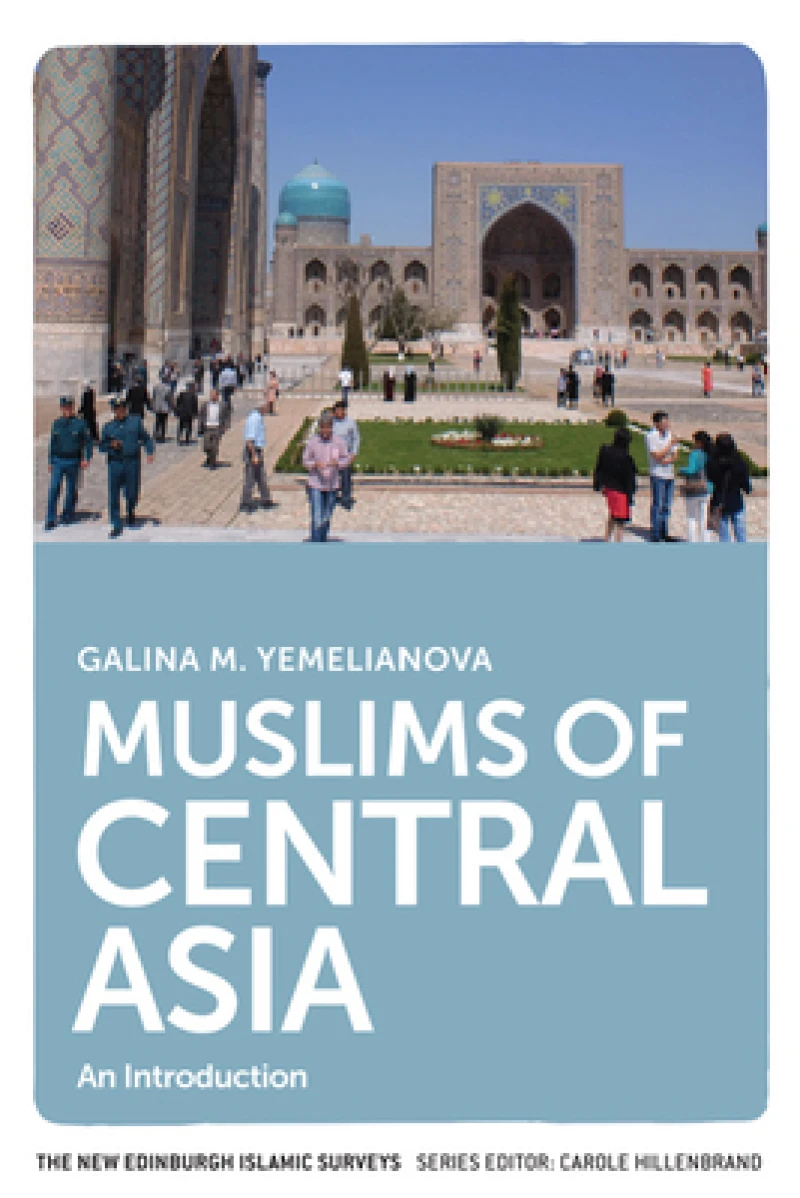
Muslims of Central Asia : An Introduction
Book Details
Format
Hardback or Cased Book
Book Series
The New Edinburgh Islamic Surveys
ISBN-10
1474416322
ISBN-13
9781474416320
Publisher
Edinburgh University Press
Imprint
Edinburgh University Press
Country of Manufacture
GB
Country of Publication
GB
Publication Date
Jan 31st, 2019
Print length
288 Pages
Weight
490 grams
Dimensions
16.40 x 24.10 x 2.20 cms
Product Classification:
Islamic life & practice
Ksh 18,900.00
Manufactured on Demand
0 in stock
Delivery Location
Delivery fee: Select location
Secure
Quality
Fast
This fascinating study which shows how, from the seventh century to the present day, the region's people have negotiated their distinctively Central Asian Islamic identity in the face of enduring external Islamic and non-Islamic dominations, ethnic nationalisms and, more recently, global transnational Islamic influences.
Between the tenth and sixteenth centuries Central Asia was one of the most prestigious cultural areas of the entire Muslim world, playing a pivotal role in the Silk Road trade. Throughout that history, and up to the present, Tajiks, Uzbeks, Kazakhs, Kyrgyz, Turkmen and other Muslim peoples of Central Asia have developed their own unique understanding and practice of Islam which has shaped their national identity and particular social and political evolution.
These special characteristics of Central Asian Islam ensured its survival during seventy years of Soviet atheist rule, while in the post-Soviet period Islam has been integrated into nation-building projects in constitutionally secular Uzbekistan, Kazakhstan, Tajikistan, Kyrgyzstan and Turkmenistan.
This absorbing history is traced in this fascinating study which shows how, from the seventh century to the present day, the region''s people have negotiated their distinctively Central Asian Islamic identity in the face of enduring external Islamic and non-Islamic dominations, ethnic nationalisms and, more recently, global transnational Islamic influences.
These special characteristics of Central Asian Islam ensured its survival during seventy years of Soviet atheist rule, while in the post-Soviet period Islam has been integrated into nation-building projects in constitutionally secular Uzbekistan, Kazakhstan, Tajikistan, Kyrgyzstan and Turkmenistan.
This absorbing history is traced in this fascinating study which shows how, from the seventh century to the present day, the region''s people have negotiated their distinctively Central Asian Islamic identity in the face of enduring external Islamic and non-Islamic dominations, ethnic nationalisms and, more recently, global transnational Islamic influences.
Get Muslims of Central Asia by at the best price and quality guaranteed only at Werezi Africa's largest book ecommerce store. The book was published by Edinburgh University Press and it has pages.

