
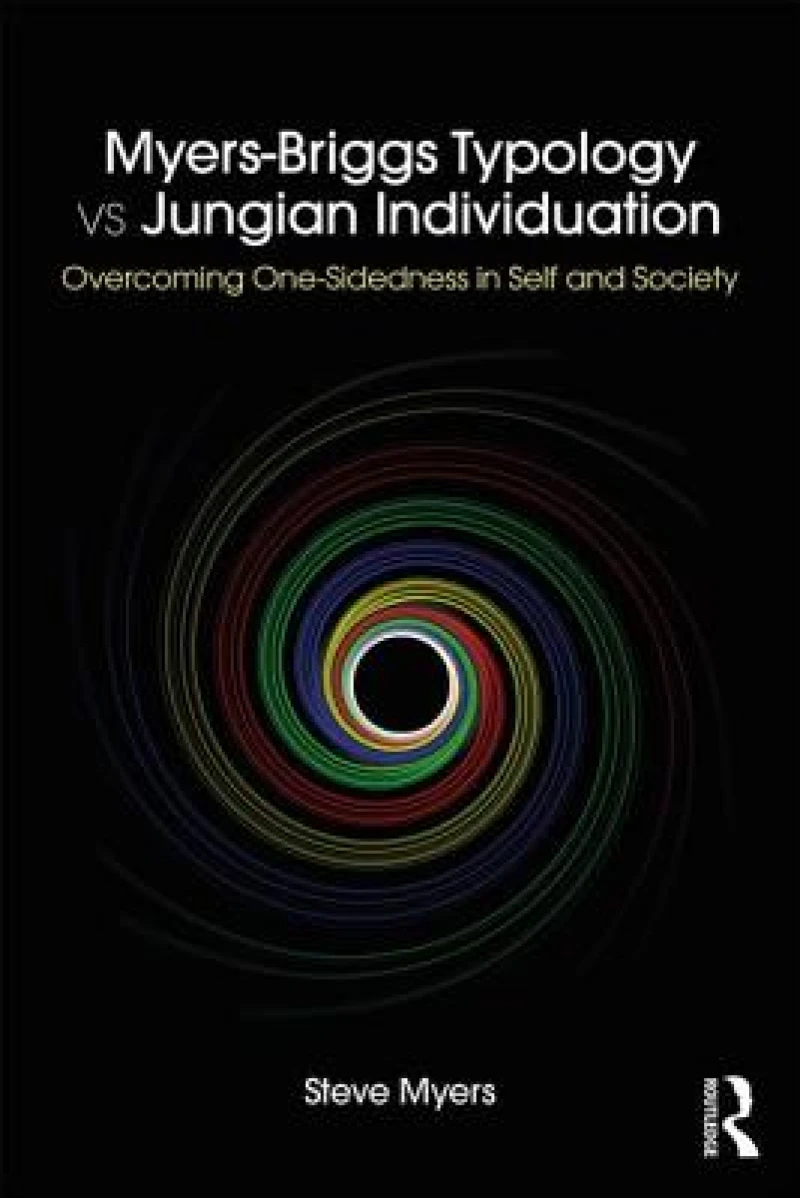
Myers-Briggs Typology vs. Jungian Individuation : Overcoming One-Sidedness in Self and Society
Book Details
Delivery Location
Delivery fee: Select location
Delivery in 14 days
Myers demonstrates how overlooked aspects of Jungs developmental theory can be greater applied by users of Myers-Briggs typology. This book provides an understanding of the main differences between Myers-Briggs typology and Jungian individuation, and describes eight principles to reconcile and overcome those differences. It also describes practical ways in which the principles can be used in personal, professional, group and cultural contexts. The book concludes with a look at common criticisms of the MBTI instrument, the main defences against them, and practical suggestions for incorporating Jungian individuation into coaching and workshops.
In Myers-Briggs Typology vs Jungian Individuation: Overcoming One-sidedness in Self and Society, Steve Myers unravels the century-long misinterpretation of Jungs seminal text, Psychological Types, to show how Jungs thinking offers solutions to the conflicts that have torn apart our societies. By challenging the popular interpretation of the Myers-Briggs Type Indicator® and similar instruments, Myers argues that we have not only missed Jungs main proposition, but our contemporary interpretation runs counter to it.
Myers aims to rediscover the overlooked argument of Jungs Psychological Types and make it of practical relevance to contemporary issues. He intends to refocus rather than discard Myers-Briggs typology, showing that there are further stages of development after becoming a type and that typological principles have a much broader application. Raising queries about the way typology is used in contemporary society, Myers uses literary examples, such as Romeo and Juliet and Carl Spittelers Prometheus and Epimetheus, to show how one-sidedness leads to conflict and to illustrate Jungs solution to the problem of opposites. He also applies this to real-life political crises by examining the decision-making of key political figures, such as Nelson Mandela, Robert Mugabe, and those involved in Brexit or the Northern Ireland peace process. The latter part of the book relates Jungs process of typological development to his later writings on alchemy, notably the axiom of Maria, to show how they all have a common goal, the transformation of attitude. The book concludes by analysing the implications of the divergence of Myers-Briggs typology and Jungian individuation for the communities who use those ideas.
This book puts Jungian individuation back at the forefront of debate and will be essential reading for intermediate and advanced users of Myers-Briggs typology. Due to its political relevance, it will also be of interest to Jungian analysts and their clients, and to academics and students of Jungian and post-Jungian ideas and political science.
Get Myers-Briggs Typology vs. Jungian Individuation by at the best price and quality guaranteed only at Werezi Africa's largest book ecommerce store. The book was published by Taylor & Francis Ltd and it has pages.

