
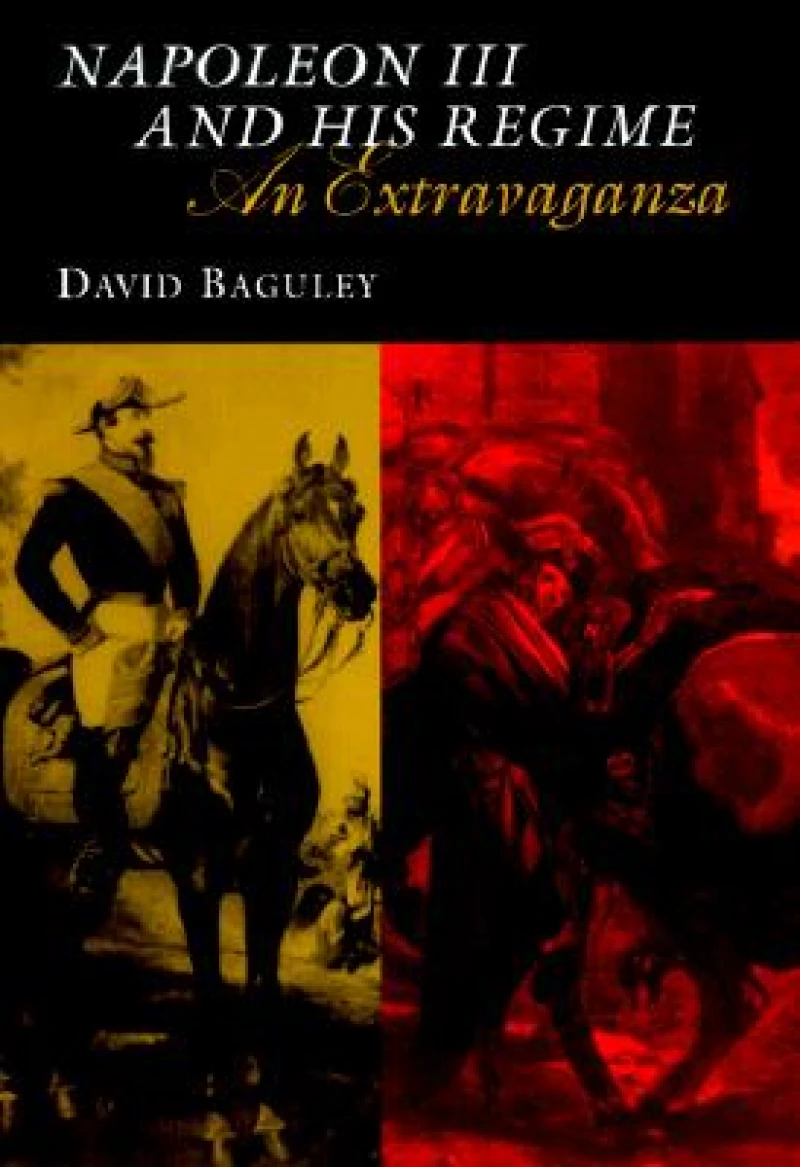
Napoleon III and His Regime : An Extravaganza
Book Details
Format
Hardback or Cased Book
Book Series
Modernist Studies
ISBN-10
0807126241
ISBN-13
9780807126240
Publisher
Louisiana State University Press
Imprint
Louisiana State University Press
Country of Manufacture
GB
Country of Publication
GB
Publication Date
Nov 1st, 2000
Print length
425 Pages
Weight
853 grams
Dimensions
23.60 x 16.10 x 3.90 cms
Ksh 8,900.00
Temporarily out of stock, due soon
0 in stock
Delivery Location
Delivery fee: Select location
Secure
Quality
Fast
Taking a highly innovative approach to Louis Napoléon Bonaparte, David Baguley entertains sources in a mélange of media and forms, pictures, performances, spectacles, rituals, music, fiction, poems, plays, architecture, fashion, as well as Louis Napoléon's own writings, to explore how the ruler was represented, invented, and interpreted.
Referred to in his time as ""the Pretender"" and ""the sphinx of the Tuileries,"" Louis Napoléon Bonaparte, the nephew of Emperor Napoleon I of France and himself ruler of the Second Empire (1852-1870), so managed the manufacture of his public image and the masking of his private self that he is, ultimately, unknowable to this day. From the mysterious circumstances of his conception in 1807 to the strange events of his downfall in 1870 and death in 1873, he lived, loved, and reigned in an extraordinary aura of myth and fantasy under the shadow of his more famous uncle.
Taking a highly innovative approach to this intriguing historical figure, David Baguley entertains sources in a mélange of media and forms, pictures, performances, spectacles, rituals, music, fiction, poems, plays, architecture, fashion, as well as Louis Napoléon's own writings, to explore how the ruler was represented, invented, and interpreted by detractors and defenders alike. The dynamic process by which the legend of Napoleon III was elaborately fabricated and then vigorously dismantled unfolds under Baguley's hand not chronologically but by generic categories, reflecting the author's underlying conviction that history and literary depictments are not as incompatible as is often assumed.
Baguley examines works by, among many others, Victor Hugo, Karl Marx, Émile Zola, Honoré Daumier, Jacques Offenbach, Gustave Flaubert, and Elizabeth Barrett Browning that range from history and biography to romanticized versions of the Emperor's feats to parody, caricature, and satire. With its conspiratorial origins, its rising and dramatically falling action, its schemes, scandals, and tragic denouement, the Second Empire appears designed to inspire writers and artists. Napoleon III, Baguley observes, could well have been the central character, or temperament, in a naturalist novel.
While most historians consider Louis Napoléon's coup d'état of December 1851 to be his boldest endeavor, Baguley shows in this expansive and eloquent work that his most extravagant venture was to found a second Napoleonic empire, and he illustrates not only the power of the name and the image but also the precariousness of the Emperor's reliance upon them. For Napoleon III, dissimulation was his natural state; opportunist or utopian reformer, or something in between, he must remain one of history's most elusive and controversial figures, ever resisting final assessment.
Taking a highly innovative approach to this intriguing historical figure, David Baguley entertains sources in a mélange of media and forms, pictures, performances, spectacles, rituals, music, fiction, poems, plays, architecture, fashion, as well as Louis Napoléon's own writings, to explore how the ruler was represented, invented, and interpreted by detractors and defenders alike. The dynamic process by which the legend of Napoleon III was elaborately fabricated and then vigorously dismantled unfolds under Baguley's hand not chronologically but by generic categories, reflecting the author's underlying conviction that history and literary depictments are not as incompatible as is often assumed.
Baguley examines works by, among many others, Victor Hugo, Karl Marx, Émile Zola, Honoré Daumier, Jacques Offenbach, Gustave Flaubert, and Elizabeth Barrett Browning that range from history and biography to romanticized versions of the Emperor's feats to parody, caricature, and satire. With its conspiratorial origins, its rising and dramatically falling action, its schemes, scandals, and tragic denouement, the Second Empire appears designed to inspire writers and artists. Napoleon III, Baguley observes, could well have been the central character, or temperament, in a naturalist novel.
While most historians consider Louis Napoléon's coup d'état of December 1851 to be his boldest endeavor, Baguley shows in this expansive and eloquent work that his most extravagant venture was to found a second Napoleonic empire, and he illustrates not only the power of the name and the image but also the precariousness of the Emperor's reliance upon them. For Napoleon III, dissimulation was his natural state; opportunist or utopian reformer, or something in between, he must remain one of history's most elusive and controversial figures, ever resisting final assessment.
Get Napoleon III and His Regime by at the best price and quality guaranteed only at Werezi Africa's largest book ecommerce store. The book was published by Louisiana State University Press and it has pages.

