
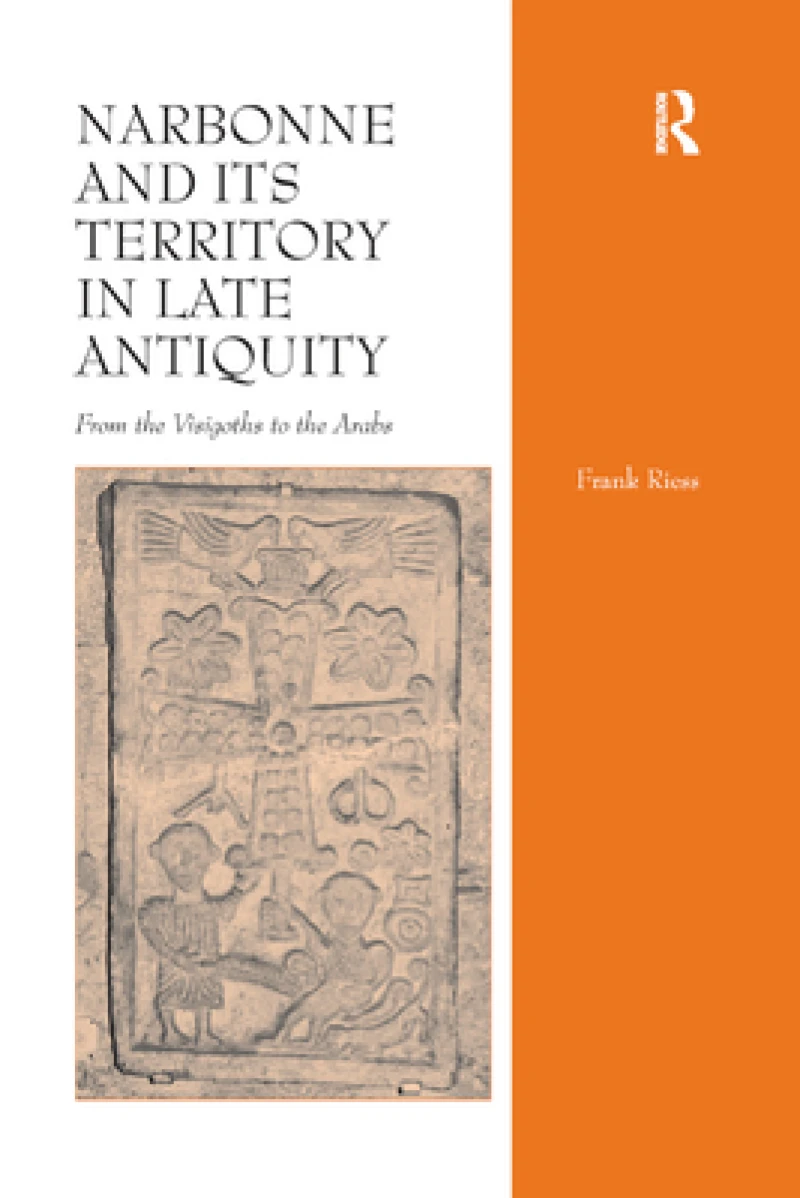
Narbonne and Its Territory in Late Antiquity : From the Visigoths to the Arabs
by
Frank Riess
Book Details
Format
Paperback / Softback
ISBN-10
0367882302
ISBN-13
9780367882303
Publisher
Taylor & Francis Ltd
Imprint
Routledge
Country of Manufacture
GB
Country of Publication
GB
Publication Date
Dec 12th, 2019
Print length
304 Pages
Weight
392 grams
Dimensions
15.60 x 23.10 x 2.90 cms
Product Classification:
Ancient history: to c 500 CEAncient history
Ksh 8,650.00
Werezi Extended Catalogue
0 in stock
Delivery Location
Delivery fee: Select location
Secure
Quality
Fast
This work centres on the post-Roman period of Narbonne and its territory, up to its capture by the Arabs in 720, encompassing not only recent archaeological findings but also perspectives of French, Spanish and Catalan historiography that have fashioned distinct national narratives. Seeking to remove Narbonne from any subsequent birth of France, Ca
This work centres on the post-Roman period of Narbonne and its territory, up to its capture by the Arabs in 720, encompassing not only recent archaeological findings but also perspectives of French, Spanish and Catalan historiography that have fashioned distinct national narratives. Seeking to remove Narbonne from any subsequent birth of France, Catalonia and Spain, the book presents a geopolitical region that took shape from the late fifth century, evolving towards the end of the eighth century into an autonomous province of the nascent Carolingian Empire. Capturing this change throughout a 300-year period somewhat lacking in written sources, the book takes us beyond an exclusive depiction of the classical city to an examination of settlement in various forms. Discourses of literary criticism also lie behind aspects of this study, mapped around textual commentaries which highlight a more imaginative biography of a city. Narbonne''s role as a point of departure and travel across the Mediterranean is examined through a reading of the correspondence of Paulinus of Nola and the writings of Sulpicius Severus, enabling the reader to gain a fuller picture of the city and its port. The topography of Narbonne in the fifth century is surveyed together with Bishop Rusticus?s church-building programme. Later chapters emphasise the difficulties in presenting a detached image of Narbonne, as sources become mainly Visigothic, defining the city and its region as part of a centralised kingdom. Particular attention is given to the election of Liuva I as king in Narbonne in 568, and to the later division into upper and lower sub-kingdoms shared by Liuva and his brother Leovigild, a duality that persisted throughout the sixth and seventh centuries. The study therefore casts new light on Narbonne and its place within the Visigothic Kingdom of Toledo, suggesting that it was the capital of a territory with roots in the post-Roman settlement of barbarian successor states.
Get Narbonne and Its Territory in Late Antiquity by at the best price and quality guaranteed only at Werezi Africa's largest book ecommerce store. The book was published by Taylor & Francis Ltd and it has pages.

