
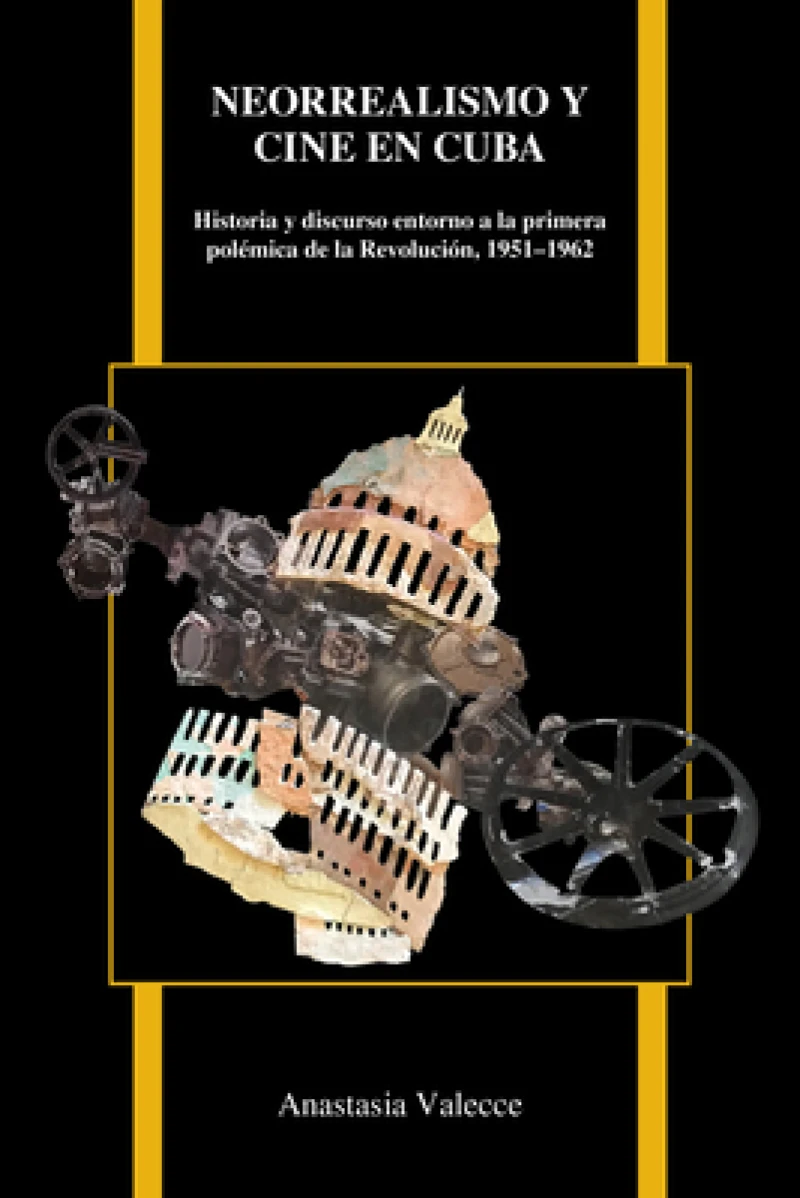
Neorrealismo Y Cine En Cuba : Historia Y Discurso Entorno a La Primera PolA©mica De La RevoluciA³n, 1951-1962
Book Details
Format
Paperback / Softback
Book Series
Purdue Studies in Romance Literatures
ISBN-10
1557539871
ISBN-13
9781557539878
Publisher
Purdue University Press
Imprint
Purdue University Press
Country of Manufacture
US
Country of Publication
GB
Publication Date
Nov 15th, 2020
Print length
232 Pages
Weight
333 grams
Dimensions
22.80 x 15.20 x 1.20 cms
Product Classification:
History of art / art & design stylesArt treatments & subjectsThe visual, decorative or fine arts: treatments and subjectsHistory of artFilms, cinemaFilm theory & criticismFilm: styles & genresFilms, cinemaFilm history, theory or criticismFilm: styles and genresGeneral & world historyGeneral and world history
Ksh 6,300.00
Werezi Extended Catalogue
0 in stock
Delivery Location
Delivery fee: Select location
Secure
Quality
Fast
Examines the aesthetic history and relations between Cuban film production and Italian Neorealism. The historical framework begins in 1951 before the triumph of the Cuban Revolution and ends in 1962, a year that marks a rupture between Cuban filmmakers and the Italian neorealist aesthetic.
Neorrealismo y cine en Cuba: Historia y discurso entorno a la primera polémica de la Revolución, 1951–1962 [Neorealism and Cinema in Cuba: History and Discourse on the First Polemic of the Revolution, 1951–1962] examines the aesthetic history and relations between Cuban film production and Italian Neorealism. The historical framework begins in 1951 before the triumph of the Cuban Revolution and ends in 1962, a year that marks a rupture between Cuban filmmakers and the Italian neorealist aesthetic. The main collaborations happened between Cuban directors Tomás Gutiérrez Alea and Julio García Espinosa and Italian neorealist filmmaker Cesare Zavattini. The circumstances that led to the end of the relationship between Zavattini and the Cuban filmmakers are connected to the film El joven rebelde [The Young Rebel], directed by García Espinosa and screened for the first time in 1961. The rupture centered on creative and ideological differences regarding the way in which the protagonist was to be portrayed in the movie. This seemingly minor disagreement had considerably larger repercussions, the end result of which was that García Espinosa and Gutiérrez Alea, as well as the rest of the Cuban filmmakers who worked within the Instituto Cubano del Arte e Industria Cinematográficos (ICAIC) after 1959, were driven to find their own creative strategies to craft a national film production. However, the Cuban filmmakers would not have found the necessary grammar to rewrite their own revolutionary cinema without the rupture with Zavattini. This new cinematographic language could not have existed without the various pauses and the distances that characterized the Cuban relationship with Neorealism. In other words, the fragmentary interchange between García Espinosa, Gutierrez Alea, and Zavattini created new spaces in which the Cubans could find creative opportunities to express their own cinematic vision.
Get Neorrealismo Y Cine En Cuba by at the best price and quality guaranteed only at Werezi Africa's largest book ecommerce store. The book was published by Purdue University Press and it has pages.

