
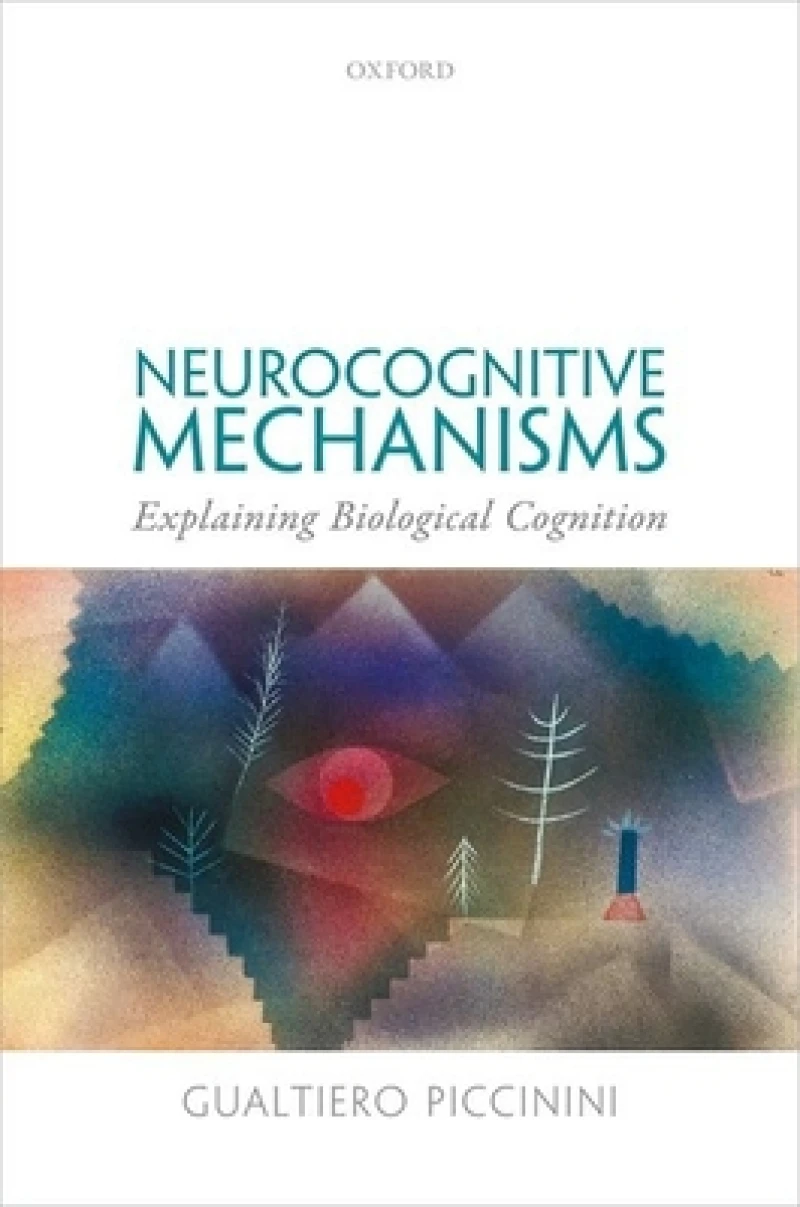
Neurocognitive Mechanisms : Explaining Biological Cognition
Book Details
Format
Hardback or Cased Book
ISBN-10
0198866283
ISBN-13
9780198866282
Publisher
Oxford University Press
Imprint
Oxford University Press
Country of Manufacture
GB
Country of Publication
GB
Publication Date
Nov 12th, 2020
Print length
416 Pages
Weight
790 grams
Dimensions
16.50 x 24.00 x 3.50 cms
Product Classification:
Cognitive sciencePhilosophy of mindPhilosophy of scienceNeurosciences
Ksh 21,600.00
Werezi Extended Catalogue
0 in stock
Delivery Location
Delivery fee: Select location
Secure
Quality
Fast
Gualtiero Piccinini presents a systematic and rigorous philosophical defence of the computational theory of cognition. His view posits that cognition involves neural computation within multilevel neurocognitive mechanisms, and includes novel ideas about ontology, functions, neural representation, neural computation, and consciousness.
In Neurocognitive Mechanisms Gualtiero Piccinini presents the most systematic, rigorous, and comprehensive philosophical defence to date of the computational theory of cognition. His view posits that cognition involves neural computation within multilevel neurocognitive mechanisms, and includes novel ideas about ontology, functions, neural representation, neural computation, and consciousness. He begins by defending an ontologically egalitarian account of composition and realization, according to which all levels are equally real. He then explicates multiple realizability and mechanisms within this ontologically egalitarian framework, defends a goal-contribution account of teleological functions, and defends a mechanistic version of functionalism. This provides the foundation for a mechanistic account of computation, which in turn clarifies the ways in which the computational theory of cognition is a multilevel mechanistic theory supported by contemporary cognitive neuroscience. Piccinini argues that cognition is computational at least in a generic sense. He defends the computational theory of cognition from standard objections, yet also rebuts putative a priori arguments. He contends that the typical vehicles of neural computations are representations, and that, contrary to the received view, the representations posited by the computational theory of cognition are observable and manipulatable in the laboratory. He also contends that neural computations are neither digital nor analog; instead, neural computations are sui generis. He concludes by investigating the relation between computation and consciousness, suggesting that consciousness may be a functional phenomenon without being computational in nature. This book will be of interest to philosophers of cognitive science as well as neuroscientists.
Get Neurocognitive Mechanisms by at the best price and quality guaranteed only at Werezi Africa's largest book ecommerce store. The book was published by Oxford University Press and it has pages.

