
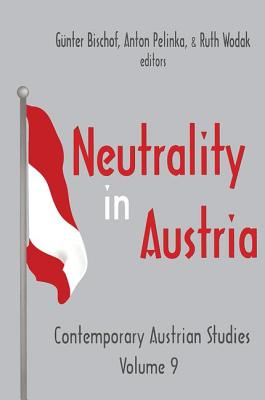
Neutrality in Austria
Book Details
Delivery Location
Delivery fee: Select location
The volume emerged from the Wittgenstein Research Center project on "Discourse, Politics, and Identity," an interdisciplinary investigation of the meaning of Austrian neutrality. The first two chapters analyze the current meaning of Austrian neutrality. Karin Liebhart records narrative interviews with former presidents Rudolf Kirchschlger and Kurt Waldheim, both central political actors present at the creation and implementation of Austria''s postwar neutrality. Gertraud Benke and Ruth Wodak provide in-depth analysis of a debate on Austrian National Television on "NATO and Neutrality," a microcosm of Austrian popular opinion that exposed all positions and ideological preferences on neutrality. The historian Oliver Rathkolb surveys international perceptions of Austrian neutrality over the past half-century. For comparative contrast David Irwin and John Wilson apply Foucault''s theoretical framework to the history and debates on neutrality in Ireland. Political scientists Heinz Grtner and Paul Luif provide examples of how Austrian neutrality has been handled in the past and today. Michael Gehler analyzes Austria''s response to the Hungarian crisis of 1956 and Klaus Eisterer reviews the Austrian legation''s handling of the 1968 Czechoslovak crisis.
Gnter Bischof is professor of history and executive director of Center Austria at the University of New Orleans. Anton Pelinka is professor of political science at the University of Innsbruck and director of the Institute of Conflict Research in Vienna. Ruth Wodak is professor in the linguistics department at the University of Vienna and director of the research center "Discourse, Politics, Identity" at the Austrian Academy of Science.
Get Neutrality in Austria by Anton Pelinka at the best price and quality guaranteed only at Werezi Africa's largest book ecommerce store. The book was published by Taylor & Francis Inc and it has 386 pages.
Customers Who Bought This Also Bought
Regime Change
KSh 5,050.00

Rise Fall Great Powers
KSh 3,050.00
Wealth, Poverty and Politics
KSh 6,300.00
Trade Wars Are Class Wars – How Rising Inequality Distorts the Global Economy and Threatens International Peace
KSh 2,600.00

A Brief History of Equality
KSh 2,850.00

Our Malady
KSh 2,000.00
The Vision of the Anointed
KSh 3,250.00
Seeing Like a State – How Certain Schemes to Improve the Human Condition Have Failed
KSh 3,550.00

Narrow Corridor
KSh 2,350.00

Chokepoint Capitalism
KSh 2,000.00

Abundance
KSh 3,400.00

Nudge
KSh 5,000.00
More by Anton Pelinka
Zur Aktualität von Paul F. Lazarsfeld
KSh 3,600.00

The Marshall Plan in Austria
KSh 11,250.00
Austrian Foreign Policy in Historical Context
KSh 18,700.00
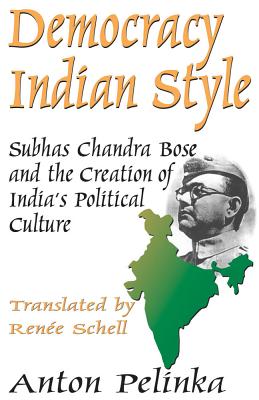
Democracy Indian Style
KSh 22,500.00

The Austrian Party System
KSh 9,100.00
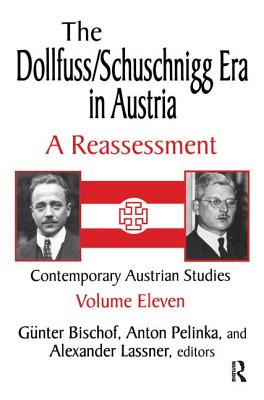
The Dollfuss/Schuschnigg Era in Austria
KSh 33,850.00
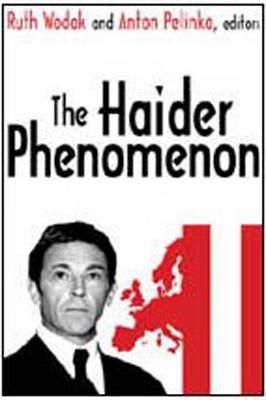
The Haider Phenomenon
KSh 30,950.00
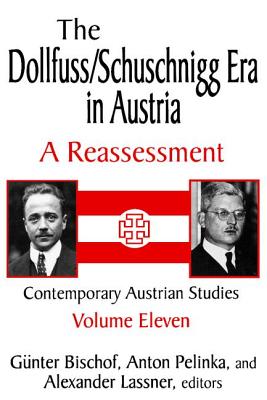
The Dollfuss/Schuschnigg Era in Austria
KSh 10,450.00

The Challenge of Ethnic Conflict, Democracy and Self-determination in Central Europe
KSh 30,950.00
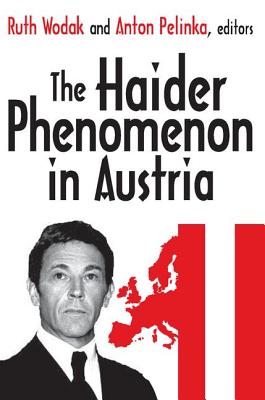
The Haider Phenomenon
KSh 10,450.00
Austria
KSh 8,500.00
Austrian Foreign Policy in Historical Context
KSh 7,250.00
