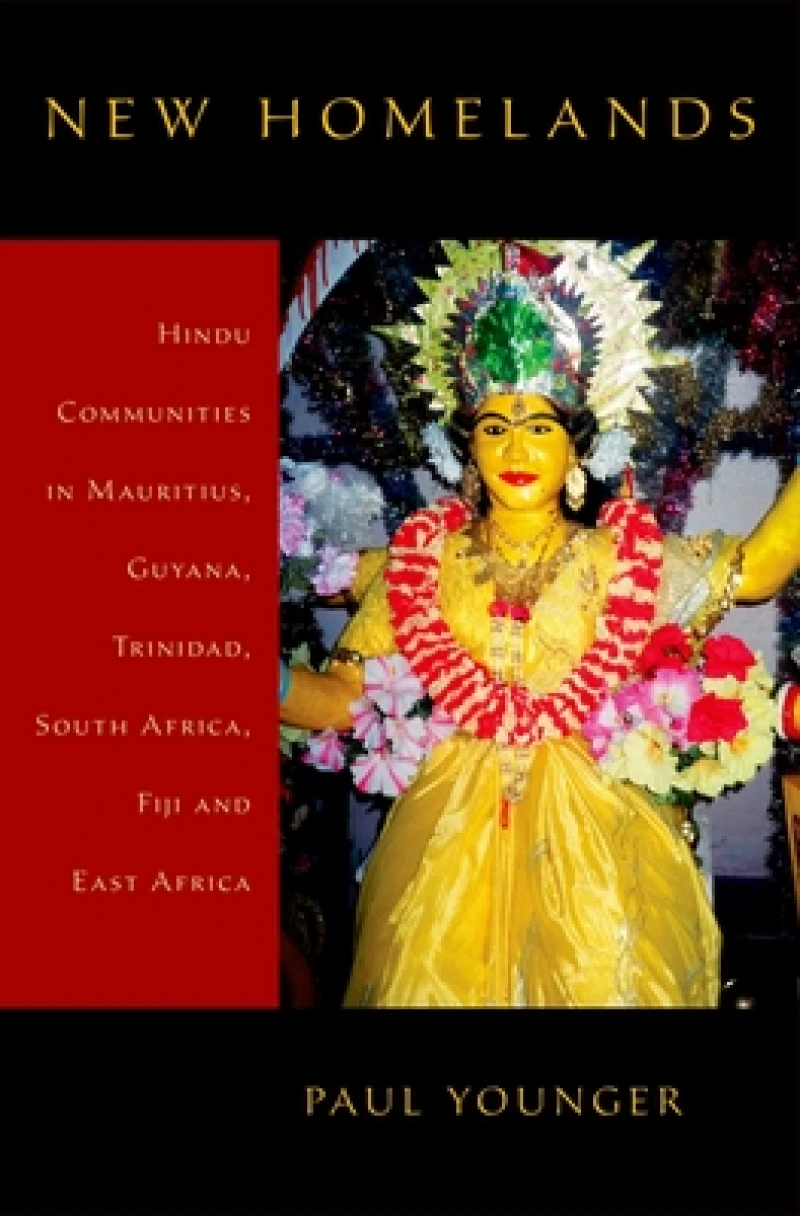
New Homelands : Hindu Communities in Mauritius, Guyana, Trinidad, South Africa, Fiji, and East Africa
by
Paul Younger
Book Details
Format
Hardback or Cased Book
ISBN-10
0195391640
ISBN-13
9780195391640
Publisher
Oxford University Press Inc
Imprint
Oxford University Press Inc
Country of Manufacture
GB
Country of Publication
GB
Publication Date
Dec 10th, 2009
Print length
304 Pages
Weight
634 grams
Dimensions
23.70 x 16.50 x 2.00 cms
Ksh 14,550.00
Manufactured on Demand
0 in stock
Delivery Location
Delivery fee: Select location
Secure
Quality
Fast
When the colonial slave trade, and then slavery itself, were abolished early in the 19th century, the British empire brazenly set up a new system of trade using Indian rather than African laborers. The new system of ''indentured'' labor was supposed to be different from slavery because the indenture, or contract, was written for an initial period of five years and involved fixed wages and some specified conditions of work. In this fieldwork-based study, Paul Younger looks at the present day descendents of these workers and their post-indenture societies in Mauritius, Guyana, Trinidad, South Africa, Fiji, and East Africa. He finds that they still cling to the fact that it was an arbitrary British decision that took them there and made the society pluralistic. This plurality seems to require them to search their memory for a distinctive religious tradition that they can pass on to their children
When the colonial slave trade, and then slavery itself, were abolished early in the 19th century, the British empire brazenly set up a new system of trade using Indian rather than African laborers. The new system of "indentured" labor was supposed to be different from slavery because the indenture, or contract, was written for an initial period of five years and involved fixed wages and some specified conditions of work. From the workers'' point of view, the one redeeming feature of the system was that most of their workmates spoke their language and came from the same area of India. Because this allowed them to develop some sense of community, by the end of the initial five years most of the Indian laborers chose to stay in the land to which they had been taken. In time that land became the place in which they joined with others to build a new homeland. In this fieldwork-based study, Paul Younger looks at the present day descendents of these workers and their post-indenture societies in Mauritius, Guyana, Trinidad, South Africa, Fiji, and East Africa. He finds that they still cling to the fact that it was an arbitrary British decision that took them there and made the society pluralistic. This plurality seems to require them to search their memory for a distinctive religious tradition that they can pass on to their children. They know that there was a loss of culture involved in their move to these locations and consider it important to recover from that loss. But they are also intensely proud of their new identity, and insist that they have established a new religious tradition in their new homeland. For generations, says Younger, these people had struggled in their situation and now they had come up with a sense of community and purpose and were prepared to make the historical claim that they had developed an appropriate religious tradition for their specific community.
Get New Homelands by at the best price and quality guaranteed only at Werezi Africa's largest book ecommerce store. The book was published by Oxford University Press Inc and it has pages.