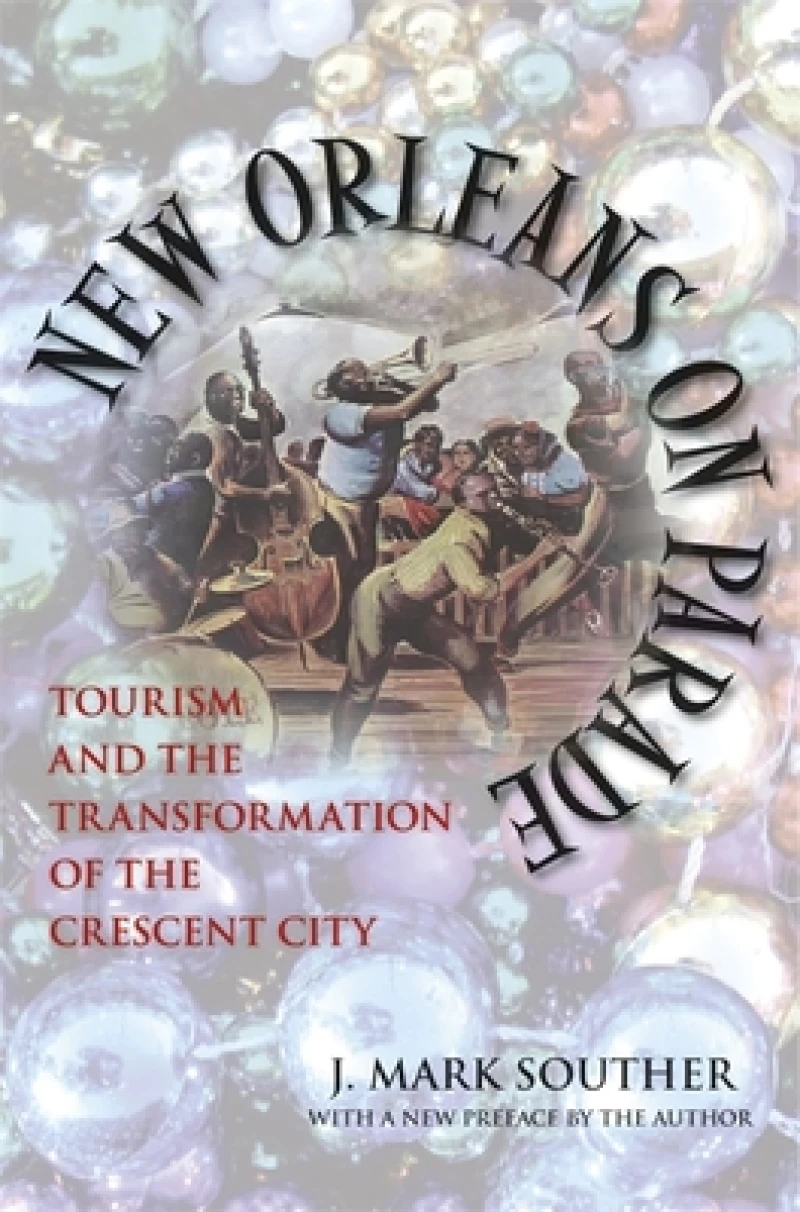
New Orleans on Parade : Tourism and the Transformation of the Crescent City
Book Details
Format
Paperback / Softback
Book Series
Making the Modern South
ISBN-10
0807154415
ISBN-13
9780807154410
Publisher
Louisiana State University Press
Imprint
Louisiana State University Press
Country of Manufacture
US
Country of Publication
GB
Publication Date
Oct 7th, 2013
Print length
340 Pages
Weight
333 grams
Dimensions
22.60 x 15.20 x 2.50 cms
Product Classification:
Industry & industrial studiesIndustry and industrial studies
Ksh 6,300.00
Werezi Extended Catalogue
0 in stock
Delivery Location
Delivery fee: Select location
Secure
Quality
Fast
Tells the story of the Big Easy in the twentieth century. In this urban biography, J. Mark Souther explores the Crescent City's architecture, music, food and alcohol, folklore and spiritualism, Mardi Gras festivities, and illicit sex commerce in revealing how New Orleans became a city that parades itself to visitors and residents alike.
New Orleans on Parade tells the story of the Big Easy in the twentieth century. In this urban biography, J. Mark Souther explores the Crescent City's architecture, music, food and alcohol, folklore and spiritualism, Mardi Gras festivities, and illicit sex commerce in revealing how New Orleans became a city that parades itself to visitors and residents alike. Stagnant between the Civil War and World War II - a period of great expansion nationally - New Orleans unintentionally preserved its distinctive physical appearance and culture. Though business, civic, and government leaders tried to pursue conventional modernization in the 1940s, competition from other Sunbelt cities as well as a national economic shift from production to consumption gradually led them to seize on tourism as the growth engine for future prosperity, giving rise to a veritable gumbo of sensory attractions. A trend in historic preservation and the influence of outsiders helped fan this newfound identity, and the city's residents learned to embrace rather than disdain their past. A growing reliance on the tourist trade fundamentally affected social relations in New Orleans. African Americans were cast as actors who shaped the culture that made tourism possible while at the same time they were exploited by the local power structure. As black leaders' influence increased, the white elite attempted to keep its traditions - including racial inequality - intact, and race and class issues often lay at the heart of controversies over progress. Once the most tolerant diverse city in the South and the nation, New Orleans came to lag behind the rest of the country in pursuing racial equity. Souther traces the ascendancy of tourism in New Orleans through the final decades of the twentieth century and beyond, examining the 1984 World's Fair, the collapse of Louisiana's oil industry in the eighties, and the devastating blow dealt by Hurricane Katrina in 2005. Narrated in a lively style and resting on a bedrock of research, New Orleans on Parade is a landmark book that allows readers to fully understand the image-making of the Big Easy.
Get New Orleans on Parade by at the best price and quality guaranteed only at Werezi Africa's largest book ecommerce store. The book was published by Louisiana State University Press and it has pages.