
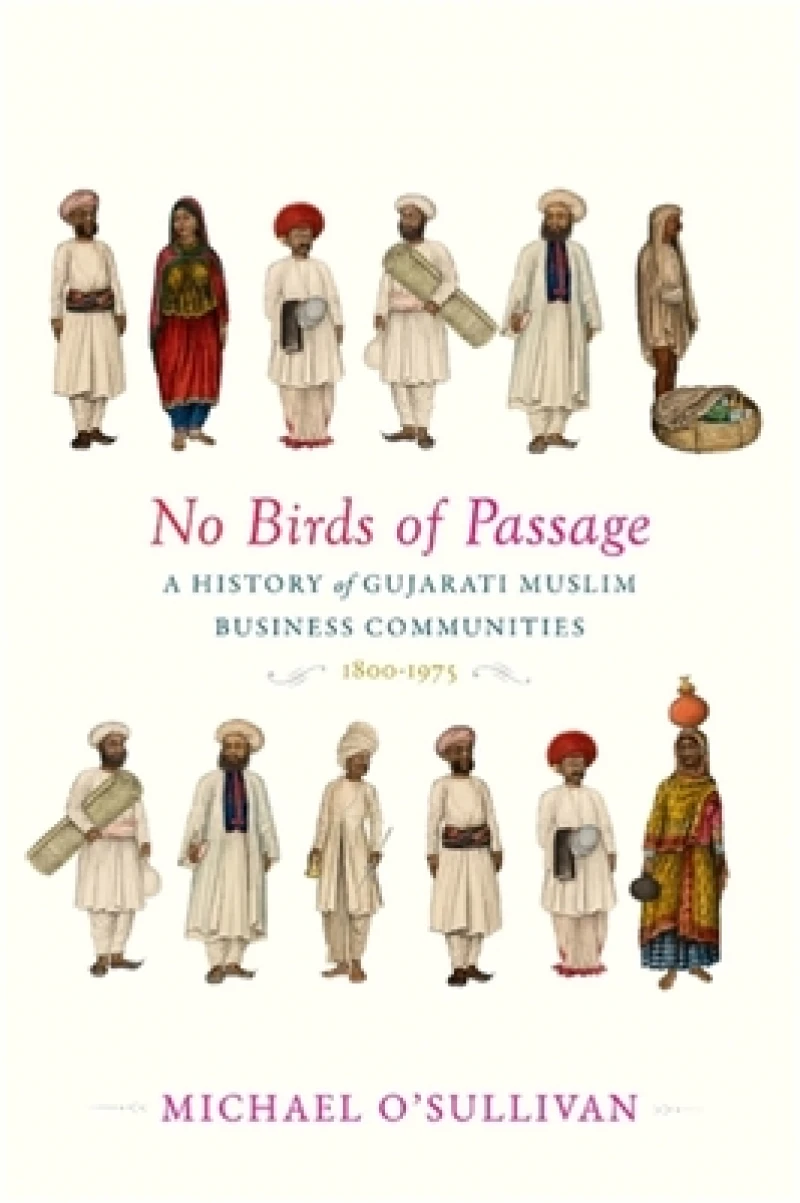
No Birds of Passage – A History of Gujarati Muslim Business Communities, 1800–1975 : A History of Gujarati Muslim Business Communities, 1800–1975
Book Details
Format
Hardback or Cased Book
ISBN-10
0674271904
ISBN-13
9780674271906
Publisher
Harvard University Press
Imprint
Harvard University Press
Country of Manufacture
GB
Country of Publication
GB
Publication Date
Sep 19th, 2023
Print length
400 Pages
Weight
772 grams
Dimensions
16.50 x 24.40 x 3.60 cms
Ksh 7,900.00
Temporarily out of stock, due soon
0 in stock
Delivery Location
Delivery fee: Select location
Secure
Quality
Fast
No Birds of Passage explores the remarkable business success of three Gujarati Muslim commercial castes: the Bohras, Khojas, and Memons. Often stereotyped as “Westernized” and as Hindus in all but name, these groups are better seen as having developed a distinctive Muslim capitalism, in which religious and commercial prerogatives are inseparable.
A sweeping account of three Gujarati Muslim trading communities, whose commercial success over nearly two centuries sheds new light on the history of capitalism, Islam, and empire in South Asia. During the nineteenth century, three Gujarati Muslim commercial castes—the Bohras, Khojas, and Memons—came to dominate Muslim business in South Asia. Although these communities constitute less than 1 percent of South Asia’s Muslim population, they are still disproportionately represented among the region’s leading Muslim-owned firms today. In No Birds of Passage, Michael O’Sullivan argues that the conditions enabling their success have never been understood, thanks to stereotypes—embraced equally by colonial administrators and Muslim commentators—that estrange them from their religious identity. Yet while long viewed as Hindus in all but name, or as “Westernized” Muslims who embraced colonial institutions, these groups in fact entwined economic prerogatives and religious belief in a distinctive form of Muslim capitalism. Following entrepreneurial firms from Gujarat to the Hijaz, Hong Kong, Mombasa, Rangoon, and beyond, O’Sullivan reveals the importance of kinship networks, private property, and religious obligation to their business endeavors. This paradigm of Muslim capitalism found its highest expression in the jamaats, the central caste institutions of each community, which combined South Asian, Islamicate, and European traditions of corporate life. The jamaats also played an essential role in negotiating the position of all three groups in relation to British authorities and Indian Muslim nationalists, as well as the often-sharp divisions within the castes themselves. O’Sullivan’s account sheds light on Gujarati Muslim economic life from the dawn of colonial hegemony in India to the crisis of the postcolonial state, and provides fascinating insights into the broader effects of capitalist enterprise on Muslim experience in modern South Asia.
Get No Birds of Passage – A History of Gujarati Muslim Business Communities, 1800–1975 by at the best price and quality guaranteed only at Werezi Africa's largest book ecommerce store. The book was published by Harvard University Press and it has pages.

