
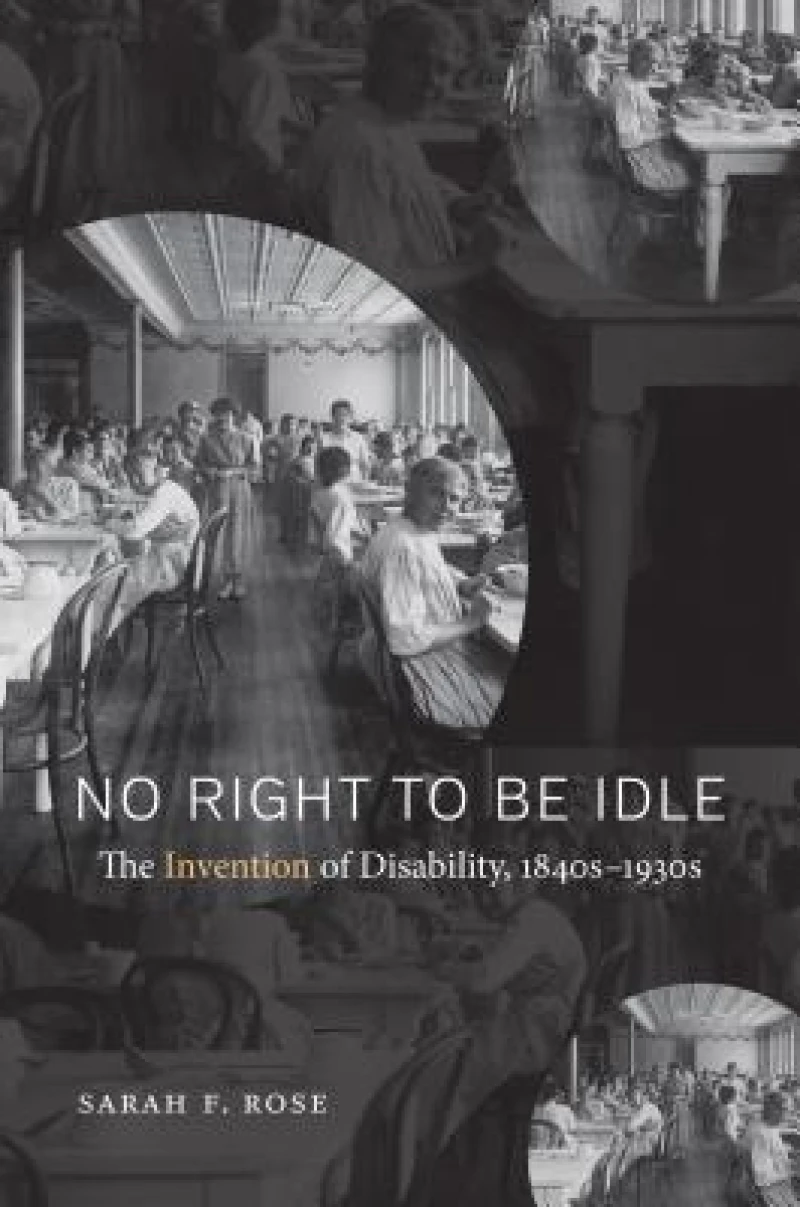
No Right to Be Idle : The Invention of Disability, 1850-1930
by
Sarah Rose
Book Details
Format
Paperback / Softback
ISBN-10
1469624893
ISBN-13
9781469624891
Publisher
The University of North Carolina Press
Imprint
The University of North Carolina Press
Country of Manufacture
US
Country of Publication
GB
Publication Date
Apr 3rd, 2017
Print length
400 Pages
Weight
644 grams
Dimensions
15.80 x 23.40 x 3.20 cms
Product Classification:
Disability: social aspectsDisability: social aspectsLabour / income economicsLabour economics
Ksh 5,950.00
Werezi Extended Catalogue
0 in stock
Delivery Location
Delivery fee: Select location
Secure
Quality
Fast
During the late nineteenth and early twentieth centuries, Americans with all sorts of disabilities came to be labelled as ""unproductive citizens"". As Sarah F. Rose explains, a perfect storm of public policies, shifting family structures, and economic changes barred workers with disabilities from mainstream workplaces and simultaneously cast disabled people as morally questionable dependents.
During the late nineteenth and early twentieth centuries, Americans with all sorts of disabilities came to be labeled as “unproductive citizens.” Before that, disabled people had contributed as they were able in homes, on farms, and in the wage labor market, reflecting the fact that Americans had long viewed productivity as a spectrum that varied by age, gender, and ability. But as Sarah F. Rose explains in No Right to Be Idle, a perfect storm of public policies, shifting family structures, and economic changes effectively barred workers with disabilities from mainstream workplaces and simultaneously cast disabled people as morally questionable dependents in need of permanent rehabilitation to achieve ""self-care"" and ""self-support.""
By tracing the experiences of policymakers, employers, reformers, and disabled people caught up in this epochal transition, Rose masterfully integrates disability history and labor history. She shows how people with disabilities lost access to paid work and the status of “worker”--a shift that relegated them and their families to poverty and second-class economic and social citizenship. This has vast consequences for debates about disability, work, poverty, and welfare in the century to come.
By tracing the experiences of policymakers, employers, reformers, and disabled people caught up in this epochal transition, Rose masterfully integrates disability history and labor history. She shows how people with disabilities lost access to paid work and the status of “worker”--a shift that relegated them and their families to poverty and second-class economic and social citizenship. This has vast consequences for debates about disability, work, poverty, and welfare in the century to come.
Get No Right to Be Idle by at the best price and quality guaranteed only at Werezi Africa's largest book ecommerce store. The book was published by The University of North Carolina Press and it has pages.

