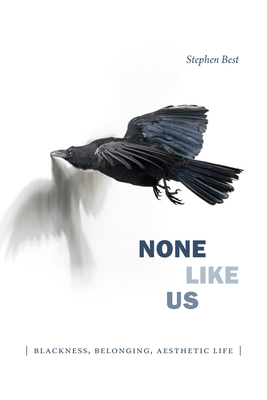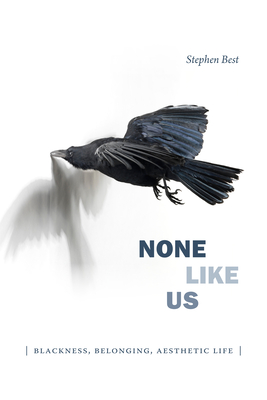
None Like Us : Blackness, Belonging, Aesthetic Life
by
Stephen Best
Book Details
Format
Paperback / softback
Book Series
Theory Q
ISBN-10
147800150X
ISBN-13
9781478001508
Publisher
Duke University Press
Imprint
Duke University Press
Country of Manufacture
US
Country of Publication
GB
Publication Date
Nov 26th, 2018
Print length
208 Pages
Weight
322 grams
Dimensions
22.90 x 15.20 x 1.80 cms
KSh 3,950.00
Temporarily out of stock, due soon
0 in stock
Delivery Location
Delivery fee: Select location
Secure
Quality
Fast
It passes for an unassailable truth that the slave past provides an explanatory prism for understanding the black political present. In None Like Us Stephen Best reappraises what he calls “melancholy historicism”-a kind of crime scene investigation in which the forensic imagination is directed toward the recovery of a “we” at the point of “our” violent origin. Best argues that there is and can be no “we” following from such a time and place, that black identity is constituted in and through negation, taking inspiration from David Walker’s prayer that “none like us may ever live again until time shall be no more.” Best draws out the connections between a sense of impossible black sociality and strains of negativity that have operated under the sign of queer. In None Like Us the art of El Anatsui and Mark Bradford, the literature of Toni Morrison and Gwendolyn Brooks, even rumors in the archive, evidence an apocalyptic aesthetics, or self-eclipse, which opens the circuits between past and present and thus charts a queer future for black study.
Get None Like Us by Stephen Best at the best price and quality guaranteed only at Werezi Africa's largest book ecommerce store. The book was published by Duke University Press and it has 208 pages.
Customers Who Bought This Also Bought

The Finest Hotel in Kabul
KSh 2,150.00

Black Wave
KSh 2,700.00

Migrations
KSh 5,450.00

Art of War / The Book of Lord Shang
KSh 1,100.00

Nexus
KSh 2,350.00

World According to Colour
KSh 2,700.00

Crusade for Justice – The Autobiography of Ida B. Wells, Second Edition
KSh 4,050.00

Modern Classics Road To Wigan Pier
KSh 1,800.00

The Origins of Totalitarianism
KSh 2,700.00
In the Wake
KSh 3,600.00
Question of Palestine
KSh 2,700.00

Palestine
KSh 2,400.00