
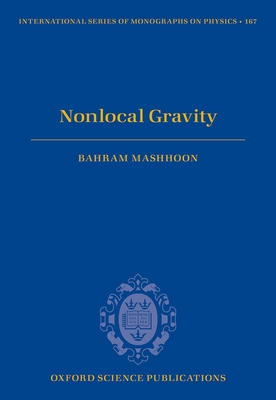
Nonlocal Gravity
Book Details
Format
Hardback
Book Series
International Series of Monographs on Physics
ISBN-10
019880380X
ISBN-13
9780198803805
Publisher
Oxford University Press
Imprint
Oxford University Press
Country of Manufacture
GB
Country of Publication
GB
Publication Date
May 18th, 2017
Print length
252 Pages
Weight
648 grams
Dimensions
25.20 x 18.20 x 2.10 cms
Product Classification:
Theoretical & mathematical astronomyTheoretical and mathematical astronomyRelativity physics
KSh 20,050.00
Currently unavailable
0 in stock
Delivery Location
Delivery fee: Select location
Secure
Quality
Fast
Relativity theory assumes locality, without accounting for the observer's past history. This book introduces nonlocality, or history dependence, into relativity theory. Inertia and gravitation are deeply tied, suggesting gravity may be nonlocal. The gravitational memory of past events must then be taken into account.
Relativity theory is based on a postulate of locality, which means that the past history of the observer is not directly taken into account. This book argues that the past history should be taken into account. In this way, nonlocality---in the sense of history dependence---is introduced into relativity theory. The deep connection between inertia and gravitation suggests that gravity could be nonlocal, and in nonlocal gravity the fading gravitational memory of past events must then be taken into account. Along this line of thought, a classical nonlocal generalization of Einstein''s theory of gravitation has recently been developed.A significant consequence of this theory is that the nonlocal aspect of gravity appears to simulate dark matter. According to nonlocal gravity theory, what astronomers attribute to dark matter should instead be due to the nonlocality of gravitation. Nonlocality dominates on the scale of galaxies and beyond. Memory fades with time; therefore, the nonlocal aspect of gravity becomes weaker as the universe expands.The implications of nonlocal gravity are explored in this book for gravitational lensing, gravitational radiation, the gravitational physics of the Solar System and the internal dynamics of nearby galaxies, as well as clusters of galaxies. This approach is extended to nonlocal Newtonian cosmology, where the attraction of gravity fades with the expansion of the universe. Thus far, scientists have only compared some of the consequences of nonlocal gravity with astronomical observations.
Get Nonlocal Gravity by Bahram, Professor of Physics (retired), Department of Physics and Astronomy, University of Missour at the best price and quality guaranteed only at Werezi Africa's largest book ecommerce store. The book was published by Oxford University Press and it has 252 pages.
Customers Who Bought This Also Bought

Seven Brief Lessons on Physics
KSh 2,350.00
Series of Bessel and Kummer-Type Functions
KSh 8,100.00
Expanding Worldviews: Astrobiology, Big History and Cosmic Perspectives
KSh 36,000.00

Mapping the Primordial Universe
KSh 8,100.00

Taking the Back off the Watch
KSh 16,200.00
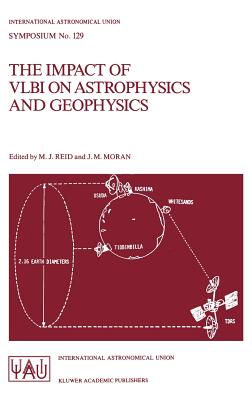
The Impact of VLBI on Astrophysics and Geophysics
KSh 32,400.00

Archaeoastronomy
KSh 10,100.00

Archaeoastronomy
KSh 3,250.00
Making Waves
KSh 6,300.00
Bayesian Logical Data Analysis for the Physical Sciences
KSh 22,500.00

How to Build a Universe
KSh 4,500.00

Life on Earth and other Planetary Bodies
KSh 23,400.00
More in This Genre
Seven Brief Lessons on Physics
KSh 2,350.00
Series of Bessel and Kummer-Type Functions
KSh 8,100.00
Expanding Worldviews: Astrobiology, Big History and Cosmic Perspectives
KSh 36,000.00
Mapping the Primordial Universe
KSh 8,100.00
Taking the Back off the Watch
KSh 16,200.00
The Impact of VLBI on Astrophysics and Geophysics
KSh 32,400.00
