
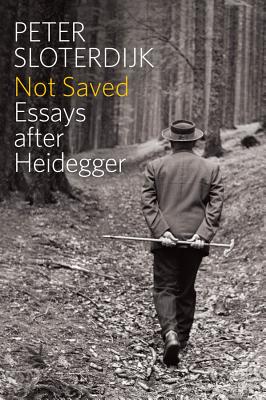
Not Saved – Essays After Heidegger : Essays After Heidegger
Book Details
Format
Hardback
ISBN-10
0745696988
ISBN-13
9780745696980
Publisher
John Wiley and Sons Ltd
Imprint
Polity Press
Country of Manufacture
GB
Country of Publication
GB
Publication Date
Nov 4th, 2016
Print length
300 Pages
Weight
580 grams
Dimensions
23.90 x 15.90 x 2.90 cms
Product Classification:
Phenomenology & ExistentialismPhenomenology and Existentialism
KSh 9,900.00
Currently unavailable
0 in stock
Delivery Location
Delivery fee: Select location
Secure
Quality
Fast
One can rightly say of Peter Sloterdijk that each of his essays and lectures is also an unwritten book. That is why the texts presented here, which sketch a philosophical physiognomy of Martin Heidegger, should also be characterized as a collected renunciation of exhaustiveness.
One can rightly say of Peter Sloterdijk that each of his essays and lectures is also an unwritten book. That is why the texts presented here, which sketch a philosophical physiognomy of Martin Heidegger, should also be characterized as a collected renunciation of exhaustiveness. In order to situate Heidegger's thought in the history of ideas and problems, Peter Sloterdijk approaches Heidegger's work with questions such as: If Western philosophy emerged from the spirit of the polis, what are we to make of the philosophical suitability of a man who never made a secret of his stubborn attachment to rural life? Is there a provincial truth of which the cosmopolitan city knows nothing? Is there a truth in country roads and cabins that would be able to undermine the universities with their standardized languages and globally influential discourses? From where does this odd professor speak, when from his professorial chair in Freiburg he claims to inquire into what lies beyond the history of Western metaphysics? Sloterdijk also considers several other crucial twentieth-century thinkers who provide some needed contrast for the philosophical physiognomy of Martin Heidegger. A consideration of Niklas Luhmann as a kind of contemporary version of the Devil's Advocate, a provocative critical interpretation of Theodor Adorno's philosophy that focuses on its theological underpinnings and which also includes reflections on the philosophical significance of hyperbole, and a short sketch of the pessimistic thought of Emil Cioran all round out and deepen Sloterdijk's attempts to think with, against, and beyond Heidegger. Finally, in essays such as "Domestication of Being" and the "Rules for the Human Park," which incited an international controversy around the time of its publication and has been translated afresh for this volume, Sloterdijk develops some of his most intriguing and important ideas on anthropogenesis, humanism, technology, and genetic engineering.
Get Not Saved – Essays After Heidegger by Peter Sloterdijk at the best price and quality guaranteed only at Werezi Africa's largest book ecommerce store. The book was published by John Wiley and Sons Ltd and it has 300 pages.
Customers Who Bought This Also Bought

Trouble With Being Born
KSh 2,000.00
Being and Nothingness
KSh 7,300.00
Existentialists and Mystics
KSh 4,500.00
Existentialism and Humanism
KSh 1,800.00
Nausea
KSh 2,000.00
Phenomenology of Spirit
KSh 5,700.00
What is Literature?
KSh 3,250.00

The Modern Classics Myth of Sisyphus
KSh 2,000.00
Man for Himself
KSh 3,350.00
Hegel''s Inversion of Philosophy
KSh 17,100.00
Sickness unto Death
KSh 2,000.00
Brooklyn Crime Novel
KSh 1,800.00
More by Peter Sloterdijk

The Continent Without Qualities
KSh 9,900.00

Midwife of the Intellect
KSh 1,600.00

The Continent Without Qualities
KSh 3,300.00
Globes
KSh 6,600.00
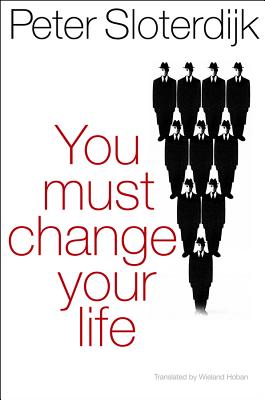
You Must Change Your Life
KSh 3,900.00

Prometheus''s Remorse
KSh 2,500.00
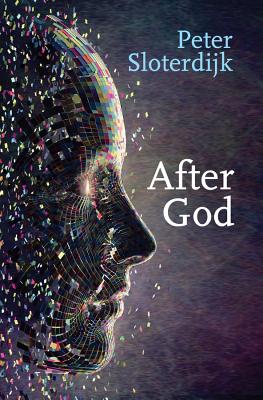
After God
KSh 3,400.00
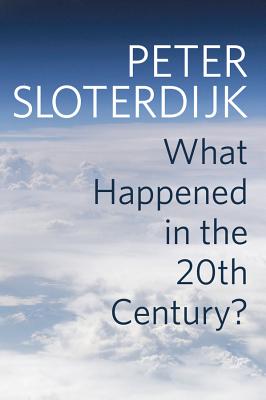
What Happened in the Twentieth Century?: Towards a Critique of Extremist Reason
KSh 3,500.00

Out of the World
KSh 3,950.00

Stress and Freedom
KSh 6,300.00
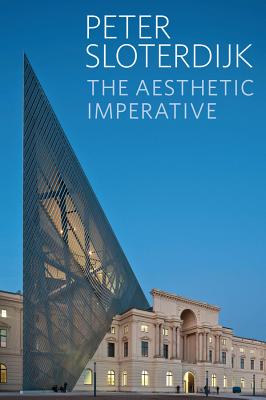
The Aesthetic Imperative – Writings on Art
KSh 9,900.00
Derrida, an Egyptian
KSh 6,300.00
