
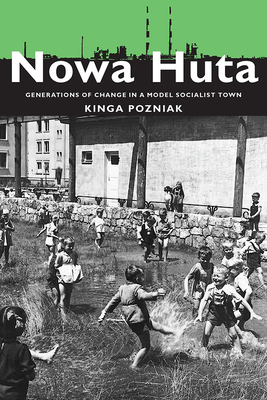
Nowa Huta : Generations of Change in a Model Socialist Town
Book Details
Format
Paperback / softback
Book Series
Russian and East European Studies
ISBN-10
0822963183
ISBN-13
9780822963189
Publisher
University of Pittsburgh Press
Imprint
University of Pittsburgh Press
Country of Manufacture
US
Country of Publication
GB
Publication Date
Oct 24th, 2014
Print length
240 Pages
Weight
366 grams
Dimensions
23.20 x 15.40 x 1.80 cms
KSh 8,450.00
Temporarily out of stock, due soon
0 in stock
Delivery Location
Delivery fee: Select location
Secure
Quality
Fast
Kinga Pozniak shows how the political, economic, and social upheavals in Nowa Huta, Poland have profoundly shaped the memory of these events in the minds of three generations of people who lived through them since the end of the Second World War.
In 1949 construction of the planned town of Nowa Huta began on the outskirts of Kraków, Poland. Its centerpiece, the Lenin Steelworks, promised a secure future for workers and their families. By the 1980s, however, the rise of the Solidarity movement and the ensuing shock therapy program of the early 1990s rapidly transitioned the country from socialism to a market-based economy, and Nowa Huta fell on hard times. Kinga Pozniak shows how the remarkable political, economic, and social upheavals since the end of the Second World War have profoundly shaped the historical memory of these events in the minds of the people who lived through them. Through extensive interviews, she finds three distinct, generationally based framings of the past. Those who built the town recall the might of local industry and plentiful jobs. The following generation experienced the uprisings of the 1980s and remembers the repression and dysfunction of the socialist system and their resistance to it. Today’s generation has no direct experience with either socialism or Solidarity, yet as residents of Nowa Huta they suffer the stigma of lower-class stereotyping and marginalization from other Poles. Pozniak examines the factors that lead to the rewriting of history and the formation of memory, and the use of history to sustain current political and economic agendas. She finds that despite attempts to create a single, hegemonic vision of the past and a path for the future, these discourses are always contested—a dynamic that, for the residents of Nowa Huta, allows them to adapt as their personal experience tells them.
Get Nowa Huta by Kinga Pozniak at the best price and quality guaranteed only at Werezi Africa's largest book ecommerce store. The book was published by University of Pittsburgh Press and it has 240 pages.
Customers Who Bought This Also Bought

Nexus
KSh 2,350.00

World According to Colour
KSh 2,700.00

Sapiens
KSh 2,350.00

Guns, Germs and Steel
KSh 2,400.00

Shifting Sands
KSh 4,500.00

21 Lessons for the 21st Century
KSh 2,350.00

Profits, Prophets, Coaches and Kings
KSh 4,500.00

Africa Is Not A Country
KSh 2,350.00

Myth and Meaning
KSh 2,150.00

Three Women
KSh 2,000.00

Half of It
KSh 2,000.00

Death and Life of Great American Cities
KSh 3,600.00
