
Book Details
Delivery Location
Delivery fee: Select location
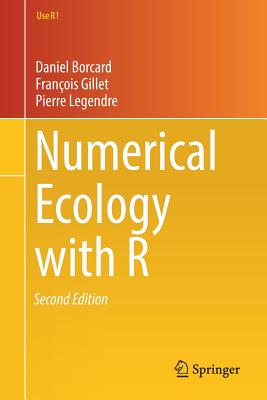
This new edition of Numerical Ecology with R guides readers through an applied exploration of the major methods of multivariate data analysis, as seen through the eyes of three ecologists. It provides a bridge between a textbook of numerical ecology and the implementation of this discipline in the R language. The book begins by examining some exploratory approaches. It proceeds logically with the construction of the key building blocks of most methods, i.e. association measures and matrices, and then submits example data to three families of approaches: clustering, ordination and canonical ordination. The last two chapters make use of these methods to explore important and contemporary issues in ecology: the analysis of spatial structures and of community diversity. The aims of methods thus range from descriptive to explanatory and predictive and encompass a wide variety of approaches that should provide readers with an extensive toolbox that can address a wide palette of questions arising in contemporary multivariate ecological analysis. The second edition of this book features a complete revision to the R code and offers improved procedures and more diverse applications of the major methods. It also highlights important changes in the methods and expands upon topics such as multiple correspondence analysis, principal response curves and co-correspondence analysis. New features include the study of relationships between species traits and the environment, and community diversity analysis.
This book is aimed at professional researchers, practitioners, graduate students and teachers in ecology, environmental science and engineering, and in related fields such as oceanography, molecular ecology, agriculture and soil science, who already have a background in general and multivariate statistics and wish to apply this knowledge to their data using the R language, as well as people willing to accompany their disciplinary learning with practical applications. People from other fields (e.g. geology, geography, paleoecology, phylogenetics, anthropology, the social and education sciences, etc.) may also benefit from the materials presented in this book. Users are invited to use this book as a teaching companion at the computer. All the necessary data files, the scripts used in the chapters, as well as extra R functions and packages written by the authors of the book, are available online (URL: http://adn.biol.umontreal.ca/~numericalecology/numecolR/).Get Numerical Ecology with R by Daniel Borcard, François Gillet at the best price and quality guaranteed only at Werezi Africa's largest book ecommerce store. The book was published by Springer International Publishing AG and it has 435 pages.
Customers Who Bought This Also Bought

How to Lie with Statistics
KSh 2,350.00
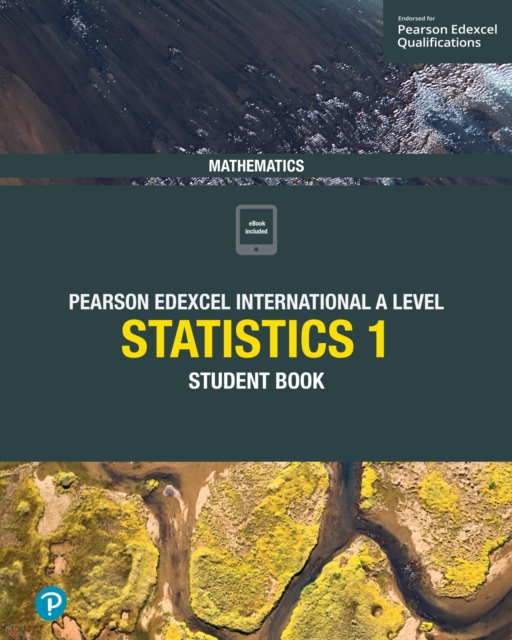
Pearson Edexcel International A Level Mathematics Statistics 1 Student Book
KSh 5,900.00
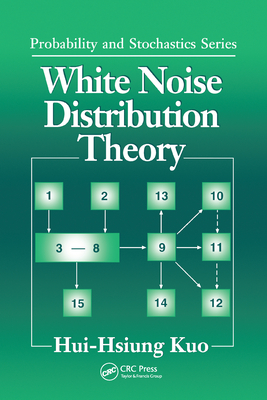
White Noise Distribution Theory
KSh 9,750.00
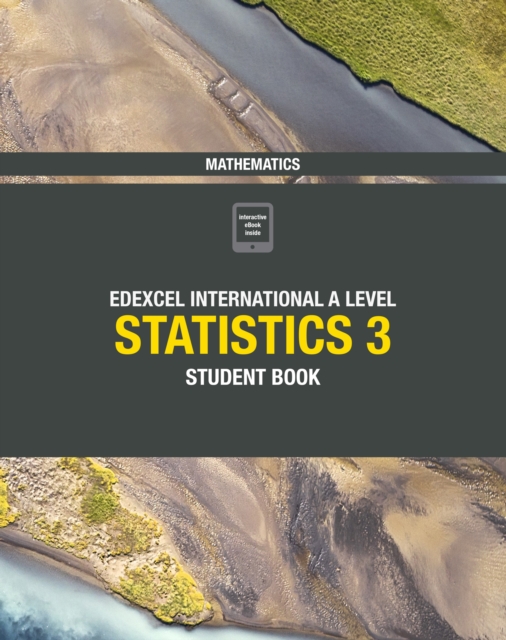
Pearson Edexcel International A Level Mathematics Statistics 3 Student Book
KSh 5,700.00

Pearson Edexcel International A Level Mathematics Statistics 2 Student Book
KSh 5,700.00

Caie Al Maths - Prob 1
KSh 4,500.00

Scouting and Scoring – How We Know What We Know about Baseball
KSh 3,050.00
Caie Al Maths - Prob 2
KSh 4,450.00

Modeling Cancer Progression and the Effects of Treatment
KSh 21,950.00

Introduction to Data Science
KSh 9,900.00

Stochastic Differential Equations
KSh 13,150.00

The Evidential Foundations of Probalistic Reasoning
KSh 6,850.00
More by Daniel Borcard, François Gillet


More in This Genre
How to Lie with Statistics
KSh 2,350.00
Pearson Edexcel International A Level Mathematics Statistics 1 Student Book
KSh 5,900.00
White Noise Distribution Theory
KSh 9,750.00
Pearson Edexcel International A Level Mathematics Statistics 3 Student Book
KSh 5,700.00
Pearson Edexcel International A Level Mathematics Statistics 2 Student Book
KSh 5,700.00
Caie Al Maths - Prob 1
KSh 4,500.00
