
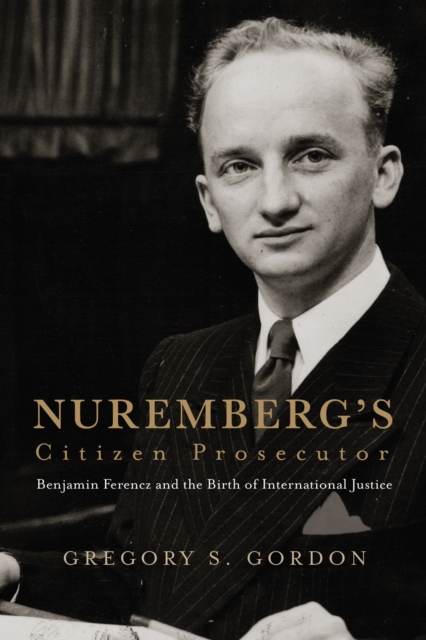
Nuremberg''s Citizen Prosecutor : Benjamin Ferencz and the Birth of International Justice
Book Details
Delivery Location
Delivery fee: Select location
Delivery in 2 days
The remarkable life of one of the twentieth century's great warriors for justice, from Nuremberg to the first trial of the International Criminal Court
On September 29, 1947, in Courtroom 600, before the Nuremberg Military Tribunal, twenty-seven-year-old Benjamin Ferencz approached the lectern to deliver the prosecution's opening statement against Hitler's brutal henchmen of the Einsatzgruppen—the SS killing units responsible for more than 1.5 million deaths during the Holocaust—in what the Associated Press dubbed "the biggest murder trial in history." As the field of international criminal justice was being born in the aftermath of World War II, only Ferencz led in all its phases: investigation, prosecution, and restitution—an extraordinary feat given his humble origins as an impoverished immigrant escaping antisemitic persecution in Eastern Europe and growing up in New York's Hell's Kitchen. A Harvard Law scholarship student, Ferencz had been General Patton's lead war crimes field investigator before becoming a chief prosecutor at Nuremberg. Horrified by what he encountered, he dedicated his career to Holocaust survivors, pioneering key restitution efforts and helping negotiate the landmark reparations treaty between West Germany, Israel, and Jewish civil society. Later, he became a peace advocate and driving force behind the creation of the International Criminal Court, remarkably joining the prosecution for the Court's first trial as the last living Nuremberg prosecutor.
Gregory Gordon, a former war crimes prosecutor himself and the first scholar with full access to Ferencz's personal papers, has produced an expansive, page-turning biography that uncovers incredible, and previously unknown, details about Ferencz's remarkable life. In this first major biography of the Nuremberg prosecutor in English, Gordon reveals fascinating missing links running through Ferencz's career which throw into a whole new light his landmark achievements.
Get Nuremberg''s Citizen Prosecutor by Gregory S. Gordon at the best price and quality guaranteed only at Werezi Africa's largest book ecommerce store. The book was published by University of Virginia Press and it has 520 pages.
Customers Who Bought This Also Bought

The Second Emancipation – Nkrumah, Pan–Africanism, and Global Blackness at High Tide
KSh 5,650.00

Maurice and Maralyn
KSh 2,000.00
Crusade for Justice – The Autobiography of Ida B. Wells, Second Edition
KSh 4,050.00

Ecce Homo
KSh 1,800.00

The Life of the Author – Maya Angelou
KSh 3,600.00

Centre Cannot Hold
KSh 3,050.00

Year of Magical Thinking
KSh 2,000.00

Muhammad: His Life Based on the Earliest Sources
KSh 3,600.00
Survive the Savage Sea
KSh 2,600.00

Buckley
KSh 6,250.00

Life in Letters
KSh 5,400.00

Green Hills of Africa
KSh 1,800.00
More in This Genre
The Second Emancipation – Nkrumah, Pan–Africanism, and Global Blackness at High Tide
KSh 5,650.00
Maurice and Maralyn
KSh 2,000.00
Crusade for Justice – The Autobiography of Ida B. Wells, Second Edition
KSh 4,050.00
Ecce Homo
KSh 1,800.00
The Life of the Author – Maya Angelou
KSh 3,600.00
Centre Cannot Hold
KSh 3,050.00
