
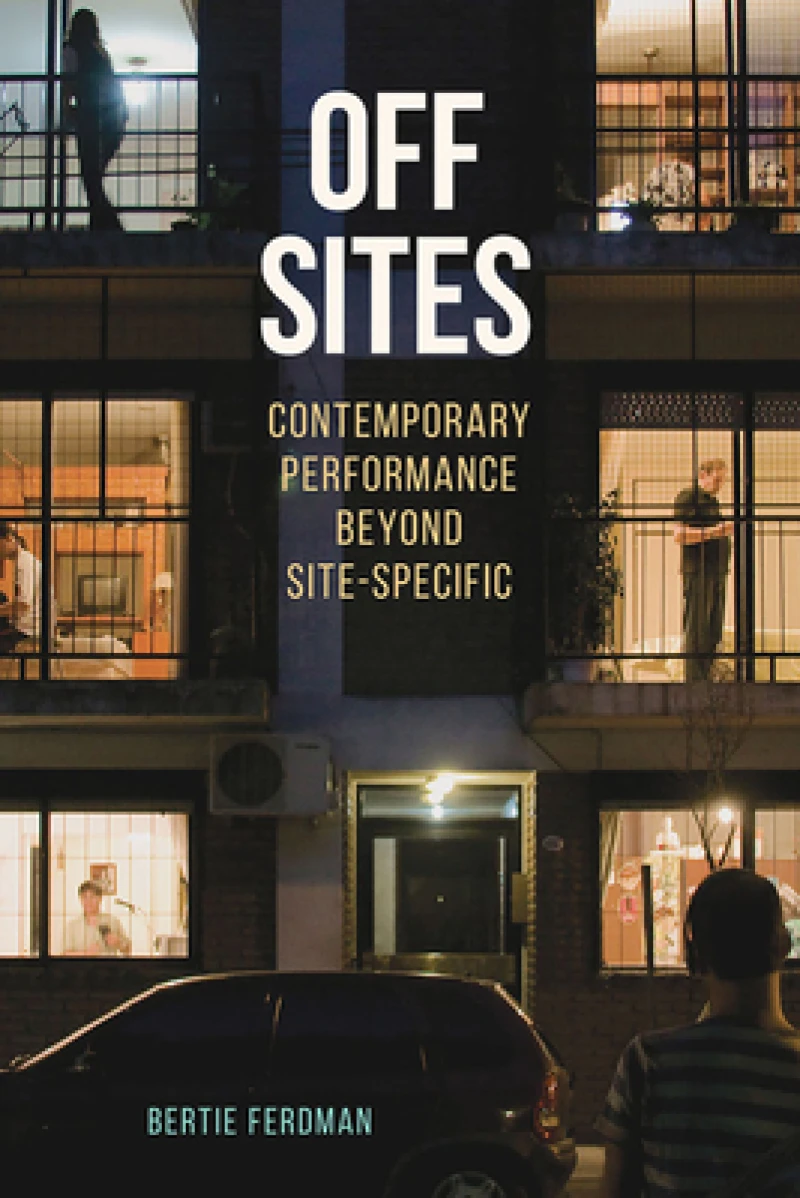
Off Sites : Contemporary Performance Beyond Site-Specific
Book Details
Format
Paperback / Softback
ISBN-10
0809334704
ISBN-13
9780809334704
Publisher
Southern Illinois University Press
Imprint
Southern Illinois University Press
Country of Manufacture
US
Country of Publication
GB
Publication Date
Jul 30th, 2018
Print length
200 Pages
Weight
352 grams
Dimensions
15.30 x 22.80 x 2.20 cms
Product Classification:
Theatre studiesIndividual actors & performersIndividual actors and performersTheatre studies
Ksh 5,750.00
Werezi Extended Catalogue
0 in stock
Delivery Location
Delivery fee: Select location
Secure
Quality
Fast
Rethinks current definitions of ""site-specific performance"" - a genre of theatre that adopts spaces outside of traditional theatre buildings and uses the experience of space, place, and situation as an integral component to the structure and content of a theatrical work. This book looks at key productions of artists working in this genre.
Off Sites: Contemporary Performance beyond Site-Specific rethinks current definitions of “site-specific performance”—a genre of theatre that adopts spaces outside of traditional theatre buildings and uses the experience of space, place, and situation as an integral component to the structure and content of a theatrical work.
This book looks at key productions of artists working in this genre, including Private Moment by David Levine and Geyser Land, conceived and directed by video artist Mary Ellen Strom and choreographer Ann Carlson.
This incredibly rich and vital part of theatre in the past several decades has become diverse enough that the term “site-specific” has ceased to adequately describe it. Contextualizing site-specific practices in both visual and performing arts discourses, author Bertie Ferdman traces the evolution of that term from an experimental staging practice to an engaged situational event. Substituting the term “off-site,” she illustrates the ways in which a new generation of artists have challenged the disciplinary frameworks of site-specific theatre.
She focuses on five distinct ways in which these artists do that: 1) blurring the traditional boundaries between the fictional and the real; 2) changing how the audience and actor interact with each other and whether they are physically together or apart; 3) fabricating sites from physically bound, conceptually constructed, or virtual spaces; 4) establishing live situations in real vs. fiction; and 5) challenging our preconceived notions of time and space.
The first chapter outlines the book’s primary goals, traces the genealogy of site-based work through the twentieth and twenty-first centuries, and presents the theoretical groundwork for the book. Each subsequent chapter focuses on a particular type of “off-site”: Disciplinary Sites, Spectator Sites, Temporal Sites, Urban Sites, and contains several case studies.
Main questions asked by this study include: How are artists and performances engaging with site? What sites do contemporary theatre practices engender? How does live performance negotiate such sites?
This book looks at key productions of artists working in this genre, including Private Moment by David Levine and Geyser Land, conceived and directed by video artist Mary Ellen Strom and choreographer Ann Carlson.
This incredibly rich and vital part of theatre in the past several decades has become diverse enough that the term “site-specific” has ceased to adequately describe it. Contextualizing site-specific practices in both visual and performing arts discourses, author Bertie Ferdman traces the evolution of that term from an experimental staging practice to an engaged situational event. Substituting the term “off-site,” she illustrates the ways in which a new generation of artists have challenged the disciplinary frameworks of site-specific theatre.
She focuses on five distinct ways in which these artists do that: 1) blurring the traditional boundaries between the fictional and the real; 2) changing how the audience and actor interact with each other and whether they are physically together or apart; 3) fabricating sites from physically bound, conceptually constructed, or virtual spaces; 4) establishing live situations in real vs. fiction; and 5) challenging our preconceived notions of time and space.
The first chapter outlines the book’s primary goals, traces the genealogy of site-based work through the twentieth and twenty-first centuries, and presents the theoretical groundwork for the book. Each subsequent chapter focuses on a particular type of “off-site”: Disciplinary Sites, Spectator Sites, Temporal Sites, Urban Sites, and contains several case studies.
Main questions asked by this study include: How are artists and performances engaging with site? What sites do contemporary theatre practices engender? How does live performance negotiate such sites?
Get Off Sites by at the best price and quality guaranteed only at Werezi Africa's largest book ecommerce store. The book was published by Southern Illinois University Press and it has pages.

