
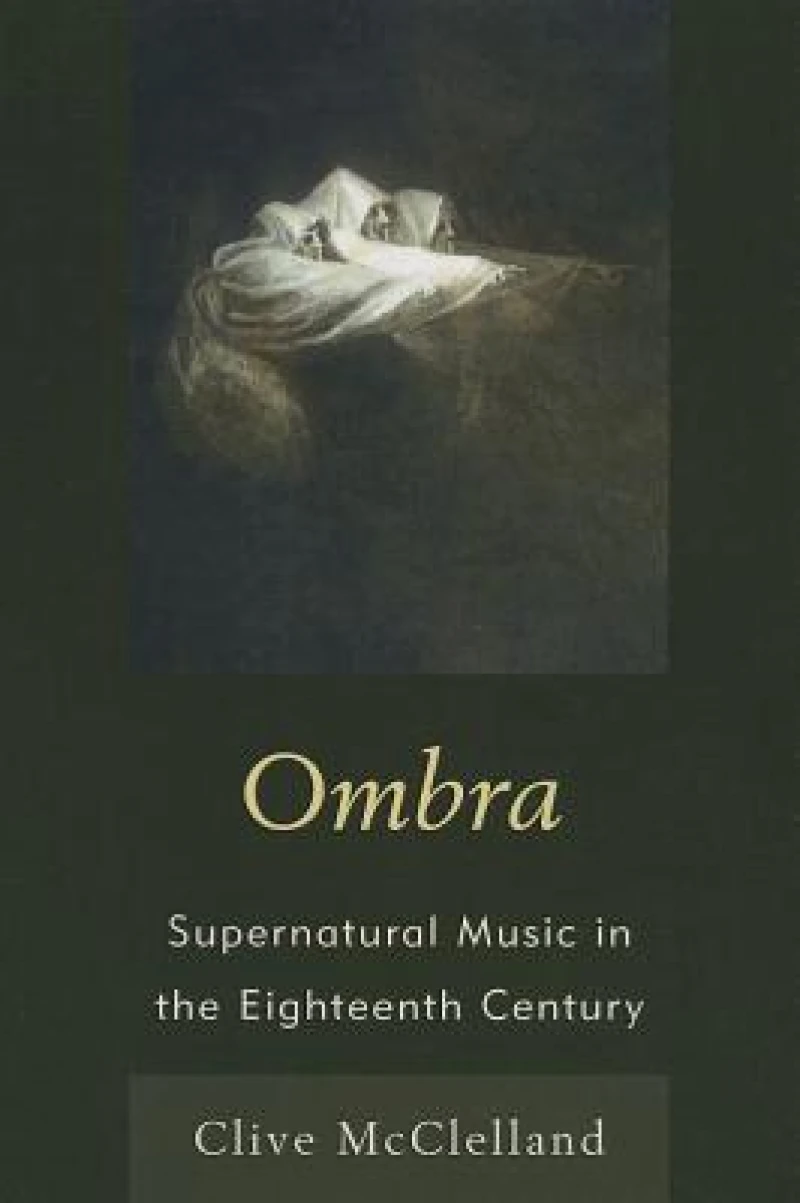
Ombra : Supernatural Music in the Eighteenth Century
Book Details
Format
Paperback / Softback
ISBN-10
0739188178
ISBN-13
9780739188170
Publisher
Bloomsbury Publishing Plc
Imprint
Lexington Books
Country of Manufacture
GB
Country of Publication
GB
Publication Date
Oct 9th, 2013
Print length
260 Pages
Weight
358 grams
Dimensions
22.60 x 15.40 x 2.20 cms
Product Classification:
Theory of music & musicologyWestern "classical" musicOperaWorld music
Ksh 9,850.00
Manufactured on Demand
0 in stock
Delivery Location
Delivery fee: Select location
Secure
Quality
Fast
Ombra is the term which applies to an operatic scene involving the appearance of an oracle or demon, witches, or ghosts. Such scenes can be traced back to the early days of opera and were commonplace in the seventeenth century in Italy and France. Operas based on the legends of Orpheus, Iphigenia, and Alcestis provide numerous examples of ombra and extend well into the eighteenth century. Clive McClelland's Ombra: Supernatural Music in the Eighteenth Century is an in-depth examination of ombra and is many influences on classical music performance. McClelland reveals that ombra scenes proved popular with audiences not only because of the special stage effects employed, but also due to increasing use of awe-inspiring musical effects. By the end of the eighteenth century the scenes had come to be associated with an elaborate set of musical features including slow, sustained writing, the use of flat keys, angular melodic lines, chromaticism and dissonance, dotted rhythms and syncopation, tremolando effects, unexpected harmonic progressions, and unusual instrumentation, especially involving trombones. It is clearly distinct from other styles that exhibit some of these characteristics, such as the so-called 'Sturm und Drang' or 'Fantasia.' Futhermore, parallels can be drawn between these features and Edmund Burke's 'sublime of terror,' thus placing ombra music on an important position in the context of eighteenth-century aesthetic theory.
Ombra is the term which applies to an operatic scene involving the appearance of an oracle or demon, witches, or ghosts. Such scenes can be traced back to the early days of opera and were commonplace in the seventeenth century in Italy and France. Operas based on the legends of Orpheus, Iphigenia, and Alcestis provide numerous examples of ombra and extend well into the eighteenth century.Clive McClelland''s Ombra: Supernatural Music in the Eighteenth Century is an in-depth examination of ombra and is many influences on classical music performance. McClelland reveals that ombra scenes proved popular with audiences not only because of the special stage effects employed, but also due to increasing use of awe-inspiring musical effects. By the end of the eighteenth century the scenes had come to be associated with an elaborate set of musical features including slow, sustained writing, the use of flat keys, angular melodic lines, chromaticism and dissonance, dotted rhythms and syncopation, tremolando effects, unexpected harmonic progressions, and unusual instrumentation, especially involving trombones. It is clearly distinct from other styles that exhibit some of these characteristics, such as the so-called ''Sturm und Drang'' or ''Fantasia.'' Futhermore, parallels can be drawn between these features and Edmund Burke''s ''sublime of terror,'' thus placing ombra music on an important position in the context of eighteenth-century aesthetic theory.
Get Ombra by at the best price and quality guaranteed only at Werezi Africa's largest book ecommerce store. The book was published by Bloomsbury Publishing Plc and it has pages.

