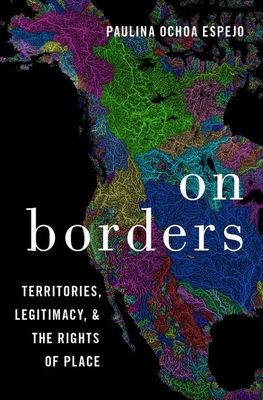
On Borders : Territories, Legitimacy, and the Rights of Place
Book Details
Format
Hardback
ISBN-10
0190074191
ISBN-13
9780190074197
Publisher
Oxford University Press Inc
Imprint
Oxford University Press Inc
Country of Manufacture
US
Country of Publication
GB
Publication Date
Sep 8th, 2020
Print length
344 Pages
Weight
660 grams
Dimensions
16.40 x 24.30 x 2.40 cms
KSh 20,550.00
Temporarily out of stock, due soon
0 in stock
Delivery Location
Delivery fee: Select location
Secure
Quality
Fast
On Borders asks when are borders legitimate, and it offers a new theory to answer the question. The book challenges critical and normative theories that criticize or justify borders solely in terms of identity (who you are), and instead frames borders and border legitimacy from the perspective of place and presence (where you are). Instead of thinking of borders as the exclusionary limit of identity groups (a "desert island model"), the book develops a theory of territorial jurisdictions grounded on place-specific relations, giving central roles to urban settings and the environment. Paulina Ochoa Espejo calls this the "watershed model" of territorial rights and borders.
When are borders justified? Who has a right to control them? Where should they be drawn?Today people think of borders as an island''s shores. Just as beaches delimit a castaway''s realm, so borders define the edges of a territory, occupied by a unified people, to whom the land legitimately belongs. Hence a territory is legitimate only if it belongs to a people unified by a civic identity. Sadly, this Desert Island Model of territorial politics forces us to choose. If we want territories, then we can either have democratic legitimacy, or inclusion of different civic identities--but not both. The resulting politics creates mass xenophobia, migrant-bashing, hoarding of natural resources, and border walls. To escape all this, On Borders presents an alternative model. Drawing on an intellectual tradition concerned with how land and climate shape institutions, it argues that we should not see territories as pieces of property owned by identity groups. Instead, we should see them as watersheds: as interconnected systems where institutions, people, the biota, and the land together create overlapping civic duties and relations, what the book calls place-specific duties. This Watershed Model argues that borders are justified when they allow us to fulfill those duties; that border-control rights spring from internationally-agreed conventions--not from internal legitimacy; that borders should be governed cooperatively by the neighboring states and the states system; and that border redrawing should be done with environmental conservation in mind. The book explores how this model undoes the exclusionary politics of desert islands.
Get On Borders by Paulina Ochoa Espejo at the best price and quality guaranteed only at Werezi Africa's largest book ecommerce store. The book was published by Oxford University Press Inc and it has 344 pages.
Customers Who Bought This Also Bought

River of Darkness
KSh 2,700.00

Landmarks
KSh 2,350.00

Forgotten
KSh 2,000.00

Sand, Science, and the Civil War
KSh 8,800.00

Migrant Justice in the Age of Removal – Rights, Law, and Resistance against Territory's Exclusions
KSh 19,050.00
Beyond the Mountains
KSh 6,550.00

The Price of Permanence – Nature and Business in the New South
KSh 11,800.00

Reinventing the River City
KSh 17,500.00
The Rise and Decline of the Redneck Riviera – An Insider`s History of the Florida–Alabama Coast
KSh 6,700.00
Let Us Now Praise Famous Gullies
KSh 5,550.00
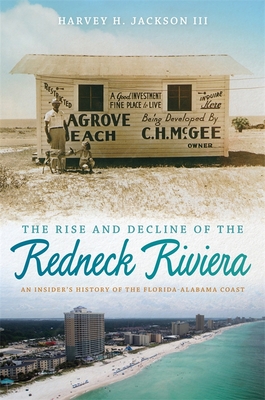
Rise and Decline of the Redneck Riviera
KSh 4,850.00
The Georgia-South Carolina Boundary
KSh 5,850.00