
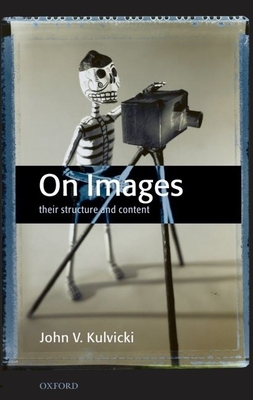
On Images : Their Structure and Content
Book Details
Format
Hardback
ISBN-10
019929075X
ISBN-13
9780199290758
Publisher
Oxford University Press
Imprint
Oxford University Press
Country of Manufacture
GB
Country of Publication
GB
Publication Date
Aug 3rd, 2006
Print length
272 Pages
Weight
460 grams
Dimensions
14.40 x 21.90 x 1.80 cms
KSh 11,950.00
Currently unavailable
0 in stock
Delivery Location
Delivery fee: Select location
Secure
Quality
Fast
Shows that a properly crafted structural account of pictures has many advantages over the perceptual accounts that dominate the literature on this topic. This book explains the close relationship between pictures, diagrams, graphs and other kinds of non-linguistic representation.
Whether it was the demands of life, leisure, or a combination of both that forced our hands, we have developed a myriad of artefacts---maps, notes, descriptions, diagrams, flow-charts, photographs, paintings, and prints---that stand for other things. Most agree that images and their close relatives are special because, in some sense, they look like what they are about. This simple claim is the starting point for most philosophical investigations into the nature of depiction.On Images argues that this starting point is fundamentally misguided. Whether a representation is an image depends not on how it is perceived but on how it relates to others within a system. This kind of approach, first championed by Nelson Goodman in his Languages of Art, has not found many supporters, in part because of weaknesses with Goodman''s account. On Images shows that a properly crafted structural account of pictures has many advantages over the perceptual accounts that dominate the literature on this topic. In particular, it explains the close relationship between pictures, diagrams, graphs and other kinds of non-linguistic representation. It undermines the claim that pictures are essentially visual by showing that audio recordings, tactile line drawings, and other non-visual representations are pictorial. Also, by avoiding explaining images in terms of how we perceive them, this account sheds new light on why pictures seem so perceptually special in the first place. This discussion of picture perception recasts some old debates on the topic, suggests further lines of philosophical and empirical research, and ultimately leads to a new perspective on pictorial realism.
Get On Images by John V. Kulvicki at the best price and quality guaranteed only at Werezi Africa's largest book ecommerce store. The book was published by Oxford University Press and it has 272 pages.
Customers Who Bought This Also Bought

World According to Colour
KSh 2,700.00
What Art Does
KSh 2,700.00
Art on My Mind
KSh 2,000.00

Modern Classics Ways of Seeing
KSh 2,000.00
Monsters
KSh 2,350.00

Create Dangerously
KSh 700.00

Danse Macabre
KSh 2,500.00
Thinking About Art – A Thematic Guide to Art History
KSh 5,800.00

Monsters
KSh 3,600.00

The Artist''s Way
KSh 4,500.00
The Artist''s Way Toolkit
KSh 2,350.00

Goya''s Last Portrait/A Question of Geography
KSh 2,350.00
