
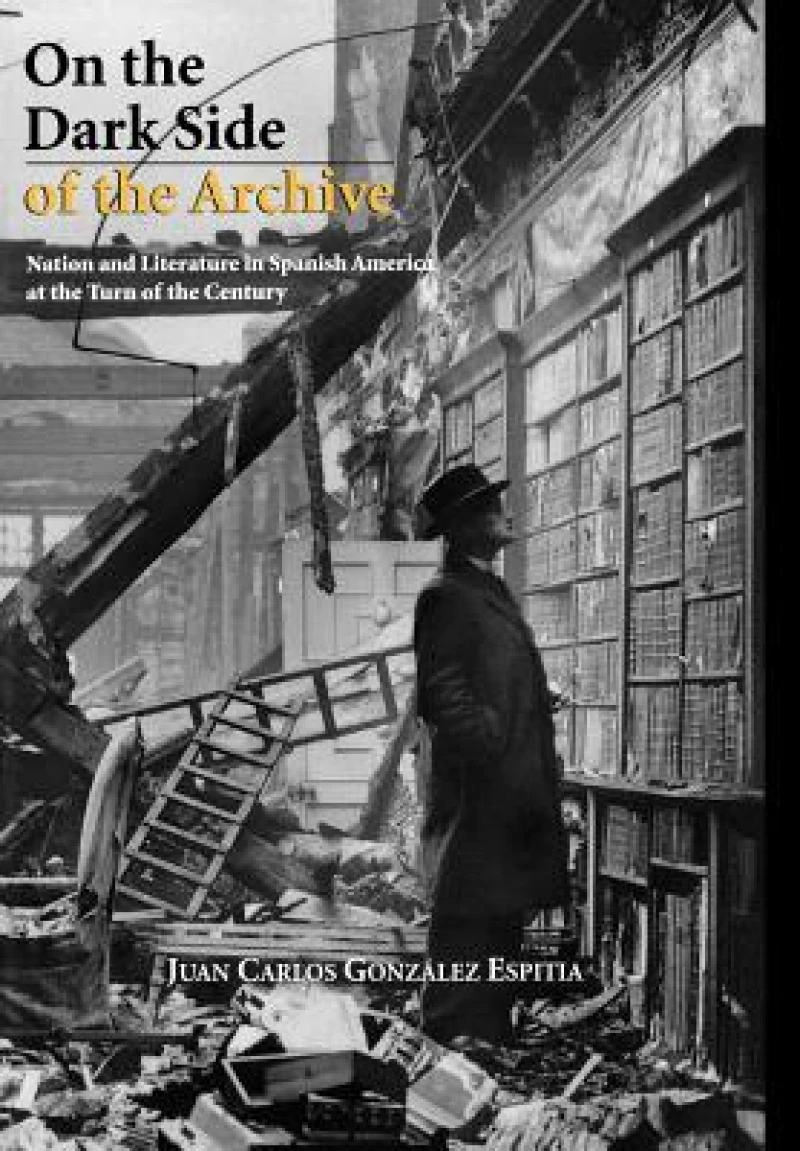
On the Dark Side of the Archive : Nation and Literature in Spanish America at the Turn of the Century
Book Details
Format
Hardback or Cased Book
ISBN-10
161148331X
ISBN-13
9781611483314
Publisher
Bucknell University Press
Imprint
Bucknell University Press
Country of Manufacture
GB
Country of Publication
GB
Publication Date
Dec 1st, 2009
Print length
250 Pages
Weight
510 grams
Dimensions
24.40 x 16.70 x 1.90 cms
Product Classification:
Literary reference worksSocial & cultural historySocial classesPolitical science & theory
Ksh 17,500.00
Manufactured on Demand
0 in stock
Delivery Location
Delivery fee: Select location
Secure
Quality
Fast
On the Dark Side of the Archive examines nineteenth-century nation building through narratives that are not part of the romantic or realist traditions, specifically those associated with the critique of traditional ideas often portrayed in Decadentism and modernismo. The study focuses on the "non-canonical" works of turn-of-the-century authors—including José María Vargas Vila, Horacio Quiroga, Clemente Palma, and José Martí—and concludes with a study that compares the literary portrayal of doomed societies in the nineteenth century with the work of contemporary authors, such as Fernando Vallejo. González Espitia establishes a critique of the concept of nation building in the romantic narratives of South America. These narratives are generally characterized by underlying erotic discourses meant to set the recently liberated countries of Latin America on a path toward class harmony, racial integration, socially beneficial marriage, and demographic expansion. An analysis of nation-building narratives understood as erotic discourses must also consider novels that manifest a dynamics of self-destruction. The authors included in this book subvert the idea of "nation" as a clear, positive, and fruitful space, bringing a dose of reality to this elusive concept. These authors design alternative futures for Latin America, futures that were seen as fruitless, obscure, contemptible, or doomed.
On the Dark Side of the Archive examines nineteenth-century nation building through narratives that are not part of the romantic or realist traditions, specifically those associated with the critique of traditional ideas often portrayed in Decadentism and modernismo. The study focuses on the "non-canonical" works of turn-of-the-century authors—including José María Vargas Vila, Horacio Quiroga, Clemente Palma, and José Martí—and concludes with a study that compares the literary portrayal of doomed societies in the nineteenth century with the work of contemporary authors, such as Fernando Vallejo. González Espitia establishes a critique of the concept of nation building in the romantic narratives of South America. These narratives are generally characterized by underlying erotic discourses meant to set the recently liberated countries of Latin America on a path toward class harmony, racial integration, socially beneficial marriage, and demographic expansion. An analysis of nation-building narratives understood as erotic discourses must also consider novels that manifest a dynamics of self-destruction. The authors included in this book subvert the idea of "nation" as a clear, positive, and fruitful space, bringing a dose of reality to this elusive concept. These authors design alternative futures for Latin America, futures that were seen as fruitless, obscure, contemptible, or doomed.
Get On the Dark Side of the Archive by at the best price and quality guaranteed only at Werezi Africa's largest book ecommerce store. The book was published by Bucknell University Press and it has pages.

