
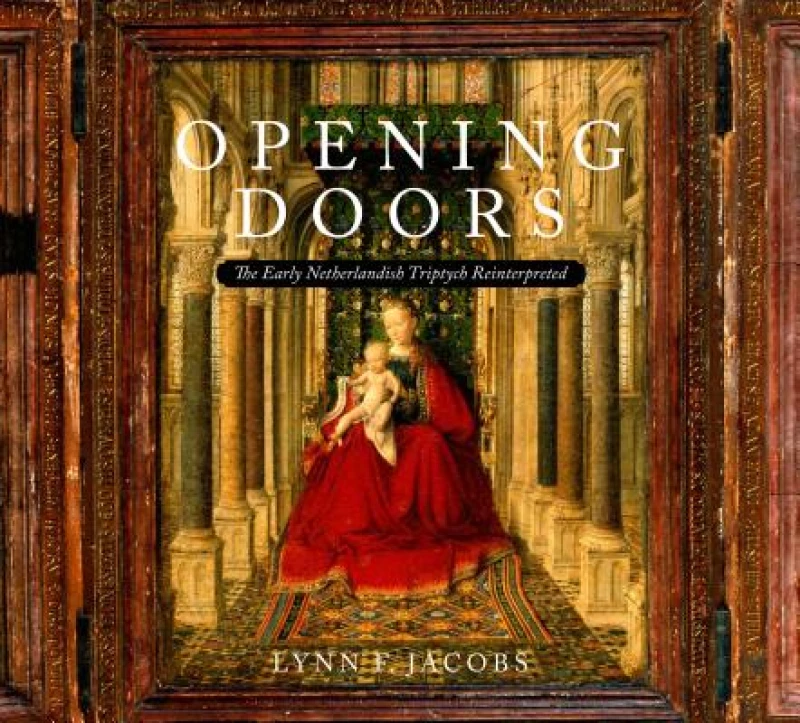
Opening Doors – The Early Netherlandish Triptych Reinterpreted : The Early Netherlandish Triptych Reinterpreted
Book Details
Format
Hardback or Cased Book
ISBN-10
0271048409
ISBN-13
9780271048406
Publisher
Pennsylvania State University Press
Imprint
Pennsylvania State University Press
Country of Manufacture
US
Country of Publication
GB
Publication Date
Apr 7th, 2012
Print length
328 Pages
Weight
2,132 grams
Dimensions
27.40 x 24.80 x 3.20 cms
Product Classification:
History of art / art & design stylesRenaissance artHistory of artHistory of art
Ksh 18,800.00
Werezi Extended Catalogue
0 in stock
Delivery Location
Delivery fee: Select location
Secure
Quality
Fast
A study of Netherlandish triptychs from the early fifteenth century through the early seventeenth century, covering works by Jan van Eyck, Rogier van der Weyden, Hugo van der Goes, Hieronymus Bosch, and Peter Paul Rubens. Explores how the triptych format structures and generates meaning.
Opening Doors is the first book of its kind: a comprehensive study of the emergence and evolution of the Netherlandish triptych from the early fifteenth through the early seventeenth centuries. The modern term “triptych” did not exist during the period Lynn Jacobs discusses. Rather, contemporary French, Dutch, and Latin documents employ a very telling description—they call the triptych a “painting with doors.” Using this term as her springboard, Jacobs considers its implications for the structure and meaning of the triptych. The fundamental nature of the format created doors that established thresholds, boundaries, and interconnections between physical parts of the triptych—the center and wings, the interior and the exterior—and between types of meaning, the sacred and the earthly, different narrative moments, different spaces, different levels of status, and, ultimately, different worlds. Moving chronologically from early triptychs such as Campin’s Mérode Triptych and Van Eyck’s Dresden Triptych to sixteenth-century works by Bosch, and closing with a discussion of Rubens, Jacobs considers how artists negotiated the idea of the threshold. From her analysis of Campin’s ambiguous divisions between the space represented across the panels, to Van der Weyden’s invention of the “arch motif” that organized relations between the viewer and the painting, to Van der Goes’s complex hierarchical structures, to Bosch’s unprecedentedly unified spaces, Jacobs shows us how Netherlandish artists’ approach to the format changed and evolved, culminating in the early seventeenth century with Rubens’s great Antwerp altarpieces.
Get Opening Doors – The Early Netherlandish Triptych Reinterpreted by at the best price and quality guaranteed only at Werezi Africa's largest book ecommerce store. The book was published by Pennsylvania State University Press and it has pages.

