

Optimisation of Manufacturing Processes : A Response Surface Approach
by
Mark Evans
Book Details
Format
Hardback
ISBN-10
1902653866
ISBN-13
9781902653860
Publisher
Maney Publishing
Imprint
Maney Publishing
Country of Manufacture
GB
Country of Publication
GB
Publication Date
Sep 1st, 2003
Print length
320 Pages
Weight
832 grams
Product Classification:
Production and industrial engineeringProduction engineering
KSh 33,850.00
Currently unavailable
0 in stock
Delivery Location
Delivery fee: Select location
Secure
Quality
Fast
This book explores the planning, implementation and analysis of experiments designed both to improve existing manufacturing process and to create newer and better processes and products.
Get Optimisation of Manufacturing Processes by Mark Evans at the best price and quality guaranteed only at Werezi Africa's largest book ecommerce store. The book was published by Maney Publishing and it has 320 pages.
Customers Who Bought This Also Bought

Hybrid Manufacturing Processes
KSh 24,550.00

Intelligent Manufacturing Systems and Industry 5.0
KSh 18,700.00

Advances in Manufacturing for Aerospace Alloys
KSh 21,600.00
Multicriteria Optimization
KSh 28,450.00
Micro Light Emitting Diode
KSh 21,600.00
Sheet Bulk Metal Forming
KSh 39,600.00
Printed Organic and Molecular Electronics
KSh 36,000.00
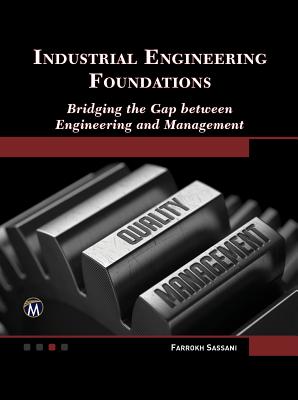
Industrial Engineering Foundations
KSh 7,900.00
Advanced Manufacturing and Automation IX
KSh 23,400.00

Safety Instrumented Systems
KSh 20,350.00

Impact
KSh 32,400.00
Innovative Design, Analysis and Development Practices in Aerospace and Automotive Engineering
KSh 32,400.00
More by Mark Evans

The New Music Industries
KSh 9,900.00

Entry 3 Reading and Writing
KSh 1,850.00

Entry 2 Reading and Writing
KSh 1,850.00

The New Music Industries
KSh 9,900.00
Movement Training for the Modern Actor
KSh 33,850.00
Mime into Physical Theatre: A UK Cultural History 1970–2000
KSh 26,300.00

Climb
KSh 2,700.00
Frantic Assembly
KSh 30,950.00

Jacques Copeau
KSh 30,950.00

Witches Tarot Mini
KSh 2,350.00

Towards a Pedagogy of Higher Education
KSh 7,900.00

Self-Realization
KSh 29,500.00
