
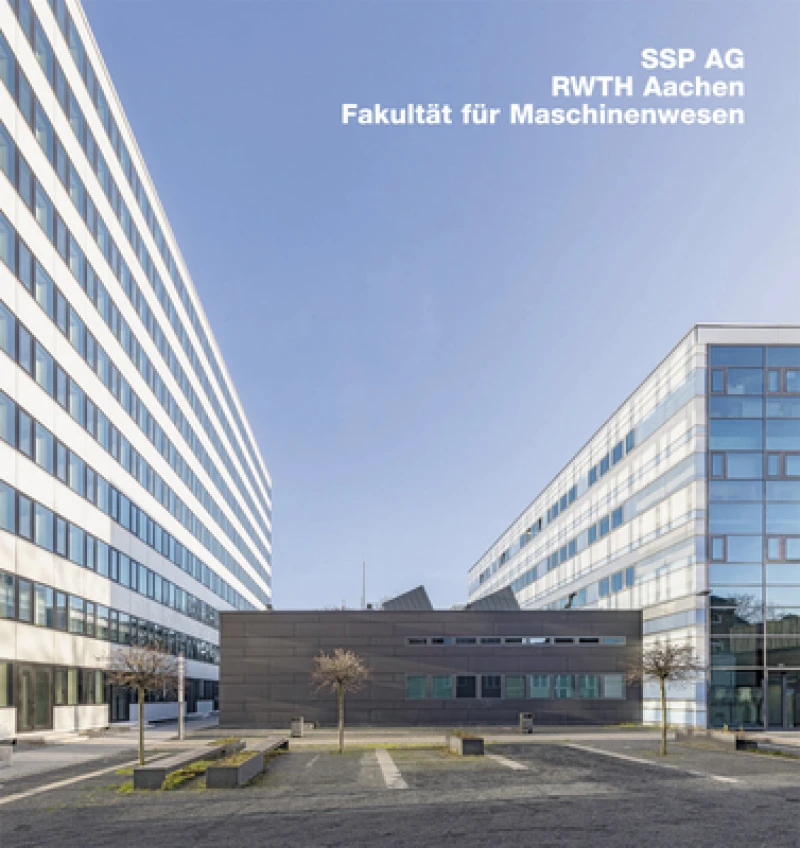
Opus 86 : SSP AG, RWTH Aachen, Fakultat fur Maschinenwesen
Book Details
Format
Hardback or Cased Book
ISBN-10
393256586X
ISBN-13
9783932565861
Publisher
Edition Axel Menges
Imprint
Edition Axel Menges
Country of Manufacture
GB
Country of Publication
GB
Publication Date
Dec 2nd, 2021
Print length
52 Pages
Weight
778 grams
Product Classification:
Architecture
Ksh 5,400.00
Werezi Extended Catalogue
0 in stock
Delivery Location
Delivery fee: Select location
Secure
Quality
Fast
From the 1960s to the 1980s, new university buildings were regarded as real showcase projects in Germany. With their help, it was hoped to catch up with the international building scene again after the severe destruction of the Second World War. However, deficiencies in the technical execution and also in the subsequent building maintenance often led to the fact that in the course of the years serious structural problems appeared more and more frequently in the former showcase projects, which in some cases even led to the demolition of former demonstrative projects. This opus volume presents such an aging university ensemble on the old campus of the RWTH Aachen, which could not only be saved, but also embodies a renaissance of high-quality urban development and sustainable architecture. This balancing act is thanks to the architects and engineers of the renowned SSP AG from Bochum. First of all, they used the building task to significantly reorganise the old campus area in terms of urban development and to uncover lost urban references. In a next step, they demolished a dilapidated multi-storey car park and built the new technical centre, the Technikum on its foundations. In doing so, they followed the highest construction standards and sustainability strategies down to the smallest detail. However, the architects were able to retain the neighbouring, defective high-rise building of the so-called Sammelbau of the Faculty of Mechanical Engineering. They stripped the high-rise down to its bare supporting structure and then refurbished it to the highest technical and ecological standards, just like the Technikum. In times when terms such as sustainability or building ecology are being used in an almost inflationary manner, the project presented here is a real model, because it not only speaks of high standards, but has in fact implemented the highest standards and because it has given the concept of re-use (ie: the recycling of old, dilapidated building substance, a sensuously appealing structural form and a long-term new utility).
Get Opus 86 by at the best price and quality guaranteed only at Werezi Africa's largest book ecommerce store. The book was published by Edition Axel Menges and it has pages.

