
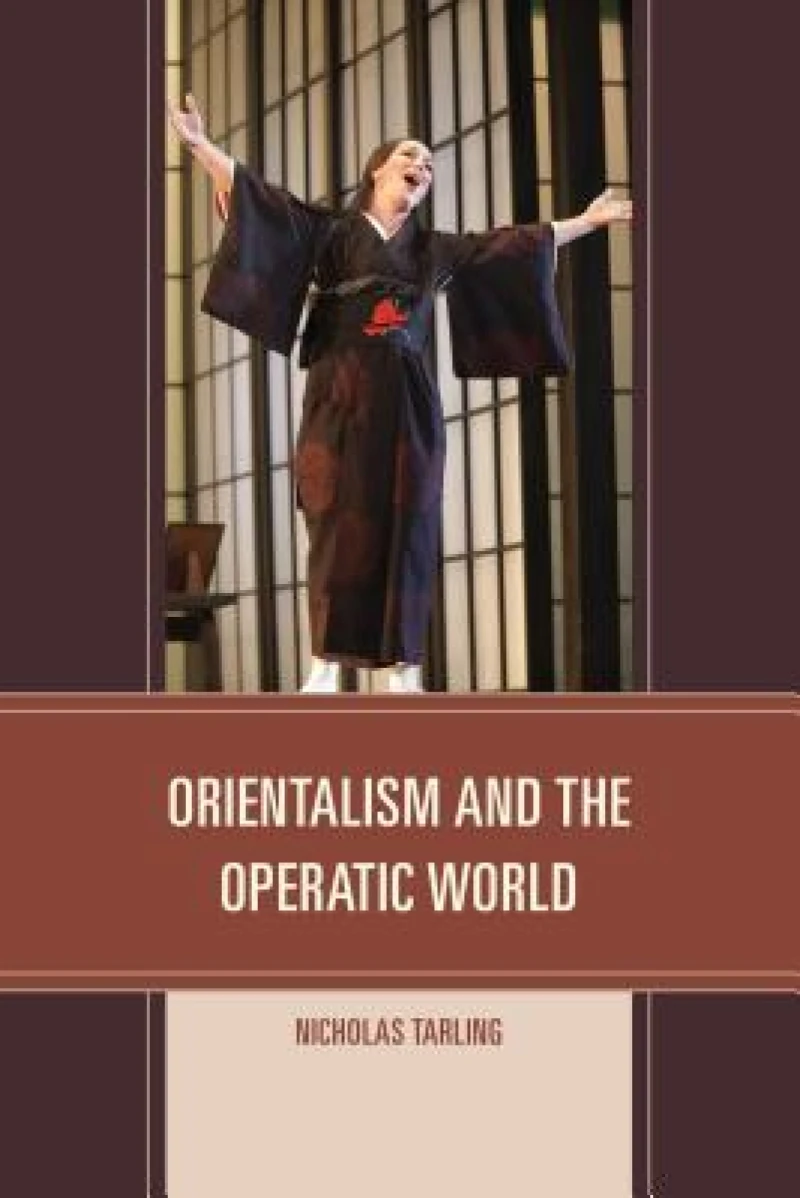
Orientalism and the Operatic World
Book Details
Format
Hardback or Cased Book
ISBN-10
1442245433
ISBN-13
9781442245433
Publisher
Bloomsbury Publishing Plc
Imprint
Rowman & Littlefield Publishers
Country of Manufacture
US
Country of Publication
GB
Publication Date
Apr 23rd, 2015
Print length
354 Pages
Weight
684 grams
Dimensions
23.80 x 15.70 x 2.40 cms
Product Classification:
Music reviews & criticismOpera
Ksh 21,500.00
Manufactured on Demand
0 in stock
Delivery Location
Delivery fee: Select location
Secure
Quality
Fast
Western opera is a globalized and globalizing phenomenon and affords us a unique opportunity for exploring the concept of “orientalism,” the subject of literary scholar Edward Said’s modern classic on the topic. Nicholas Tarling’s Orientalism and the Operatic World places opera in the context of its steady globalization over the past two centuries. In this important survey, Tarling first considers how the Orient appears on the operatic stage in Britain, France, Germany, Russia, and the United States before exploring individual operas according to the region of the “Orient” in which the work is set.Throughout, Tarling offers key insights into such notable operas as George Frideric Handel’s Berenice, Giuseppe Verdi’s Aida, Giacomo Puccini’s Madama Butterfly, Pietro Mascagni’s Iris, and others. Orientalism and the Operatic World argues that any close study of the history of Western opera, in the end, fails to support the notion propounded by Said that Westerners inevitably stereotyped, dehumanized, and ultimately sought only to dominate the East through art. Instead, Tarling argues that opera is a humanizing art, one that emphasizes what humanity has in common by epic depictions of passion through the vehicle of song.Orientalism and the Operatic World is not merely for opera buffs or even first-time listeners. It should also interest historians of both the East and West, scholars of international relations, and cultural theorists.
Western opera is a globalized and globalizing phenomenon and affords us a unique opportunity for exploring the concept of “orientalism,” the subject of literary scholar Edward Said’s modern classic on the topic. Nicholas Tarling’s Orientalism and the Operatic World places opera in the context of its steady globalization over the past two centuries. In this important survey, Tarling first considers how the Orient appears on the operatic stage in Britain, France, Germany, Russia, and the United States before exploring individual operas according to the region of the “Orient” in which the work is set. Throughout, Tarling offers key insights into such notable operas as George Frideric Handel’s Berenice, Giuseppe Verdi’s Aida, Giacomo Puccini’s Madama Butterfly, Pietro Mascagni’s Iris, and others. Orientalism and the Operatic World argues that any close study of the history of Western opera, in the end, fails to support the notion propounded by Said that Westerners inevitably stereotyped, dehumanized, and ultimately sought only to dominate the East through art. Instead, Tarling argues that opera is a humanizing art, one that emphasizes what humanity has in common by epic depictions of passion through the vehicle of song. Orientalism and the Operatic World is not merely for opera buffs or even first-time listeners. It should also interest historians of both the East and West, scholars of international relations, and cultural theorists.
Get Orientalism and the Operatic World by at the best price and quality guaranteed only at Werezi Africa's largest book ecommerce store. The book was published by Bloomsbury Publishing Plc and it has pages.

