
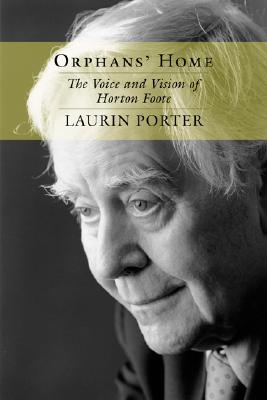
Orphans'' Home : The Voice and Vision of Horton Foote
Book Details
Format
Paperback / softback
Book Series
Southern Literary Studies
ISBN-10
0807128791
ISBN-13
9780807128794
Publisher
Louisiana State University Press
Imprint
Louisiana State University Press
Country of Manufacture
US
Country of Publication
GB
Publication Date
Apr 1st, 2003
Print length
248 Pages
Weight
322 grams
Dimensions
21.40 x 14.00 x 2.00 cms
KSh 4,950.00
Temporarily out of stock, due soon
0 in stock
Delivery Location
Delivery fee: Select location
Secure
Quality
Fast
By critical consensus, Horton Foote's foremost achievement is The Orphans' Home Cycle - a course of nine independent yet interlocking plays. Drawing on a range of sources, Laurin Porter demonstrates why the author's masterpiece is a unique accomplishment not only in his personal oeuvre but also in the canon of American drama.
A Pulitzer Prize-winning playwright, an Emmy-winning television writer, and an Oscar-winning screenwriter of such notable films as To Kill a Mockingbird, Tender Mercies, and A Trip to Bountiful, the amazingly versatile Horton Foote has been a force on the American cultural scene for more than fifty years. By critical consensus, Foote's foremost achievement is The Orphans' Home Cycle - a course of nine independent yet interlocking plays that traces the transformation over twenty-six years of a small-town southern orphan, Horace Robedaux, into a husband, father, and patriarch. Drawing on a wide range of sources, including interviews with Foote, Laurin Porter demonstrates why the author's masterpiece is a unique accomplishment not only in his personal oeuvre but also in the canon of American drama.
Set in and near Harrison, Texas, the fictitious counterpart to Foote's native Wharton, and based partly on his father's childhood and his parents' courtship and marriage, the plays introduce two extended families - those of Horace and his wife, Eliazbeth - across three generations, as well as numerous townspeople whose lives intertwine with theirs. The result is a wide-ranging, intricate work of interconnected stories reminiscent of William Faulkner's Yoknapatawpha saga.
Porter shows how the small-town southern culture speaks through Horace while she examines the functions of family and community in identity formation. She explains that Foote's signature style - which replaces stage directions, poetic language, and suspense-driven narratives with sparse, restrained dialogue and seemingly actionless plots - creates a simmering power by stressing subtext over text, a strategy more often associated with the novel than drama. Similarly, Foote uses recurring character types and motifs, interrelated images and symbols, and parallel and inverted events that reverberate within and among the plays, employing language and structure in innovative ways. In comparing the cycle with the works of William Faulkner and Eugene O'Neill, Porter positions Foote at the intersection of southern literature and American drama.
Foote's emphasis, Porter concludes, is not so much on returning home as on leaving it and building a new family, contending that for Foote home is not a place but a geography of the heart. Her definitive Orphans' Home shines much-needed light on an understudied talent and proves Foote's to be a vital American voice.
Set in and near Harrison, Texas, the fictitious counterpart to Foote's native Wharton, and based partly on his father's childhood and his parents' courtship and marriage, the plays introduce two extended families - those of Horace and his wife, Eliazbeth - across three generations, as well as numerous townspeople whose lives intertwine with theirs. The result is a wide-ranging, intricate work of interconnected stories reminiscent of William Faulkner's Yoknapatawpha saga.
Porter shows how the small-town southern culture speaks through Horace while she examines the functions of family and community in identity formation. She explains that Foote's signature style - which replaces stage directions, poetic language, and suspense-driven narratives with sparse, restrained dialogue and seemingly actionless plots - creates a simmering power by stressing subtext over text, a strategy more often associated with the novel than drama. Similarly, Foote uses recurring character types and motifs, interrelated images and symbols, and parallel and inverted events that reverberate within and among the plays, employing language and structure in innovative ways. In comparing the cycle with the works of William Faulkner and Eugene O'Neill, Porter positions Foote at the intersection of southern literature and American drama.
Foote's emphasis, Porter concludes, is not so much on returning home as on leaving it and building a new family, contending that for Foote home is not a place but a geography of the heart. Her definitive Orphans' Home shines much-needed light on an understudied talent and proves Foote's to be a vital American voice.
Get Orphans'' Home by Laurin Porter at the best price and quality guaranteed only at Werezi Africa's largest book ecommerce store. The book was published by Louisiana State University Press and it has 248 pages.
Customers Who Bought This Also Bought

Worthy
KSh 3,500.00
Michelangelo
KSh 5,950.00

The 38 Letters from J.D. Rockefeller to his son
KSh 2,600.00

Elephant Whisperer
KSh 2,150.00

Toni at Random
KSh 4,500.00

Artists Who Changed History
KSh 5,900.00
Once Upon a Time
KSh 2,000.00

Yoko
KSh 4,500.00

Fassbinder Thousands of Mirrors
KSh 2,350.00

Kill ''Em and Leave
KSh 2,350.00

Lin-Manuel Miranda
KSh 3,600.00
Monsters
KSh 2,350.00
