
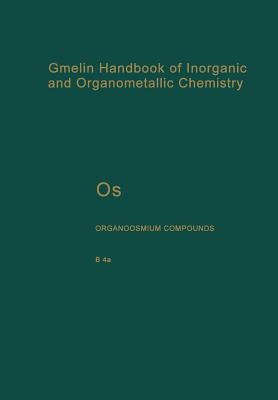
Book Details
Format
Paperback / softback
ISBN-10
3662075415
ISBN-13
9783662075418
Edition
Eighth Edition 1995
Publisher
Springer-Verlag Berlin and Heidelberg GmbH & Co. KG
Imprint
Springer-Verlag Berlin and Heidelberg GmbH & Co. K
Country of Manufacture
DE
Country of Publication
GB
Publication Date
Oct 3rd, 2013
Print length
179 Pages
Weight
344 grams
Dimensions
24.40 x 16.90 x 1.70 cms
Product Classification:
Chemistry
KSh 8,100.00
Werezi Extended Catalogue
Delivery in 12 days
1 copies in stock
Delivery Location
Delivery fee: Select location
Delivery in 12 days
Secure
Quality
Fast
The GmeLin series "Organometallic Compounds" comprises compounds containing at least one carbon-to-metal bond (except cyano compounds, which are considered inorganic). It includes all information in scientific journals, but patents, conference reports, and disserta tions generally were not reviewed. The volumes published so far are listed on p. V/'' Organometallic compounds are classified according to their nuclearity and the bonding mode of the organic ligands nL. Nuclearity means the number of atoms of the title metal in the formula unit disregarding any additional metals that may be present. The term nL designates a ligand bonded by n carbon atoms to one or different atoms of the title metal. As usual, a-bonded 1 L ligands are designated by R. Inorganic ligands (Le., ligands bonded exclusively by elements other than carbon) are generally designated by 0 or X. 0 means donor ligands such as pyridine or phosphanes; m-electron donors are specified by mO. X is reserved for negatively charged ligands or other one-electron donors such as halogens or SnR ; bridging X ligands may donate one 3 2 2 2 (~-H), three (~-Cl, ~-OR), or five (~3-1) electrons. Terms such as lL_ 0, 20-X, or 20_ 0_ 0 may be used for multidentate ligands. Heterometals are often designated by M, and bridging elements, bridging groups, or nonmetallic cluster constituents by E. The symbols 1] and ~ follow the IUPAC nomenclature.
Get OS Organoosmium Compounds by Karin Greiner, Petra Olms-Keller at the best price and quality guaranteed only at Werezi Africa's largest book ecommerce store. The book was published by Springer-Verlag Berlin and Heidelberg GmbH & Co. KG and it has 179 pages.
Customers Who Bought This Also Bought
Chemistry for the IB MYP 4 & 5
KSh 9,950.00

Short History of Nearly Everything
KSh 2,350.00
The Vision of Ephesians – The Task of the Church and the Glory of God
KSh 2,500.00

Chemistry: The Central Science in SI Units, Global Edition
KSh 15,950.00

Chemistry for Breakfast
KSh 2,000.00

Pearson Edexcel International AS Level Chemistry Student Book
KSh 8,400.00

Pearson Edexcel International A Level Chemistry Lab Book
KSh 1,700.00

Disappearing Spoon...and other true tales from the Periodic Table
KSh 2,150.00

Pearson Edexcel International A Level Chemistry Student Book
KSh 8,400.00
CSSM Chem Y2 Paper 1
KSh 2,200.00
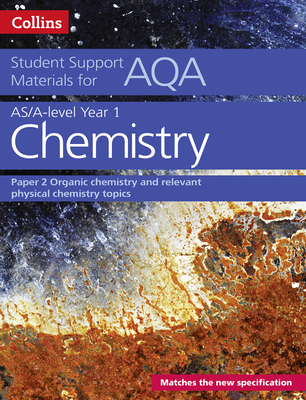
CSSM Chem Y1 Paper 2
KSh 2,050.00

Student Support Materials for AQA
KSh 1,750.00
More by Karin Greiner, Petra Olms-Keller

More in This Genre
Chemistry for the IB MYP 4 & 5
KSh 9,950.00
Short History of Nearly Everything
KSh 2,350.00
The Vision of Ephesians – The Task of the Church and the Glory of God
KSh 2,500.00
Chemistry: The Central Science in SI Units, Global Edition
KSh 15,950.00
Chemistry for Breakfast
KSh 2,000.00
Pearson Edexcel International AS Level Chemistry Student Book
KSh 8,400.00
